
Reviewed · COMMUNIST HISTORY & BUNK'ART TOURS
A Communist Manifesto: Tirana before and after
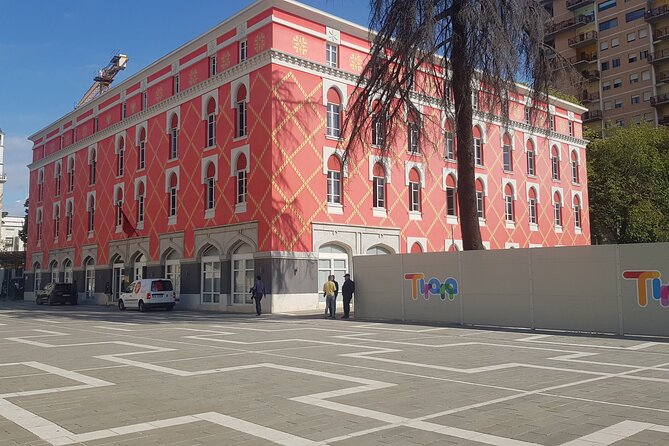
Tirana’s politics hide in plain sight. I love how the tour uses Skënderbej Square as a starting compass and then checks in again at the Enver Hoxha Pyramid to show what changed. I also like that the guide shares personal, lived-in context about the communist period, not just facts. One drawback: a lot of the most famous sites here are viewed from the outside, so if you’re chasing ticketed museum time, you’ll want to plan follow-up stops.
This is a relaxed 2.5-hour walking tour with a small group (max 15) and it runs in English. You’ll get coffee or tea during the route, plus a short pause for a drink at the end. Wear comfy shoes, because the whole point is stepping through Tirana on foot and getting your bearings fast.
In This Review
- Key highlights to expect
- Communist symbols in everyday Tirana: what this tour actually does
- Price and value: what $34.84 buys you in real terms
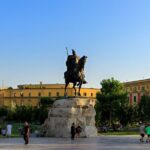
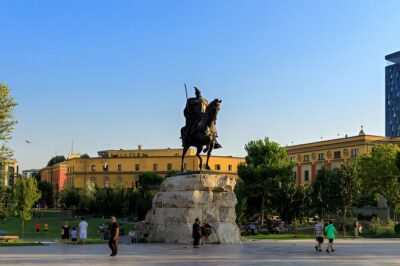
- Starting at Skënderbej Square: your fast map of Tirana
- The House of Leaves from outside: seeing surveillance-era traces
- Blloku: walking the neighborhood shaped by power
- Mother Teresa Square: the city reframes itself
- Komiteti Bar and the coffee stop: slowing down on purpose
- The Pyramid of Tirana stop: a visible anchor for the communist era
- Who this tour fits best (and who should skip it)
- Practical details that affect your day
- Should you book A Communist Manifesto: Tirana before and after?
- FAQ
- How long is the tour?
- Where does the tour start and end?
- Is the House of Leaves area included, or do I need tickets?
- Are the other stops free, or do I pay extra?
- What’s included in the price?
- Can I cancel for free?
Key highlights to expect
- Skënderbej Square orientation that helps you understand where everything sits
- Outside views of the House of Leaves, plus context for what it meant
- Blloku district walk for a different slice of Tirana’s communist-era story
- Mother Teresa Square and the shift in symbolism after communism
- A short drink stop at Komiteti Bar to slow down and reset
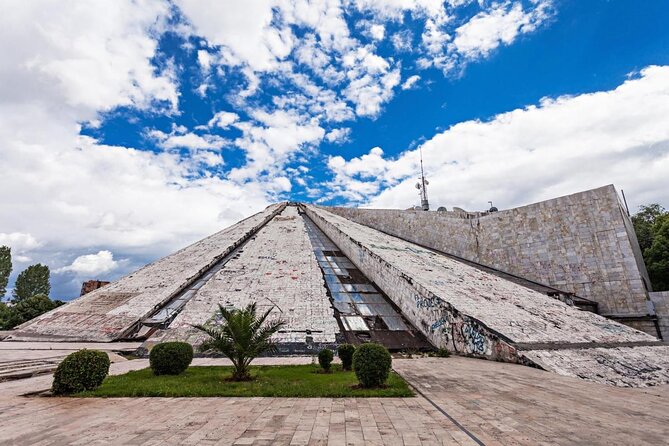
- Enver Hoxha Pyramid photo stop as a visible anchor for the whole theme
Communist symbols in everyday Tirana: what this tour actually does
This tour works because it doesn’t treat communist history like a distant textbook chapter. It treats it like something you can still read in the city’s layout, monuments, and neighborhoods. You start at the central political heart of Tirana, then you move through areas that feel totally normal now—until your guide connects them back to the era that shaped them.
I like this approach for two reasons. First, it helps you orient fast. You’re not just walking; you’re building a mental map. Second, it keeps the tone human. The best moments aren’t the most dramatic buildings; they’re the guide’s small details about how people lived and how power shaped daily routines.
The practical angle: you’re doing this on foot for about 2 hours 30 minutes, with several short stops. That makes it a strong choice for a short trip when you want context without committing to a full-day museum marathon.
More Tirana communist-era history tours through the bunkers and old files


Price and value: what $34.84 buys you in real terms
At $34.84 per person, you’re paying for guided walking time, local context, and entry/visits where applicable. The good news is that the tour includes all fees and taxes, and it throws in coffee and/or tea. You’re also not paying extra for most stops—several are marked as free admissions.
Where the value really shows up is in the structure. You’re led from one meaningful anchor to the next—Skënderbej Square, Blloku, Mother Teresa Square, and the Pyramid—so you’re not wandering randomly through central Tirana. With a small group (up to 15), you also get the chance for questions, not just a one-way lecture.
If you’re trying to maximize time in Tirana, this is one of those deals where the cost feels modest compared to the benefit of having a guide stitch the timeline together while you’re still in the streets.
Starting at Skënderbej Square: your fast map of Tirana
The tour meets at Sheshi Skënderbej and kicks off right in the main square area. This is a smart first stop because it immediately gives you spatial context. When you later pass landmarks like the Mother Teresa Square area or head toward Blloku, you’ll understand what direction you’re heading and how the center of the city connects to the neighborhoods.
At this point, expect an orientation moment more than a deep museum experience. You’re there to learn how to read the city in front of you. For a first-time visitor, that matters. Tirana can feel a little chaotic at street level, but the center provides structure.
Tip for you: arrive a few minutes early and take a quick look around before the group gathers. You’ll be able to connect what you see with what the guide explains, and the whole walk will feel more coherent.
The House of Leaves from outside: seeing surveillance-era traces
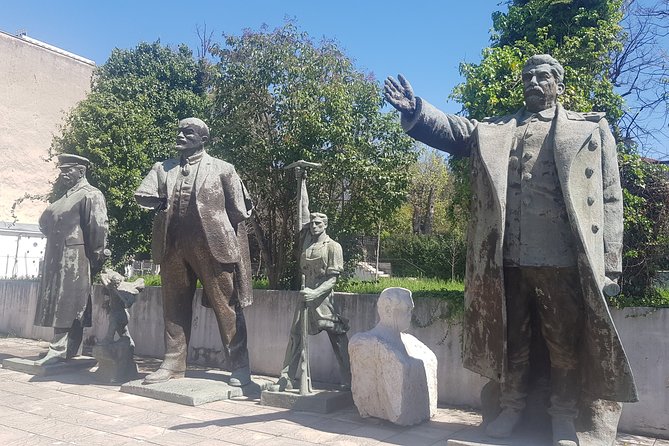
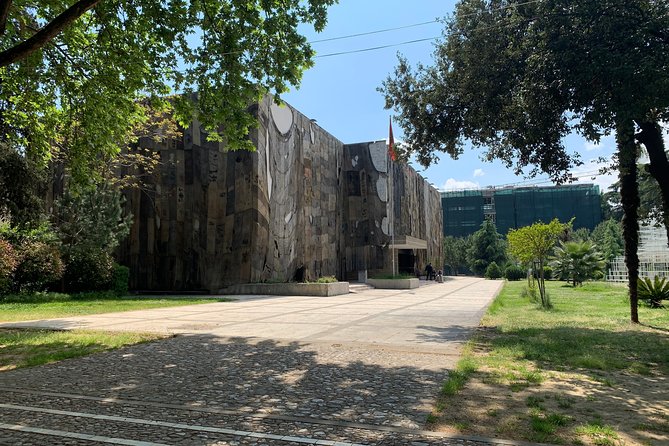
Next you’ll stop at the Museum of Secret Surveillance area and view the House of Leaves from outside. This is one of the quieter, more thought-provoking parts of the route. Even without going inside, you get a sense of how the city holds onto its past in physical form.
A key thing to know: admission here isn’t included. The tour is set up for viewing and context, not for a ticketed visit during the walk. That doesn’t make it less useful. It just means you should come with the right expectations: you’re using this stop to understand the theme, not to complete the museum on the spot.
Why it works anyway: your guide’s explanations give weight to what you’re seeing. And after this stop, the rest of the tour tends to make more sense—because the message shifts from symbols to people, and from buildings to power.
If you want more museum time, you can treat this as your “taste,” then decide later if you want to go in on your own.
Blloku: walking the neighborhood shaped by power
From the surveillance-era stop, the tour moves to Blloku, which is walked as an area rather than treated like a single monument. This matters because it changes the rhythm. Instead of one big landmark holding your attention, you start noticing the neighborhood shape—how streets connect, where people gather, and how the area’s identity is visible in everyday life.
In theme terms, Blloku helps show how communist-era power had a geography. Your guide’s storytelling brings that idea down to street level. Even if you don’t know the history in advance, the walk gives you a sense that this wasn’t just any neighborhood—it had a role in the city’s social order.
Practical downside: because this section is about walking around, you won’t get a “ticket moment.” If you want structured indoor stops every 10 minutes, this isn’t that tour. But if you want the city to feel connected, Blloku is a good pivot.


Mother Teresa Square: the city reframes itself
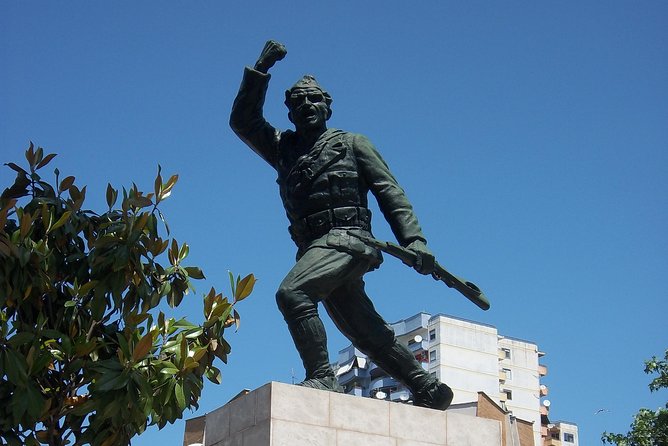
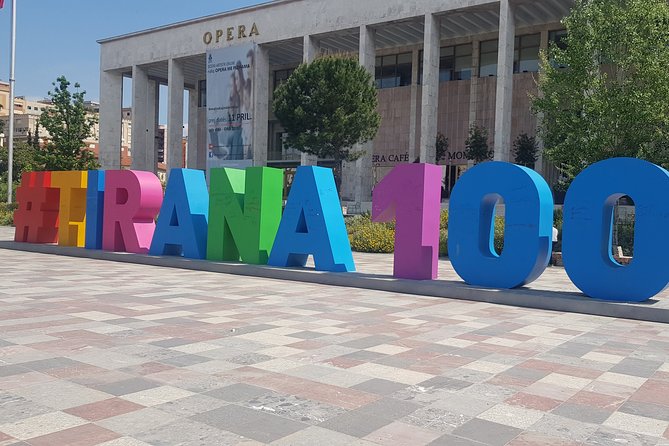
Then you move on to Mother Teresa Square, again largely a walking-and-orientation experience. This is where the theme of before and after becomes easier to grasp. The city’s symbols don’t just replace each other; they overlap, and you feel that transition in how the streets and public spaces work.
I like this stop because it helps you compare moods. You’ve just passed heavier subject matter, and now the focus shifts toward a more outward, public-facing Tirana. Even if you don’t study everything in the square, it becomes an emotional reset—and it helps you see Tirana as a living place rather than a history exhibit.
If you’re traveling with a mix of interests, this is a section that usually lands well: history is still there, but the atmosphere is more everyday.
Komiteti Bar and the coffee stop: slowing down on purpose
The tour includes coffee and/or tea, and there’s also a short stop at Komiteti Bar for a drink. This is more than a perk. It’s strategic pacing. A 2.5-hour walking tour can be intense—especially when you’re absorbing political history and city context back-to-back.
The bar stop gives you a chance to regroup with the group, ask one or two questions, and put the information you’ve heard into a calmer frame. It also makes the walk feel less like a checklist and more like a real conversation.
What you should do: use that break to ask the guide what to do next. The best tours end with better planning, and this one is set up for that.
The Pyramid of Tirana stop: a visible anchor for the communist era
The final thematic stop is the Enver Hoxha Pyramid. The tour’s description marks it as a stop by the pyramid with free admission, which usually means you’re viewing it rather than doing a ticketed visit during this walk.
This is the anchor moment. After passing through the square, the neighborhood walk, and the symbolic shift toward other public spaces, the pyramid ties it all back together. It’s one of those structures that stays in your brain because it’s hard to ignore. Even if you’ve only seen it from the street before, having the guide place it in context gives it meaning.
Photo note for you: bring your camera habits accordingly. You’ll likely want a few shots from the street and from different angles depending on where the group pauses.
Who this tour fits best (and who should skip it)
You’ll probably love this experience if you:
- want a fast introduction to Tirana’s layout and political landmarks
- like history stories that connect to specific places you can point at
- enjoy guided walking with short stops rather than long museum time
- want a small-group pace (max 15) and time to ask questions
You might want to skip or supplement it if you:
- only want ticketed museum interiors and can’t stand outside-view stops
- expect a long formal stop at one single attraction
- dislike walking for about 2.5 hours with multiple brief segments
For most visitors, the best strategy is to treat this tour as your grounding. Then you can return later for anything you want to explore more deeply.
Practical details that affect your day
This tour is offered in English and uses a mobile ticket. It’s designed for people who can participate in a walking format, and it’s in an area that’s near public transportation. Service animals are allowed too.
The route is set up to be weather-dependent and runs in conditions that suit walking. If the weather turns, you might be offered an alternate date or a full refund.
Also, it’s worth planning ahead. On average, this one tends to get booked around 13 days in advance, so reserving earlier gives you more date options.
Should you book A Communist Manifesto: Tirana before and after?
If your goal is to understand Tirana quickly—without getting lost in random monuments—this is a strong pick. You’ll get a guided walk that connects the communist era to the city you see today, using recognizable anchors like Skënderbej Square, Blloku, Mother Teresa Square, and the Enver Hoxha Pyramid. The outside-view approach still works because the guide’s storytelling gives the stops a clear purpose.
Book it if you want context, orientation, and a human tone. Consider adding a follow-up museum visit separately if you find yourself wanting more than an exterior stop at the House of Leaves area.
FAQ
How long is the tour?
It lasts about 2 hours 30 minutes.
Where does the tour start and end?
It starts at Sheshi Skënderbej, Tiranë and ends at Komiteti Bar (Rruga Papa Gjon Pali II, Tiranë).
Is the House of Leaves area included, or do I need tickets?
You’ll see the House of Leaves from outside, and admission is not included for the Museum of Secret Surveillance stop.
Are the other stops free, or do I pay extra?
Most stops are marked as free admission on the route, including Skanderbeg Square, Blloku, Mother Teresa Square, Komiteti Bar, and the Enver Hoxha Pyramid stop.
What’s included in the price?
The price includes all fees and taxes and coffee and/or tea.
Can I cancel for free?
Yes. You can cancel for a full refund up to 24 hours in advance. If you cancel less than 24 hours before the start time, the amount paid is not refundable.
More from Our Tirana Review Desk
More Tirana Communist-Era History Tours
Not quite it? More Tirana tours and Albanian day trips fresh off our review desk






Communist History & Bunk'Art Tours, compared.
 ★ 5.0The truest face of CommunismFrom $9018 reviews
 ★ 5.0Full-Day Tour of Albania’s Bunkers and Beaches, from TiranaFrom $14416 reviews
 ★ 5.0Bunkart 1 & Mount Dajti Tour – includes lunchFrom $1558 reviews
 ★ 5.0Cultural Tour in Tirana including House of LeavesFrom $583 reviews
 ★ 5.0Tirana’s Communist Past: A Tasting Tour with Traditional LunchFrom $603 reviews
Browse the lists this tour appears in