
Reviewed · TIRANA CITY WALKING TOURS
Walking Tour of Tirana
Tirana can feel like a whole history lesson with shoes on. This walking tour strings together the capital’s big landmarks fast, then slows down just enough for stories you’ll actually remember. I like the small-group size (max 15), and I also love how the stops connect themes like old religion, communist-era power, and today’s Tirana in a single loop.
Two things really make it work: you get an English-speaking licensed guide for an interactive walk, and the pacing is built for quick photos and questions without turning into a slog. One consideration is practical: the route starts on Sheshi Skënderbej and finishes near the Orthodox Cathedral, so plan your arrival timing carefully—traffic or trouble finding the meeting point can throw you off.
If you’re the type who wants a solid first orientation (and a shortlist of places to return to), this tour is a strong way to start. Just bring water and dress for heat or rain, because you’re outside for most of the experience.
In This Review
- Key things to know before you go
- Why Tirana feels like several cities in one walk
- Getting to the meeting point on time (and not losing the group)
- Skanderbeg Square and the old mosque: where the tour sets the tone
- Clock Tower quick glance: small stop, big city signal
- Bunk’Art 2: a museum stop without the long commitment
- National Gallery of Art: arts under communist-era rules
- Enver Hoxha’s Pyramid: power made visible
- Blloku and the dictator’s villa area: from public control to private life
- Postbllok Checkpoint Monument: remembering control at street level
- Resurrection of Christ Orthodox Cathedral: ending at a modern religious landmark
- What the English guide really adds (beyond facts)
- Price and value: why $18.14 can feel fair
- Who should book this Tirana walking tour
- Should you book this Tirana walking tour?
- FAQ
- How long is the Walking Tour of Tirana?
- Is the tour offered in English?
- Where does the tour start and end?
- What’s included in the price?
- Does the tour run in all weather?
- Can I cancel for a full refund?
Key things to know before you go
- A tight 2:15 route that hits major Tirana sights without marathon walking
- Communism-era focus through landmarks tied to Enver Hoxha and the Blloku area
- Guides who tell stories with humor (names you may hear include Arber, Eri, Clint, and Kedri)
- Short stops built for photos and quick context, not museum marathons
- All the listed admissions are free at the stops on this walk
- Great for planning your next hours, because you’ll learn what’s worth revisiting
Why Tirana feels like several cities in one walk
Tirana’s charm is that it doesn’t stick to one era. In a compact area, you can bounce from a central square to an old mosque, then move to places tied to communist rule, and end at a newer Orthodox landmark. The guide’s job is to make the timeline make sense while you’re still on your feet.
I especially like tours that treat Tirana as a living museum, not a checklist. This one leans on contrast: the official center at Skënderbej Square, the watchtower-like Clock Tower vibe, and then the more politically loaded stops around Blloku and Enver Hoxha’s Pyramid area. The result is that the city looks familiar quickly, even if you’ve never been.
More Tirana walking tours through the boulevards and back lanes


Getting to the meeting point on time (and not losing the group)
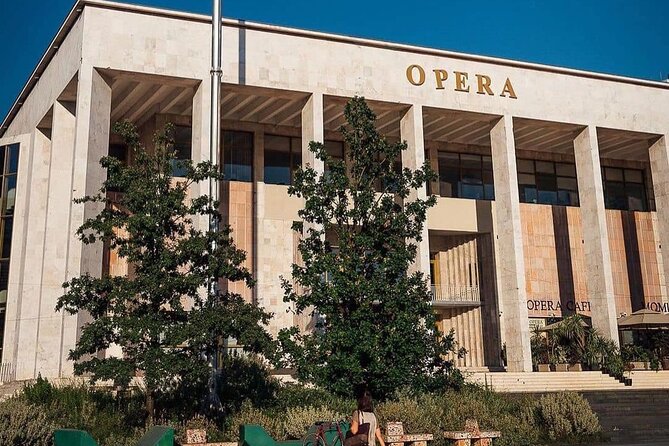
The walk starts at the National Theatre of Opera, Ballet and Folk Ensemble—right on Pallati i Kulturës / Sheshi Skënderbej. That’s a good anchor because it’s in the heart of Tirana, and the tour is near public transportation. You’ll also get a mobile ticket, which is handy when you’re moving fast between stops.
Here’s the real snag to watch: the tour starts at the scheduled time, and if you’re stuck in traffic or dropped off in the wrong spot, you can miss it. I’d treat this like a timed city walk, not a casual meet-when-you-can situation. If you’re arriving by taxi, ask the driver to drop you right at the theatre area near Sheshi Skënderbej rather than somewhere “close.”
And if you’re in a hot season, arrive a little early so you’re not searching for the group while you’re already sweating. That small buffer pays off.
Skanderbeg Square and the old mosque: where the tour sets the tone
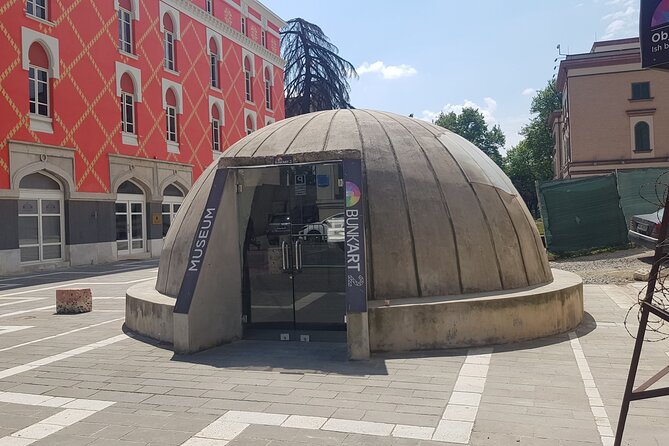
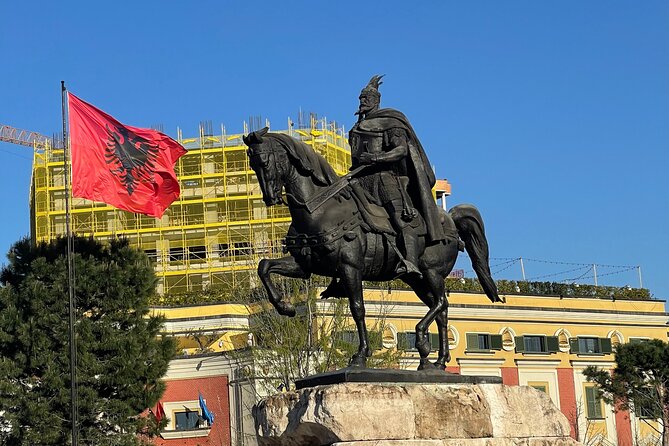
The first stretch brings you to Tirana’s main square, Skanderbeg Square, where you get oriented immediately. This is a smart move because it gives you a mental map right away: from here, it’s easier to understand where the city’s power centers, memorials, and daily life sit relative to each other.
Then you pass Xhamia Et’hem Bej, an old mosque that works as a historical counterweight to the more modern-looking political landmarks. Even if you only stop briefly, it’s the kind of site where the guide can explain why it matters—so the city stops feeling like random buildings and starts feeling like layers.
If you’re hoping for deep religious-architecture details, this part is quick. But it’s ideal if you want context without losing an entire afternoon.
Clock Tower quick glance: small stop, big city signal
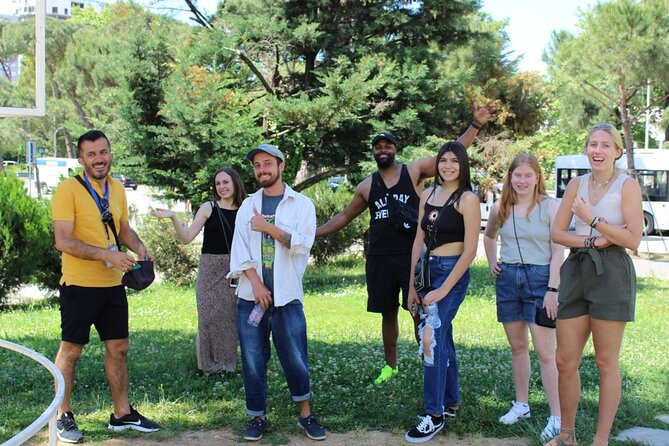
The Clock Tower stop is short, but it’s a helpful “check your bearings” moment. In cities like Tirana, landmark visibility matters. A clock tower is the kind of reference point you can use later when you’re wandering on your own.
What you should do here is simple: look around the square area and note how the tower anchors the street grid. When you’re back on your own later, those visual cues make navigation feel easier and less stressful.
Bunk’Art 2: a museum stop without the long commitment
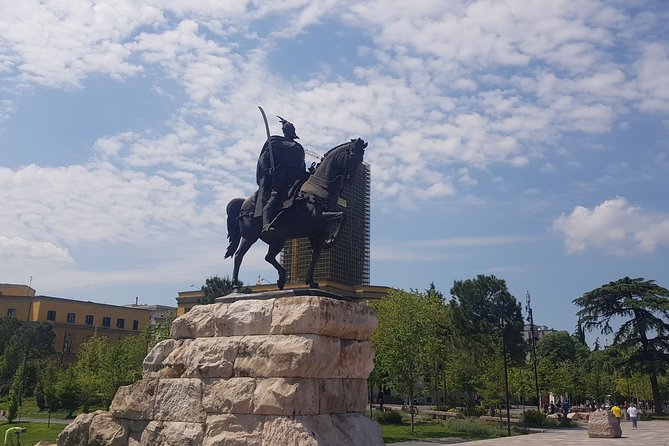
Next comes Bunk’Art 2, a museum located near the city center. The stop is brief, so don’t expect a full museum visit. Instead, think of it like a context stop: you’ll get enough framing to understand what you’re seeing and why it connects to Albania’s 20th-century story.
This is a great fit for travelers who like history but don’t want to sit for hours. It also helps if you plan to return later, because you’ll know what themes caught your attention during the walk.
More Tirana walks worth putting your boots on for




National Gallery of Art: arts under communist-era rules
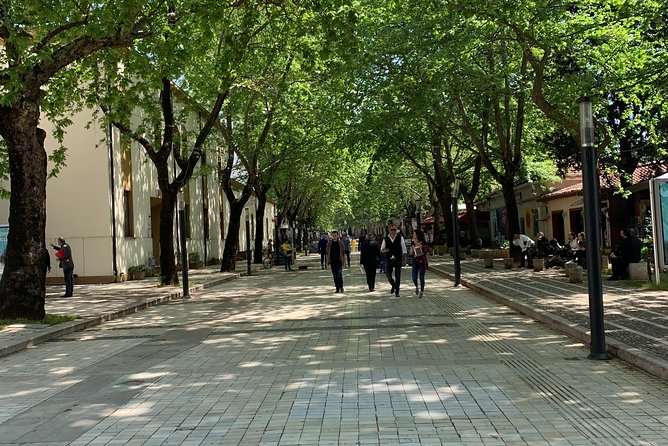
At the National Gallery of Art, the guide focuses on arts during the communist era. This is one of the stops that turns “history facts” into something more human. When art is treated as a system of ideas, you start seeing how politics can shape culture, even down to what people are allowed to produce and celebrate.
Because the stop is only about 10 minutes, the pacing is necessarily selective. But if you’re the kind of person who enjoys learning one clear thread and then following it later, this timing is perfect: you’ll come away knowing what questions to ask (or what themes to look for) if you revisit independently.
Enver Hoxha’s Pyramid: power made visible
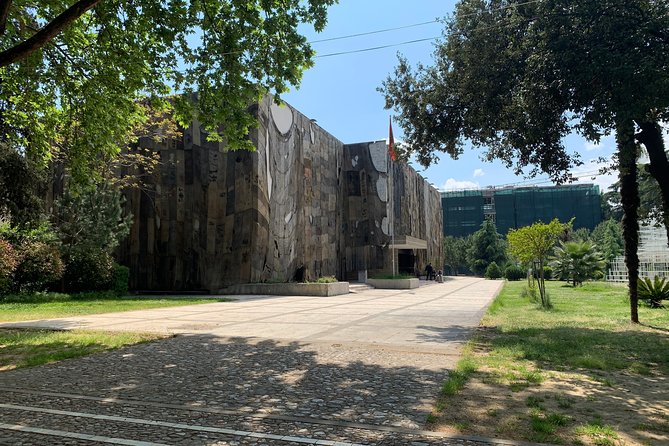
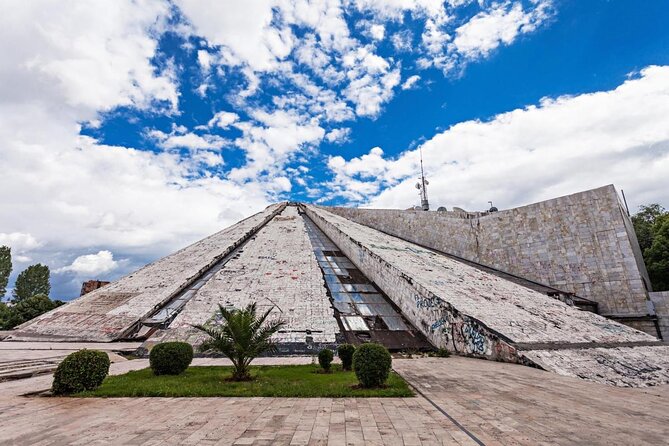
Tirana’s Enver Hoxha Pyramid is one of the capital’s headline landmarks, and the tour treats it as more than a photo spot. The guide uses it to explain how communist-era leadership left physical marks on the city.
This is where the walk becomes especially compelling if you like political history—without turning it into a lecture. You’ll see the Pyramid from the outside and hear how it fits into the story of Albanian governance and the public space people had to live with.
If your interest is mainly architecture or city planning, this stop still helps. It shows how a single structure can signal an entire era’s approach to power and symbolism.
Blloku and the dictator’s villa area: from public control to private life
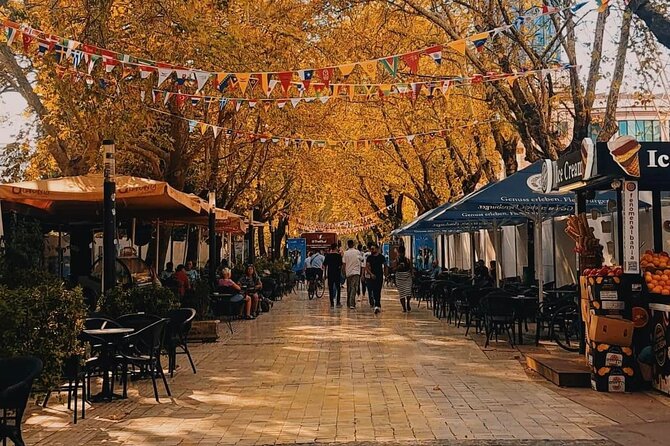
The next highlight is Blloku, described on this route as the area where the dictator’s villa is located. This is a powerful shift: you move from monumental government-linked landmarks to a neighborhood reputation connected with privilege and separation.
Even in a short stop, this area carries weight because it reframes who got access—who was seen, who was protected, and who wasn’t. The guide’s tone matters a lot here, and based on strong guide feedback, the best versions of this walk land the message without making it heavy-handed.
Also, the Blloku area is typically easier to connect to later on your own. If you want to keep exploring after the tour, this is one of the places that can turn into an extra walk.
Postbllok Checkpoint Monument: remembering control at street level
The Postbllok – Checkpoint Monument is another short stop, but it’s the kind of site that makes abstract history feel concrete. Checkpoints are a very specific form of power: they control movement, and they change everyday life.
On a walking tour, that matters because you’ll start noticing how a city organizes space to direct people. Even if you’re not there for long, you’ll leave with a better sense of why some streets feel like “they’re for something” beyond daily errands.
Resurrection of Christ Orthodox Cathedral: ending at a modern religious landmark
The tour finishes at the Resurrection of Christ Orthodox Cathedral, right near the city center. Ending here works well because it brings you to a present-day landmark after the heavier political stops. It’s like the tour’s emotional reset button: from communist-era references to a newer religious presence people can still experience now.
If you want a practical tip: plan to have time at the end for photos and a short wander afterward. Finishing near the center makes it easy to pivot into dinner or another museum without changing your whole day plan.
What the English guide really adds (beyond facts)
This tour’s main product isn’t the list of sites. It’s the guide’s ability to connect the dots while you’re walking. The strongest feedback highlights guides who are funny, story-driven, and able to answer questions without making you feel rushed.
You might hear names like Arber, Eri, Clint, Kedri, K (spelled in different ways across guides), Rie, Aurora, or Buli. The consistent thread is storytelling style—how guides bring Albania’s past to life with clarity and sometimes humor.
You’ll also benefit from the interactive format. Several people highlight having time for questions and photos. That’s a big deal: in a 2+ hour walk, the best guides manage the schedule while still letting you steer the conversation for what you personally care about.
And if you’re traveling in summer heat, pay attention to this detail: some guides actively manage shade during stops. That means you’re not just standing in sun waiting for the next briefing.
Price and value: why $18.14 can feel fair
The price is $18.14 per person for a roughly 2 hours 15 minutes walk, booked on average about 10 days in advance. All the listed admissions are free at the stops you visit, so your money mainly pays for the guide and the structure of the tour.
For a guided orientation through major city landmarks, that’s a strong value. You’re not paying museum entry fees on top, and you’re getting enough context to decide what deserves your attention later. Many of the best reviews mention that this walk helps them choose what to spend more time on independently—basically, you’re buying smart direction.
Also, because the group is capped at 15 travelers, it doesn’t feel like an endless conga line. A smaller group means more chance to ask questions and actually hear answers.
Who should book this Tirana walking tour
This is a great fit if:
- You want a first overview of Tirana with a clear historical thread
- You like guides who use stories and humor, not just dates
- You’re short on time and want the highlights without a full-day museum plan
- You’d rather walk an easy route (most stops are brief) than spend your vacation stuck indoors
It may be less ideal if you’re hoping for a detailed, slow, museum-heavy experience. The stops are designed as quick, meaningful samplers, not long sittings.
If you’re traveling with kids, note that children must be accompanied by an adult. Service animals are allowed, and the walk operates in all weather conditions—so plan clothing accordingly.
Should you book this Tirana walking tour?
I’d book it if you want the best use of your first day in Tirana: quick landmark coverage, strong context, and a guide who helps you understand what you’re seeing. The price is reasonable for what you get—especially since the listed stops don’t require admission fees.
I would hesitate only if timing is your weak spot. This walk starts on Sheshi Skënderbej and is on a schedule. If you’re not confident about meeting-point navigation or you’re arriving late due to travel uncertainty, give yourself extra buffer time so you don’t end up missing the start.
If you can show up on time and you’re ready to walk and listen for a couple of hours, this tour is one of the most efficient ways to get oriented and build real interest in what comes next.
FAQ
How long is the Walking Tour of Tirana?
It runs for about 2 hours 15 minutes.
Is the tour offered in English?
Yes, the tour is offered in English.
Where does the tour start and end?
You start at the National Theatre of Opera, Ballet and Folk Ensemble on Sheshi Skënderbej. It ends at the Resurrection of Christ Orthodox Cathedral, near the city center.
What’s included in the price?
The price includes an English-speaking licensed guide and an interactive experience. Admission tickets at the listed stops are free, while gratuities are not included.
Does the tour run in all weather?
It operates in all weather conditions, and you should dress appropriately.
Can I cancel for a full refund?
Yes. You can cancel up to 24 hours in advance for a full refund.
More Tirana Tours and Albanian Day Trips
More from Our Tirana Review Desk

More Ways to Walk Tirana on Foot



Not quite it? More Tirana tours and Albanian day trips fresh off our review desk







Tirana City Walking Tours, compared.
 ★ 5.0Local food experience & walking tour of TiranaFrom $60192 reviews
 ★ 5.0Tour a Piedi di TiranaFrom $20174 reviews
 ★ 5.0Best of Local Food & City Tour of Tirana – Food & Drinks IncludedFrom $72160 reviews
 ★ 5.0Berat Walking TourFrom $1886 reviews
 ★ 5.0Tirana Hidden Treasures Sightseeing TourFrom $1660 reviews
 ★ 4.5City Tour of Tirana & Dajti Mountain with PickupFrom $6059 reviews
 ★ 5.0Tirana Walking Tour: History, Culture &Gems by a Passionate GuideFrom $3652 reviews
 ★ 5.0Premium Walking Tour of Berat with Expert GuidesFrom $2043 reviews
Browse the lists this tour appears in