
Reviewed · BEST OF ALBANIA MULTI-DAY TOURS
The truest face of Communism
Communism hits differently when it’s built into the streets. This tour is a practical, fast-paced way to see Tirana’s main political landmarks and then get a gut-level look at Bunk’Art 1 underground. I love the small-group, private feel that keeps the day personal, and I love how the guides (often people like Leo, Dio, Aldo, Eni, Mimi, and DC) turn the big monuments into clear, human stories. The main catch: it can end up being a lot of walking, sometimes close to five miles, even with air-conditioned transport offered.
You’ll start at the civic heart of Tirana and move through layers of the communist era: propaganda architecture, isolation and militarized fear, and the everyday contrast of the party elite’s world. Expect a mix of free-and-included stops, lots of photo angles, and that signature Albanian hospitality moment with coffee and rakija.
In This Review
- Key Things That Make This Tour Worth Your Morning
- The Truest Face of Communism in One Guided Day
- Skanderbeg Square: Where Tirana Puts Its Resume on Display
- Enver Hoxha Pyramid: Propaganda That Refuses to Leave
- Postbllok Checkpoint Monument: Isolation as a Physical Place
- Blloku: The Elite Neighborhood, Then and Now
- Bunk’Art 1: The Underground Shelter That Makes You Quiet
- Guides, Small Groups, and the Pace Reality Check
- Price and Value: What You’re Really Paying For
- When the Weather Helps (and When You Should Plan a Backup)
- Should You Book This Tour?
- FAQ
- How long does the Tirana communist landmarks tour last?
- What time does the tour start?
- Where do we meet?
- Is hotel pickup included?
- Is this a private tour?
- What’s included in the tour price?
- Is lunch included?
- Is the tour offered in English?
- What if the weather is poor or I need to cancel?
Key Things That Make This Tour Worth Your Morning
- A political best-of route in just half a day: major squares, memorials, and museums without wasting time
- Bunk’Art 1’s underground bunker layout: corridors, rooms, and a nuclear-era concept made real
- Coffee and rakija included: classic Tirana breaks built into the schedule
- A private tour for your group: easier questions, calmer pacing, more conversation
- Stops built around the Hoxha era: pyramid, elite neighborhood Blloku, and isolation-themed memorials
- Guides who stick with you: strong English and personal context that makes the sights click
The Truest Face of Communism in One Guided Day
Tirana is a city where ideology is written in concrete. One stop shows you how power wanted to look. The next shows you how power wanted to control people. Then you go underground and see what the regime thought the outside world might bring.
What makes this tour work well for you is the balance. You’re not stuck only on grand monuments. You also get into the mindset of isolation—bunkers, checkpoints, and propaganda architecture that still shapes how people read the city today. And because it’s a private group format, you can ask the practical questions that usually get skipped on larger city tours.
The other big reason I’d book it: the day includes small comfort breaks. You get coffee and/or tea, and you also get rakija (alcoholic beverage) during the Blloku area stop. That’s not just a nice extra. It’s a reminder that modern Tirana still lives around these historic power centers.
More multi-day Albania tours, north to south, we have travelled from Tirana

Skanderbeg Square: Where Tirana Puts Its Resume on Display
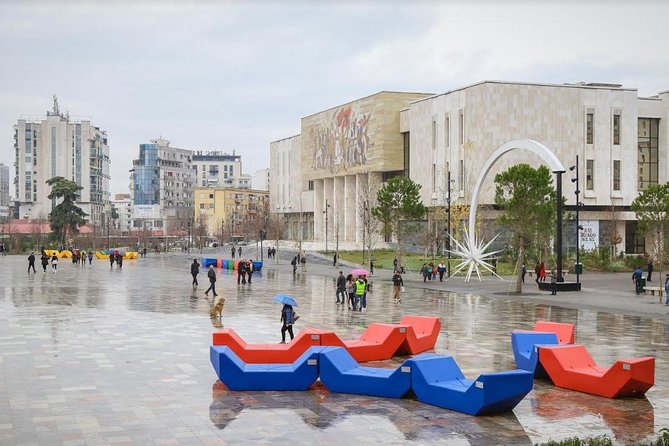
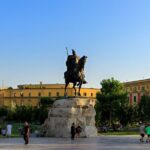
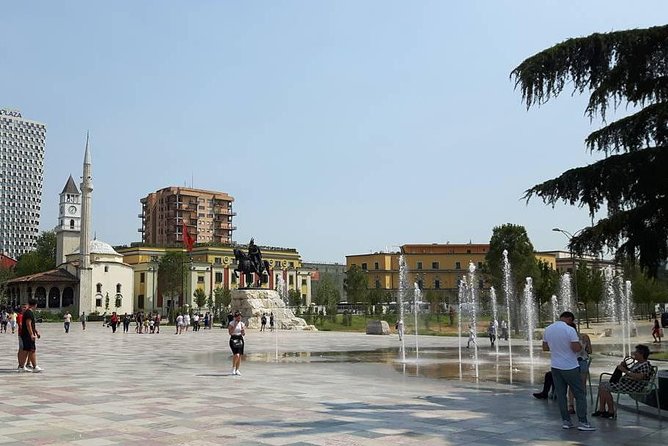
You begin at the civic center, Skanderbeg Square, a place that helps you understand how the city describes itself—layers of culture, institutions, and big symbolic buildings around one hub.
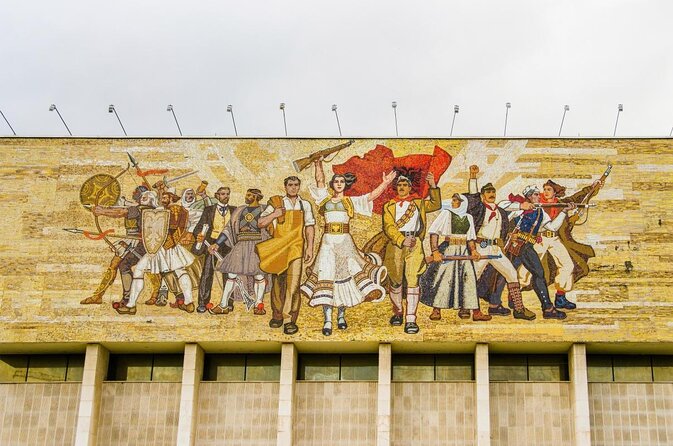
Here, you’ll see the Et’hem Bey Mosque and the clock tower, and you’ll also look over major cultural and financial landmarks like the National Theatre of Opera and Ballet and the National Bank of Albania. The stop also brings in the iconic hotel scene—famous for their presence in Tirana’s urban identity—so you can get your bearings fast before you start tracing the communist imprint.
Why this start matters: it gives you context for everything that follows. When you later see communist-era structures like the pyramid or the bunker museums, you’ll better understand how they sit next to older civic layers. It’s easier to read the city when you first understand what Tirana chose to highlight as its public face.
Enver Hoxha Pyramid: Propaganda That Refuses to Leave
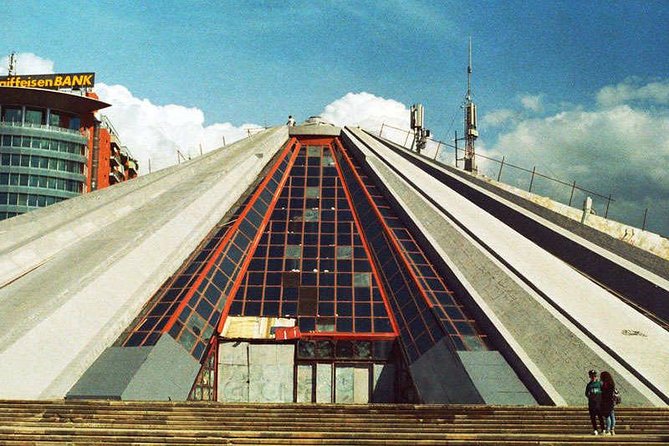
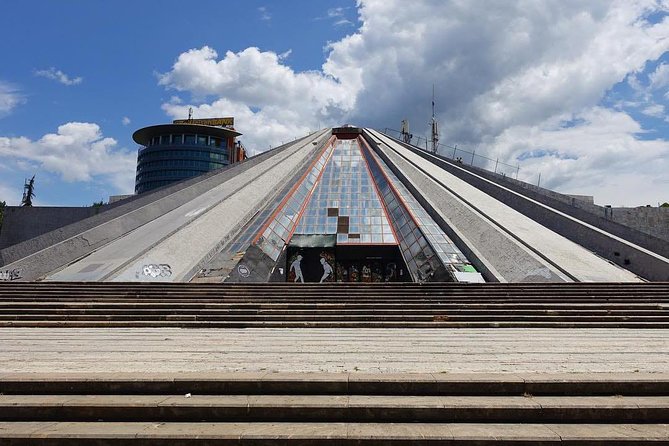
Then you move to one of Tirana’s most talked-about structures: the Enver Hoxha Pyramid. On the main boulevard, it functions like a visual symbol of a regime that insisted on turning its leader into a permanent centerpiece.
This building began as a museum connected to Enver Hoxha, the leader of the Communist Party and First Secretary of the Party of Labor from the mid-1940s until the mid-1980s. It later shifted into a mausoleum-era presence, and it was co-designed by Hoxha’s daughter. After communism fell in Albania, the site didn’t vanish. It became a cultural center and also served as a base for media offices, yet it still stands as a heavy reminder of the communist system’s obsession with authority.
The value of this stop is not just photos. It’s the conversation around why this kind of architecture was built, and why it’s still difficult to move on from it. Even if you’re more of a curious traveler than a politics buff, the pyramid gives you a concrete object to anchor what you’re hearing.
A practical tip: this is a short stop, so if there’s a specific angle you want—upper views, full façade shots, or a good street-level perspective—decide quickly and take a few steady photos early.
Postbllok Checkpoint Monument: Isolation as a Physical Place
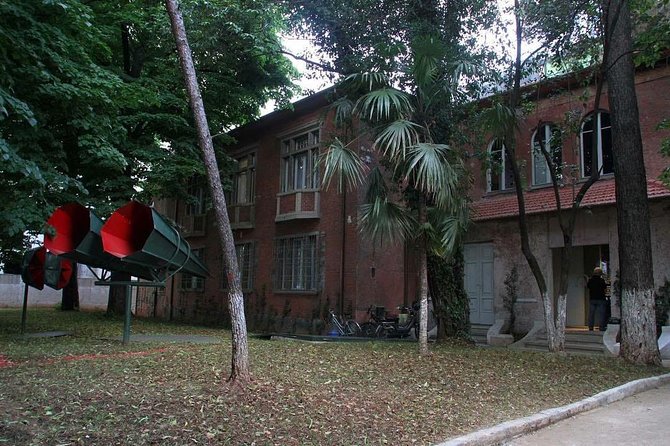
Next comes Postbllok – Checkpoint Monument, and it’s one of those stops that makes you slow down without meaning to. The concept is simple but powerful: this memorial is about the communist state’s isolation—what it tried to build between ordinary people and the outside world.
The monument combines several elements:
- a concrete defensive bunker concept (linked to how thousands of bunkers were built for families during the regime)
- materials tied to the Spaç labor camp experience, including supports from the notorious mine there
- a brightly painted section referencing the Berlin Wall, meant to show the split between East and West
Why this works for you: it doesn’t treat history like a distant textbook. It ties ideology to places—bunkers, mines, walls—so you understand isolation as something engineered into daily life, not just a political slogan.
It’s also a reminder that Albania’s communist experience was its own story, not a copy-paste of what happened elsewhere in Europe. When your guide explains the connections, the memorial becomes a map of fear and control.
Blloku: The Elite Neighborhood, Then and Now
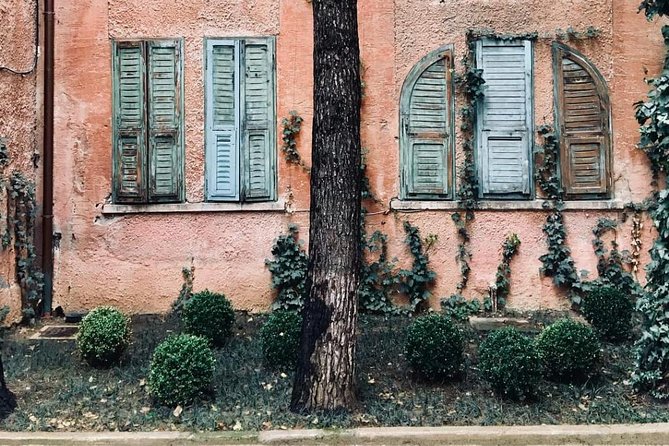
Now you get a contrast hit: Blloku, once a restricted neighborhood reserved for the political bureau and party leadership. The description of how even maps used to miss the area tells you a lot about how controlled life was.
Today, Blloku is one of the most lively central parts of Tirana, with boutiques, coffee shops, cocktail bars, pubs, and plenty of street art. That’s the surprising part: the city moved on, but the past still presses in around the edges.
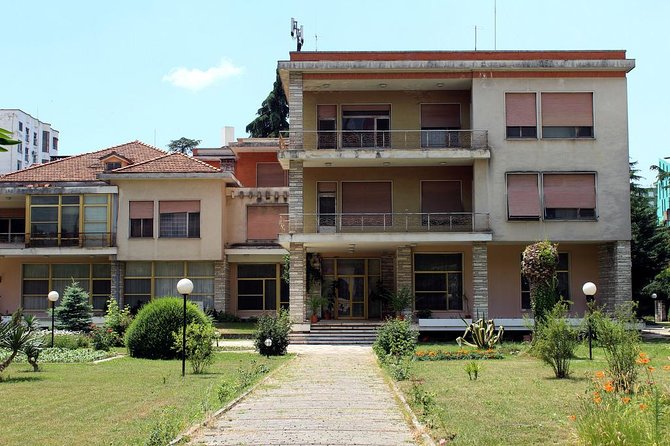
In the middle of the modern scene, you’ll also pass the former villa of Enver Hoxha. The outside view matters here because entry isn’t allowed. It stays untouched and unused, which makes it feel like a stubborn relic—the luxurious life of the dictator preserved in a way that sets up the biggest irony of all.
You also stop nearby for food and drinks tied to Albanian tradition. You’ll get traditional items and rakija, plus the kind of coffee-and-conversation break that makes the rest of the day easier to handle.
Important practical note: since lunch isn’t listed as included, think of this as a cultural food stop rather than a full meal guarantee. You’ll still want to plan a real lunch option either before or after, depending on your day.
More Tirana communist-era history tours through the bunkers and old files

Bunk’Art 1: The Underground Shelter That Makes You Quiet
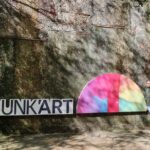
If you want one stop that changes how you think about the communist era, it’s Bunk’Art 1.
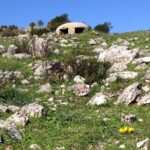
This museum is housed in a vast underground complex—rooms, corridors, and container-like spaces over multiple floors. It spans almost 3,000 square meters, and it was designed as a survival bunker concept meant to handle attacks from the outside world that never came the way the regime expected.
Key details that help you understand why this place hits:
- it was built in the 1970s and stayed secret for much of its existence
- the design aimed to survive nuclear attacks, using double concrete walls
- the space was intended for more than 100 people
- today, those exact underground rooms are repurposed as museum spaces with fragments and material connected to communist-era life and the state’s paranoia
The most valuable part of the visit is how the layout forces you to experience history physically. The labyrinth-style underground gives you a sense of how confined the regime’s mindset was—how it planned for catastrophe, guarded against imagined threats, and treated people as units that needed protection from fear rather than empowerment.
And it’s also a great place to appreciate why a guide matters. Labels are fine, but when your guide explains what you’re seeing—how the rooms relate to shelter logic—it becomes way more than a walk-through.
If you’re sensitive to tight spaces or you don’t love underground environments, this still can be manageable, but I’d pace yourself. Take a moment on the stairs and rest when you can.
Guides, Small Groups, and the Pace Reality Check
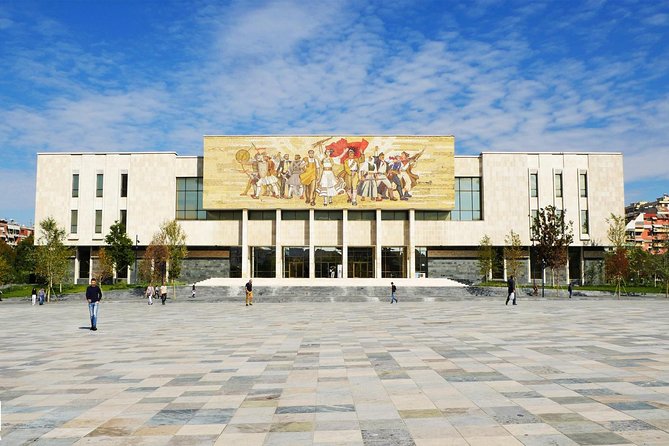
One of the most praised parts of this experience is the human side: guides who handle questions well and keep the day moving without turning it into a lecture. You’ll hear strong English explanations, and you may get personal touches from the guide’s own family context—exactly the kind of detail that makes communist history stop feeling abstract.
The format is also built around small-group energy and a private tour for your group. That typically means you can ask questions at the right moment instead of waiting your turn. It also makes the day more comfortable for travelers who want more than a checklist of stops.
The reality check is pacing. Some people find the day more walking than expected, sometimes approaching nearly five miles. Air-conditioned vehicle is listed as included, but the schedule can still be a mostly-on-foot experience. That doesn’t ruin the tour—it just means you should dress and plan like you’re walking a lot.
My advice:
- wear comfortable shoes you trust
- bring water
- don’t schedule something demanding right after, because your legs will remember this day
Price and Value: What You’re Really Paying For
At about $90.11 per person, this tour isn’t the cheapest way to see Tirana. But it’s priced like a guided, ticketed, drinks-included political walk with hotel pickup and a private-group setup.
Here’s what drives the value:
- Multiple major sights across the city instead of one neighborhood focus
- Museum time at Bunk’Art 1 with an included admission ticket
- Free admission at several key memorial/monument stops
- Included coffee/tea plus alcoholic beverages (rakija)
- Hotel pickup that saves time and stress, especially if you’re only in Tirana for a short stretch
The one thing to budget for is food beyond the included cultural food stop. Lunch is not included, so plan either an earlier meal before the tour or a later meal after the Blloku area break.
If you care about context and explanation—especially around Albania’s communist period—this feels like the kind of tour that pays you back in understanding. If you just want quick photos with minimal talking, you might feel the day is more than you need. But if you like history that has texture, this is a strong fit.
When the Weather Helps (and When You Should Plan a Backup)
The tour requires good weather. That’s not unusual for city walking days, but it matters here because several stops are outdoors or depend on comfortable walking. If the weather turns, you should expect a schedule change or a refund option as offered by the operator.
So, if you’re choosing dates, I’d pick the driest day you can. And if you’re going in shoulder season, layer up—your comfort can make a big difference when you’re moving between sun and shade around central Tirana.
Should You Book This Tour?
I’d book this tour if you want a guided, fact-based way to understand how Albania’s communist era shaped Tirana’s streets—at the level of monuments and the level of fear. The standout value is Bunk’Art 1 plus the way your guide connects the dots between the pyramid, the memorial language of Postbllok, and the elite-world contrast of Blloku.
I’d think twice if you hate walking or you want a mostly seated day. Even with vehicle included, the walking pace can be real.
For most people coming to Tirana, though, this is one of the most efficient ways to get beyond surface sightseeing and actually read what the city is still saying about its past.
FAQ
How long does the Tirana communist landmarks tour last?
It runs about 4 to 5 hours.
What time does the tour start?
The start time is 9:00 am.
Where do we meet?
You meet at Skanderbeg Square (Sheshi Skënderbej, Tiranë, Albania).
Is hotel pickup included?
Yes. Pickup is included, and you can be picked up from your chosen place of staying in Tirana.
Is this a private tour?
Yes. It’s private for your group only.
What’s included in the tour price?
The tour includes an air-conditioned vehicle, all fees and taxes, coffee and/or tea, alcoholic beverages (rakija), and hotel pickup. Admission tickets are included where specified on the route.
Is lunch included?
No, lunch is not included.
Is the tour offered in English?
Yes, it’s offered in English, and you receive a mobile ticket.
What if the weather is poor or I need to cancel?
The tour requires good weather. If it’s canceled due to poor weather, you’ll be offered a different date or a full refund. There is free cancellation up to 24 hours before the start time for a full refund.
More from Our Tirana Review Desk
More Tirana Communist-Era History Tours
More Multi-Day Albania Tours, North to South
Not quite it? More Tirana tours and Albanian day trips fresh off our review desk





Best of Albania Multi-Day Tours, compared.
 ★ 5.0Bike or E-Bike Tour Tirana: Highlights & Grand Park Guided CycleFrom $42124 reviews
 ★ 5.0Private 4 Day Tour of Albania from North to the SouthFrom $83836 reviews
 ★ 5.0Private Kosovo Tour from Tirana: Prishtina & Prizren HighlightsFrom $15431 reviews
 ★ 5.0Small Group Tour; Pearls of Albania in 8 Days (3 UNESCO Sites)From $2,27829 reviews
 ★ 5.0Discover the Best of Albania: 7 Days of Highlights & Hidden GemsFrom $20425 reviews
 ★ 5.0Small Group Tour; Gems of Albania, Kosovo & N. MacedoniaFrom $2,36123 reviews
 ★ 5.0Best Places To Visit in Albania Tour in 5 daysFrom $66215 reviews
 ★ 5.0Albanian Highlights – UNESCO sites ,Nature and Food tourFrom $97313 reviews
Browse the lists this tour appears in