
Reviewed · KRUJA CASTLE & OLD BAZAAR
Tirana and Kruja Full Day Tour
Tirana in one day can feel like a sprint, but this tour has a smart pace. You get the best mix of Ottoman-era sights in the capital and Kruja’s Skanderbeg landmarks without needing to coordinate anything yourself. Two things I really like: the hotel pickup/drop-off that keeps your morning stress low, and the fact that entrance fees are included, so you can spend more time looking and less time calculating.
The only real drawback to plan for is time pressure. It’s a 6 to 8 hour day, so if you want long museum wandering or extra shopping stops, you may feel slightly rushed during the fixed viewing windows.
In This Review
- Key takeaways before you go
- Tirana meets Kruja: what kind of day is this really?
- Getting picked up and getting it together (without thinking too hard)
- Clock Tower and Ottoman-era details in Tirana’s center
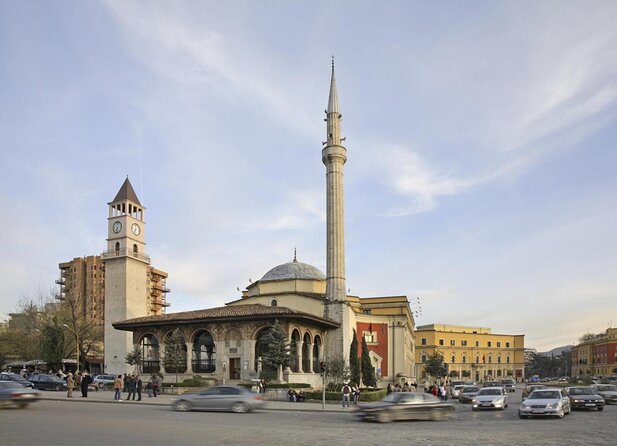
- Ethem Bey Mosque: a classic landmark with an old-city context
- Skanderbeg Square: Tirana’s main plaza and the planning behind it
- The Enver Hoxha Pyramid: a communist-era monument with a complicated name
- Kruja Castle and the Skanderbeg Museum: where the day turns scenic
- Ethnographic Museum of Kruja: customs you can actually picture
- Pazari i Vjeter: the old bazaar that still does its job
- Optional Albanian lunch: how to fit food into a timed day
- Transport, group size, and why the day feels efficient
- Price and value: what you’re really paying for at $96.12
- Who should book this tour (and who might not)
- Guides that make the difference: what to expect from the day’s explanations
- Should you book the Tirana and Kruja Full Day Tour?
- FAQ
- How long is the Tirana and Kruja full day tour?
- Is hotel pickup and drop-off included?
- Does the tour include entrance fees?
- Are meals included?
- What language is the tour offered in?
- How big is the group?
- Where does the tour take you?
- Is the tour suitable for children?
- Is there free cancellation?
Key takeaways before you go
- Max group size of 12 means you usually get easier questions and less waiting around.
- Entry fees included across the museum stops in Kruja keeps the day simple and good value.
- Two cities, one flow: Tirana history first, then Kruja Castle area before you lose daylight.
- A/C transport + pickup makes the drive part painless (and predictable).
- Spotlighting Skanderbeg + Enver Hoxha gives you two very different lenses on Albanian identity.
Tirana meets Kruja: what kind of day is this really?
This tour is built for travelers who want a lot of Albania in one day, but still want it to feel guided, not chaotic. You start in central Tirana, walk through key landmarks, then transfer up to Kruja for the Castle Hill area and its museums.
The value is in the structure. You’re not hopping between bus schedules. You’re not buying separate tickets for every stop. And you’re not stuck figuring out where to stand for the best views. Instead, you get a driver/guide, a compact group, and a day that tries to hit the core places most people come for.
Also, the pacing is practical. The tour includes short stops in Tirana and longer museum time in Kruja. That’s a good trade if you want both city context and a deeper sense of place once you’re on Kruja’s hill.
More Kruja castle and old-bazaar trips we have wandered from Tirana
Getting picked up and getting it together (without thinking too hard)
The day runs on round-trip hotel pickup and drop-off, using an air-conditioned vehicle. That matters more than it sounds. Tirana traffic can be unpredictable, and timing your own rides can turn a “simple day trip” into a small scheduling headache.
With a maximum of 12 travelers, you’re likely to get more direct attention from the guide and fewer awkward moments of the group waiting while someone catches up. If you’re the type who likes asking questions, this setup tends to work well.
The tour is offered in English and includes a driver/guide. From the guide names that have shown up in people’s experiences—like Ilir, Iris, and Ed—it’s clear the emphasis is on explaining what you’re looking at, not just pointing at buildings. You’ll get historical context, and you’ll also get practical pointers for how to move through each stop efficiently.
Clock Tower and Ottoman-era details in Tirana’s center
Tirana’s historical core has layers, and the clock tower is one of the best examples. This isn’t just a landmark for photos. It’s a story of craftsmanship, damage, and rebuilding.
You’ll learn that the clock tower’s design is tied to Ottoman influences, including an unusual detail: the bell was described as coming from Venice and ringing every hour. Then the story shifts to early modern history—during World War I, the clock was damaged, and it took until 1928 to install a new mechanism.
What makes this stop memorable is the funding and engineering angle. The new mechanism was purchased in Germany and paid for by the city’s wealthiest families plus the Tirana Municipality. Watchmakers such as Ismail Tufina (noted as the first watchmaker in 1822) and later Arif Tufina and his sons are tied to the tower’s restoration. Even the structure had to change: because the new mechanism was bigger than the original tower, an extra 5 meters and a new roof were added.
Practical note: this stop is short enough to keep you moving, but it’s long enough to absorb the why behind the architecture. If you enjoy learning how places got made—and repaired—you’ll be glad this isn’t just a quick exterior photo.
Ethem Bey Mosque: a classic landmark with an old-city context
Right next to the center action, you’ll also see the Ethem Bey Mosque area. The mosque’s construction is described in two phases: work started around 1791 or 1794 under Molla Bey, and it was finished around 1819 or 1821 by his son Haxhi Ethem Bey (connected to the wider Sulejman Pasha family line).
The bigger idea here isn’t just the mosque itself. You’ll get a sense of how the historical center was organized as a complex. The mosque sat within a broader set of buildings, with the old Bazaar in front, and other religious landmarks nearby. The Sulejman Pasha Mosque is mentioned as being built in 1614 and later destroyed during World War II, along with the Karapici mosque in the northwest.
In other words: you’re seeing a place that used to function as a network, not a single isolated attraction. That makes your walk through Tirana feel more like reading a map than ticking a box.
Skanderbeg Square: Tirana’s main plaza and the planning behind it
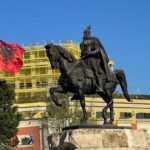
Skanderbeg Square is the heart of Tirana, and the tour hits it for a reason. The plaza—about 40,000 square meters—is named after national hero Gjergj Kastrioti Skënderbeu, and it’s dominated by the Skanderbeg Monument.
You also get something many quick city tours skip: the planning story. Tirana’s city layout is described as initially designed in 1925 by Armando Brasini, then continued in a Neo-Renaissance direction by Florestano Di Fausto. After the Italian invasion, the master plan was updated again in 1939 by Gherardo Bosio.
From a traveler’s viewpoint, this matters because it explains why the square feels so intentional and why so many major buildings cluster around it. The tour points out key landmarks near the square, including the Ethem Bey Mosque and a set of civic and cultural buildings that help you read the city’s role as the capital.
This stop is also timed well—about 30 minutes with free admission—so you’re not trapped there. You leave with a stronger mental map for the rest of Tirana and for your walkbacks later.
A few more Tirana tours and Albanian day trips worth a look

The Enver Hoxha Pyramid: a communist-era monument with a complicated name
Then you shift to a completely different tone: the Enver Hoxha Pyramid. The structure opened in 1988, originally as the Enver Hoxha Museum, focusing on the legacy of the long-time communist leader Enver Hoxha.
You’ll hear that it was co-designed with input from Hoxha’s daughter Pranvera Hoxha (an architect) and her husband Klement Kolaneci, along with other designers listed as Pirro Vaso and Vladimir Bregu. The tour also notes the cost and ambition, described as the most expensive individual structure ever constructed in Albania at the time.
This stop also comes with the kind of cultural detail that helps you understand how people talk about the past. It’s been sarcastically labeled at times as a “mausoleum,” even though that wasn’t its official purpose.
If you’re expecting a museum visit with lots of interior time, keep your expectations aligned with the schedule. This is more about seeing the monument and understanding what it represented.
Kruja Castle and the Skanderbeg Museum: where the day turns scenic
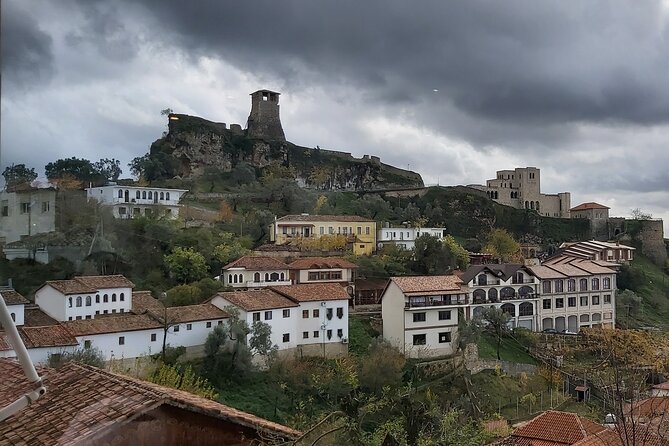
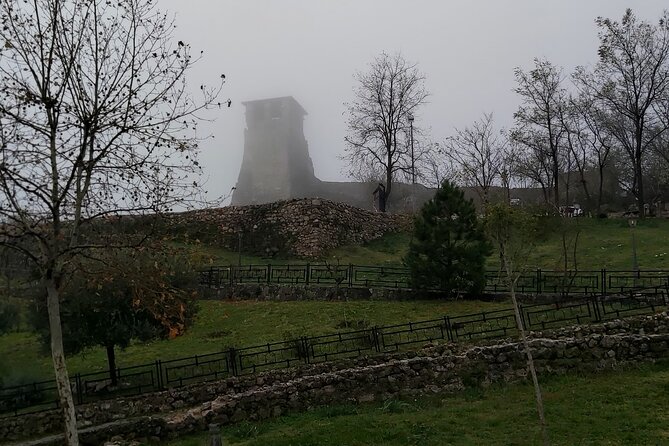
After Tirana, the mood changes as you head toward Kruja. Kruja’s big advantage is that it stacks history and views in the same place. You’re not only walking through exhibits; you’re also moving through a historic citadel setting.
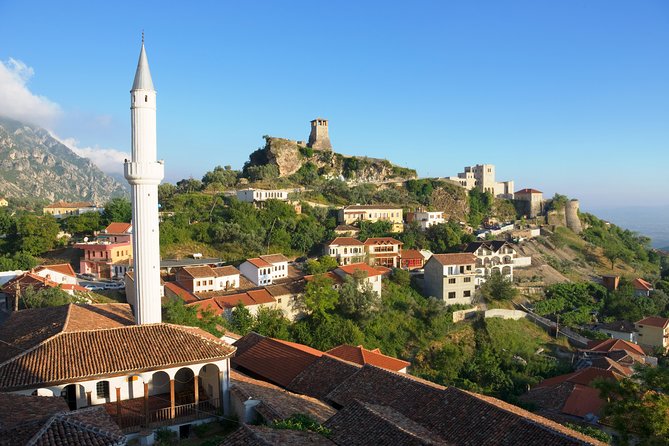
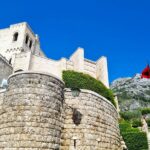
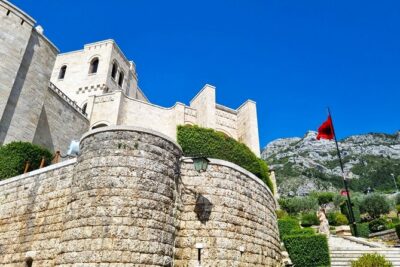
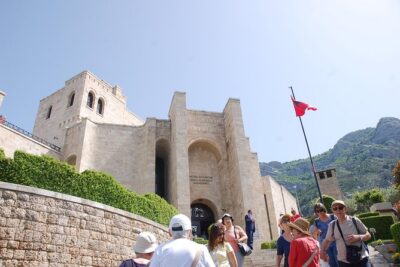
The tour’s main museum stop is Museumi Gjergj Kastrioti (Skenderbeu), also known as the National Museum “George Castriot Skanderbeg.” It’s inside Krujë Castle, which is described as a historic fortress that Ottoman troops attacked three times—1450, 1466, and 1467—and failed to capture.
The museum itself was built in the late 1970s and inaugurated on November 1, 1982. Architect Pirro Vaso and Pranvera Hoxha are again named, with construction led by a local team managed by Robert Kote. The architecture is described as memorial-like, inspired by traditional Albanian stone towers and medieval Romanesque influences.
It’s timed at about 1 hour, with admission included. That length is a good compromise. You’ll get enough time to grasp the story and see the key displays without burning your whole day in a single building.
Practical tip: if you like taking photos, do it during pauses in the guided flow, not during the densest explanation moments. The guide’s job is to keep you oriented, and the museum is the kind of place where looking first, then reading, works best.
Ethnographic Museum of Kruja: customs you can actually picture
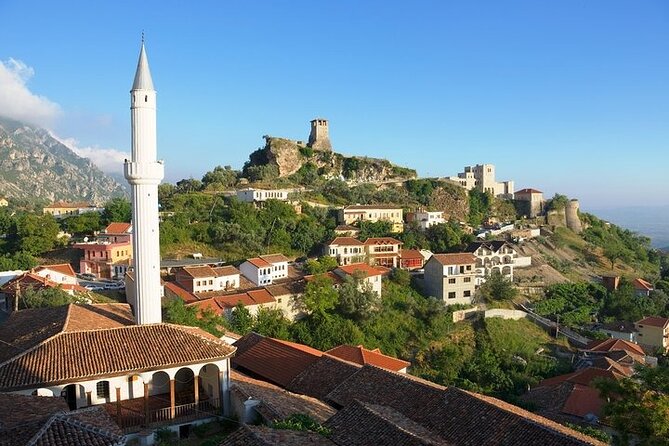
Right after the Skanderbeg focus, the tour adds Ethnographic Museum of Kruja, a 40-minute stop with admission included.
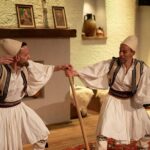
This museum is described as tracing Albanian customs and traditions across centuries. The key difference from many history-heavy stops is that it aims to help you understand how people lived, not only what battles were fought.
The value here is tone. When your day starts in political monuments and ends with national hero symbolism, ethnographic material helps restore balance. You get a more human scale: daily life, traditions, and cultural continuity.
Also, because you’ll be with a guide, the museum experience isn’t just reading labels. It’s more like getting a guided explanation that helps you recognize what the objects and themes represent.
Pazari i Vjeter: the old bazaar that still does its job
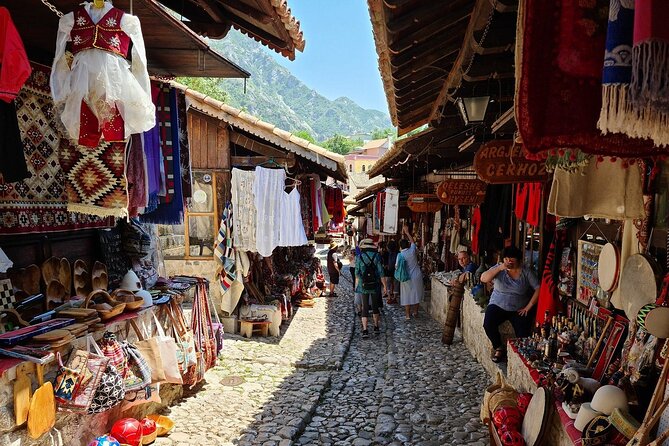
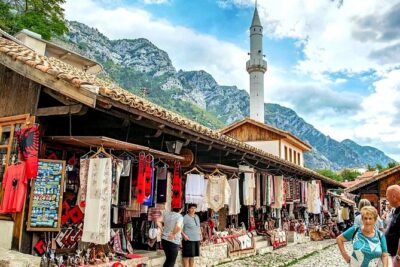
Next comes Pazari i Vjeter, Kruja’s old bazaar. This is one of those stops where the time feels well-used because it’s both historical and functional.
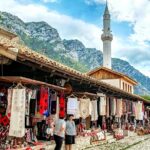
The bazaar is described as one of the oldest in Albania, with construction dating back over 400 years. It was a starting point for free trade among established merchants, and it’s located on the main road leading to the Castle of Kruja.
What’s useful for you as a traveler: the bazaar is presented as part of museum and part of traditional commercial space. That means it’s not only about viewing. It’s also about experiencing the atmosphere of a market that still works in the same general area.
You’ll have about 40 minutes, with free admission. That’s enough time to browse, pick up small souvenirs, and get a break before the day fully winds down.
If you’re shopping, go in ready to slow down. Bazaar items can be smaller and more varied than modern tourist shops. Take a minute to compare prices and quality, and don’t rush the moment you see something you like.
Optional Albanian lunch: how to fit food into a timed day
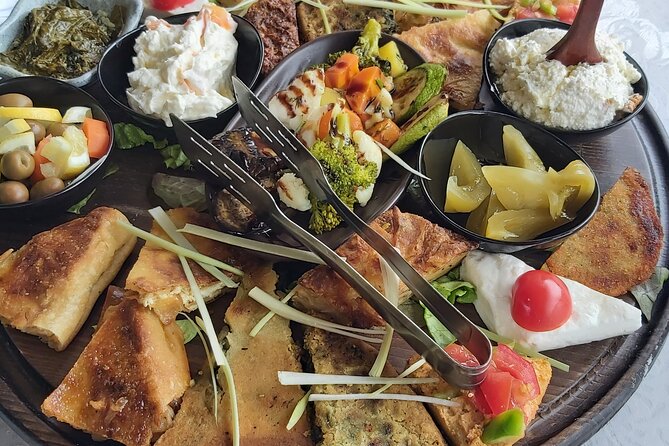
Meals and drinks are not included in the standard price, but the tour offers an optional traditional Albanian lunch at a local restaurant.
In a day with multiple timed stops, the lunch decision is about pacing. If you choose lunch, treat it as your moment to reset. You’ll likely benefit from eating earlier rather than later, especially if you want energy for the Kruja area and for any last bazaar browsing.
If you skip lunch, plan on buying something simple nearby when you’re in Kruja. The bazaar area tends to be the easiest place to do that without losing too much time.
Either way, water is your friend. A 6 to 8 hour day with walking on uneven ground is not the time to forget hydration.
Transport, group size, and why the day feels efficient
This tour doesn’t just promise a route. It also controls the friction. You get an a/c vehicle, an English-speaking guide, and hotel pickup/drop-off. The maximum of 12 travelers helps keep the group from turning into a slow-moving conga line.
The tour also includes city tour of Tirane and Kruje, and that word city matters. It means you’re not only in monuments. You’re also getting city orientation through guided context, which makes Tirana and Kruja feel easier to understand on the ground.
There’s also a clear “done for you” element: all entrance fees included where applicable, plus a mobile ticket. Less admin, more looking.
Price and value: what you’re really paying for at $96.12
At $96.12 per person, this tour is priced like a full-day deal, and the inclusions are where it earns its keep.
You’re paying for:
- Round-trip transport from Tirana in an a/c vehicle
- Hotel pickup and drop-off
- A driver/guide
- Entrance fees included at the Kruja museum stops (and the tour handles ticketing for you)
If you were to replicate this on your own, you’d spend time coordinating rides between cities, and you’d likely pay for multiple admissions and guide time separately. Here, the structure is bundled.
So the value isn’t just the number. It’s the time saved and the uncertainty removed. For a visitor with limited days in Albania, saving half a day of planning can be worth more than a few dollars.
One more pricing note: this tour is typically booked about 55 days in advance on average, which suggests it’s a popular way to see both destinations. If you’re traveling in peak season, booking earlier can help you lock in your dates.
Who should book this tour (and who might not)
This is a great fit for you if you:
- Want Tirana and Kruja in one day without logistics headaches
- Like history that connects monuments to real stories (clockwork repairs, mosque construction dates, the meaning behind political architecture)
- Prefer a guided pace with enough time to see museums and still walk the bazaar
You might want to skip or adjust if you:
- Love slow museum time and long lunch sits
- Want total freedom to linger beyond set time windows
- Are traveling with very small kids who need frequent breaks (the tour requires children to be accompanied by an adult, and the schedule is still full)
Guides that make the difference: what to expect from the day’s explanations
A big theme in people’s experience is the guide quality and how well the day runs. Names that have stood out include Ilir, Iris (paired with Illya as the driver in one account), and Abdul (as a driver) with Ed (as the guide) in another.
What that usually means in real life is: your tour won’t feel like a script. You’ll get answers to questions, and the pacing will be adjusted when the weather or crowd flow gets weird. One practical sign of a good guide is that they keep the day moving without making you feel herded.
Should you book the Tirana and Kruja Full Day Tour?
If you want a well-organized day that hits major Tirana landmarks and gives you real time in Kruja’s Castle area, I’d book it. The combination of pickup, entry fees included, and a small max group size makes it a clean value for a 1-day itinerary.
My main caution is simple: don’t book this expecting to take your time like you would with a standalone museum day. It’s efficient by design. If you like structure and guidance, you’ll get exactly what you came for—Tirana’s stories, then Kruja’s sweeping historic hill setting, with the bazaar and museums to round it out.
If you’re short on time in Albania, this tour is one of the easiest ways to feel like you understood the country’s identity, not just its landmarks.
FAQ
How long is the Tirana and Kruja full day tour?
The tour runs about 6 to 8 hours.
Is hotel pickup and drop-off included?
Yes. Hotel pickup and drop-off are included.
Does the tour include entrance fees?
Yes. Entrance fees are included for the included attractions.
Are meals included?
Meals and drinks are not included. Lunch is optional.
What language is the tour offered in?
The tour is offered in English.
How big is the group?
The tour has a maximum of 12 travelers.
Where does the tour take you?
It covers Tirana and Kruja, including stops such as Skanderbeg Square, the Enver Hoxha Pyramid, the Skanderbeg Museum in Kruja, the Ethnographic Museum of Kruja, and Pazari i Vjeter.
Is the tour suitable for children?
Children must be accompanied by an adult, and most travelers can participate.
Is there free cancellation?
Yes. You can cancel for a full refund if you cancel up to 24 hours in advance.
More Tirana Tours and Albanian Day Trips

More from Our Tirana Review Desk

More Kruja Castle and Old-Bazaar Trips
Not quite it? More Tirana tours and Albanian day trips fresh off our review desk



Kruja Castle & Old Bazaar, compared.
 ★ 5.0Kruja castle, the old Bazaar & Sarisalltik- Departure from TiranaFrom $24592 reviews
 ★ 5.0Hiking to Gamti, Bovilla Lake and Kruja Day Trip from TiranaFrom $43107 reviews
 ★ 5.0Private Bovilla Lake and Kruja City Day Tour from TiranaFrom $10534 reviews
 ★ 5.0Kruja & Durres; Semi – Private Day Tour from TiranaFrom $14933 reviews
 ★ 4.5Kruja, Old Bazaar, Museum,Sari Saltik tour from TiranaFrom $2433 reviews
 ★ 5.0Guided Tour to Kruja, Holy Mountain & Old Bazaar from DurresFrom $7029 reviews
 ★ 5.0Kruja & Durres | History and Local FoodFrom $18617 reviews
 ★ 5.0Day Tour of Kruja and Shkoder – Discover North Albania HeritageFrom $6216 reviews
Browse the lists this tour appears in