
Reviewed · GJIROKASTER, BUTRINT & THE RIVIERA
Tour of Komani, Valbona, Thethi, Blue Eye in three days
Three days, one long wow factor. This route strings together Komani Lake by ferry and Albania’s Albanian Alps highlights, from Valbona Valley trails to Theth’s Blue Eye.
I love the way the days mix big nature moments with small human stops, like the old Valbona mill by the river. I also love that the plan is guided end to end, so you’re not stuck figuring out transfers after a long hike.
One possible drawback: Day 2 is not a stroll. You’ll do the Valbona Pass trek with real elevation, so you’ll want solid walking shoes and a moderate fitness level.
In This Review
- Key things that make this Komani–Valbona–Theth trip work
- Komani Lake first: the ferry ride that sets the tone
- Valbona Valley: national park vibes plus actual daily life
- Mulliri i Vjeter: why the old mill is more than a photo stop
- Xhemes’ Lake (Xhema): rare altitude, unreal color
- Day 2’s big decision: Rragami Waterfall + the Valbona Pass
- Valbona Pass: the trek that connects it all
- Theth National Park: culture, waterfalls, and the Blue Eye payoff
- Tower of Nikoll Koceku: the story behind the stone
- Grunasi Waterfall: a 25-meter drop with a rainbow factor
- Blue Eye of Theth: what to expect from the most famous well in the area
- Boge and the ride back: small culture stop, then reset day
- Price and value: what $591.46 covers (and what it doesn’t)
- Who should book this Komani–Valbona–Theth–Blue Eye tour
- Should you book it?
- FAQ
- How long is the tour?
- What’s included in the price?
- Are meals like lunch and dinner included?
- Do I get hotel pickup and drop-off?
- Is the tour offered in English?
- What physical fitness level is needed?
- Do I need to buy tickets for each attraction?
- Is there a long hike?
- What happens if weather is poor?
Key things that make this Komani–Valbona–Theth trip work
- Komani Lake ferry through narrow gorges along the Drin River reservoir
- Valbona Pass gives you the full Albania Alps connection to Theth
- Real village texture at places like Mulliri i Vjeter and stops in Theth and Boge
- Blue Eye timing payoff: a well with changing blue/emerald colors by season
- Admissions handled for major stops, plus ferry and transfers included
- A professional guide who keeps logistics smooth and you feeling safe
Komani Lake first: the ferry ride that sets the tone
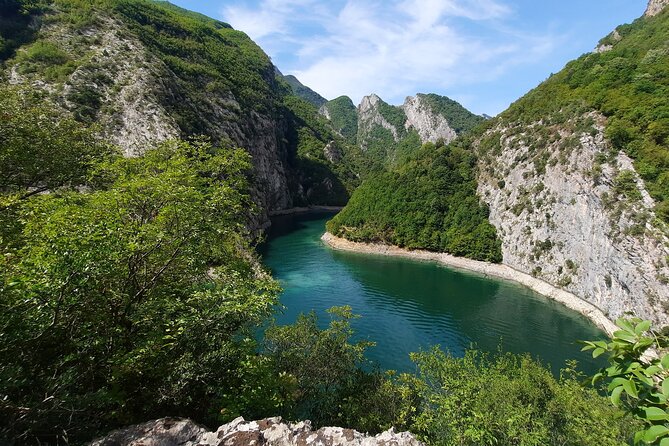
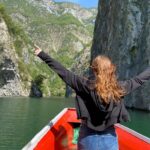
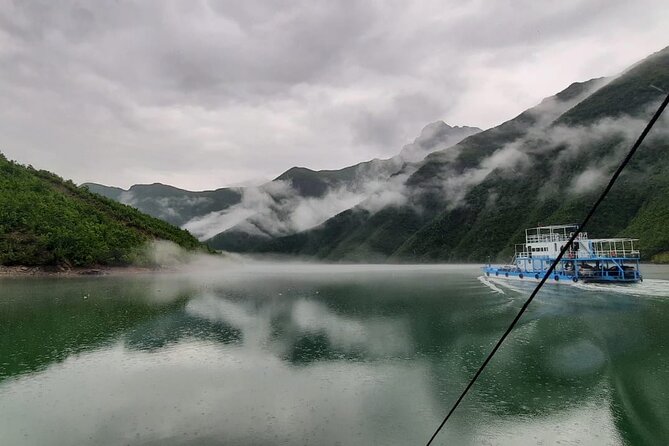
You start with the easiest kind of “wow” day: movement on water with steep, forested walls rising straight up. Komani Lake is a reservoir on the Drin River, formed from a big project built between 1979 and 1988 near the village of Koman. The result is a long, narrow stretch—about 34 km² in area—with a section where the gorge can be more than 50 meters wide. Translation: you get tight scenery, not flat postcard views.
On top of that, this area is a living ecosystem. The hills around Komani are home to predators and small wildlife, and birds show up too—common kingfisher, grey heron, and other species often associated with rivers and forest edges. You can treat the ferry as your “take it in” moment, not just a transfer.
Why this matters for value: many Albania itineraries waste time on complicated connections. Here, the ferry ticket from Komani Lake to Fierze Dam is built into the schedule. That keeps the trip feeling like a single flow instead of a chain of mini journeys.
Practical note: bring a layer. Even in good weather, lake air can cool you down, and the boat ride is a good time to wear something light but warm enough.
More Gjirokaster, Butrint and Riviera runs down south we have taken from Tirana
Valbona Valley: national park vibes plus actual daily life
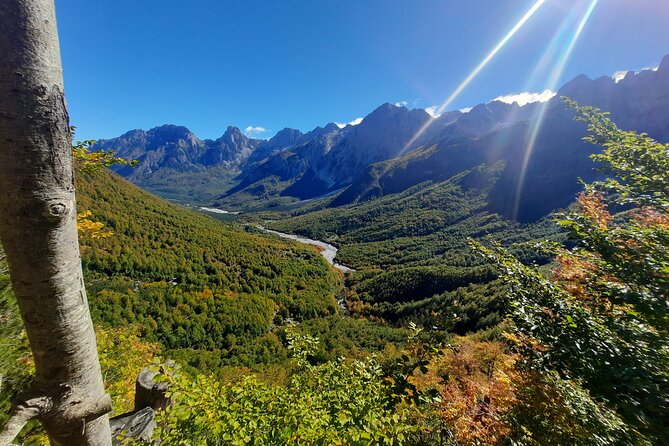
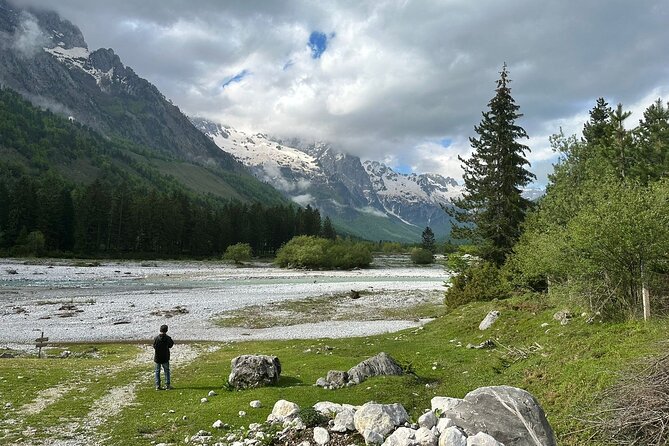
Once you reach Valbona, the tour slows down just enough to let the valley sink in. Valbona Valley National Park covers about 80 km², with the Valbona River and surrounding mountainous terrain. You’ll hear a lot of people talk about this region as part of the Albanian Alps, and it really does have that “remote but cared for” feel—glacial springs, deep depressions, waterfalls, and mixed forests (conifers and deciduous trees).
In 2022, Valbona and Theth were brought under a wider protection umbrella as part of the Alps of Albania National Park. That matters because it helps explain why you feel the emphasis on preserving ecosystems and the broader cultural setting, not just one famous viewpoint.
Mulliri i Vjeter: why the old mill is more than a photo stop
One of my favorite stops on this route is Mulliri I Vjeter—the almost 150-year-old mill used by Valbona villagers to grind grains like corn and wheat. It’s on the right side of the road just before you enter the village, and it’s close to the river area where you can pause and breathe.
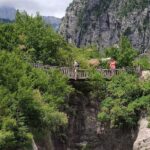
If you like travel that feels grounded, this is it. When it was functional, it also served as social space. Today it’s mainly intact, including large grinding stones and the old equipment. It’s a small pause that gives you context for what life looked like before modern transport. You’ll cross a wooden bridge and get a chance to see crystal-clear river flow among big rocks—one of those details that makes the whole valley feel real.
Xhemes’ Lake (Xhema): rare altitude, unreal color
Next up is Xhemes’ Lake, a glacial lake at about 770 meters above sea level—rare for glacial lakes, which are usually above 1,500 meters. That difference helps you understand why it feels so accessible yet still special. In spring, water levels rise; in winter, the lake can freeze and be covered in snow, even though it can be up to three meters deep.
What you’re chasing is clear water with a deep blue look, surrounded by beeches. This stop is short, but it’s high payoff: you get that “pause, stare, take it slow” feeling without committing to an all-day hike.
Potential drawback here: these valley stops can go quickly because you’re stacking many highlights across three days. If you’re the type who wants long hangs at each viewpoint, you’ll need to accept some movement. The upside is you still see everything.
Day 2’s big decision: Rragami Waterfall + the Valbona Pass
Day 2 is where the tour becomes what most people picture when they say Albania Alps. You start in the Valbona area with Ujevara E Rrogamit—often described with Rragami as Rragami Waterfall. This is tied to the Valbona River’s source: natural spring water that becomes the waterfall scene you’ll hike toward.
The walk is billed as easy, about 50 to 60 minutes one way, through beech forest, with a climb of up to around 200 meters. Even if you’re not an avid hiker, this part helps you warm up. It also sets a rhythm: you’re not thrown into the hardest work first; you earn it.
More Theth and Valbona treks in the Albanian Alps we have logged from Tirana
Valbona Pass: the trek that connects it all
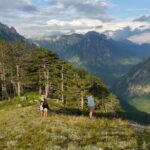
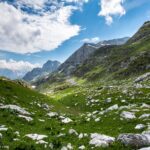
Then comes the headline: Valbona Pass, the link trail between Valbona and Theth. The pass sits at about 1,759 meters, and the itinerary notes the route as roughly a 9.5 km trail to Theth. The elevation change depends on direction: about 630 meters if you go Valbona to Theth, and about 850 meters if you do the reverse.
So what should you expect on the trail itself? You can expect changing views as you gain height, plus a steady uphill feel through parts of the hike. It’s not just scenery; it’s a full day of walking where you’ll want to keep water and energy in check.
This is also where a good guide earns their pay. A professional tour guide helps keep the group together and helps you time breaks sensibly. That matters because in mountains, small delays can add up.
A note on the tour’s “feel” here: the reviews you read about this kind of trip often mention the guide and a sense of safety. That lines up with what you want on a pass trek—someone who knows the rhythm, watches pacing, and keeps everyone from turning the hike into a stress-fest.
Consideration: the tour’s fitness rating is “moderate,” but Day 2 is still a real hike. If you’re coming from sea level recently, or you’ve had knee issues, be honest with yourself. You don’t want to be the person pushing through pain.
Theth National Park: culture, waterfalls, and the Blue Eye payoff
Arriving in Theth, you step into a place built around protection and preservation. Theth National Park was established in 1966 and centers on Shala Valley’s higher terrain—valleys, rivers, mountains, waterfalls, dense forest, and rocky formations. It’s listed as IUCN category II, and it’s also recognized for bird and plant importance. In 2017, the area gained a protected historic center status too.
That combination is why Theth doesn’t feel like a theme park. It feels like a real mountain community surrounded by protected nature.
Tower of Nikoll Koceku: the story behind the stone
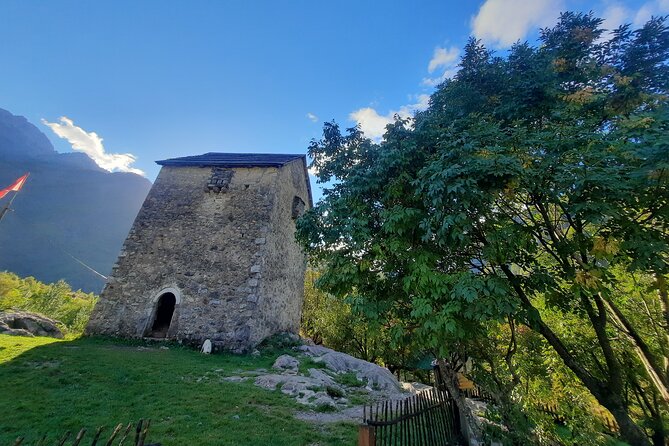
One of the most distinctive cultural stops on this route is the Tower of Nikoll Koceku. It’s a “lock-in” tower at the end of the village, used by the whole community during blood feuds. The tour details that the tower held men over age 14 while women could go out to work the land nearby.
Today, the tower can be visited. It’s described as about 388 years old and organized into three floors, with the upper two having old wooden flooring. This is the kind of stop that adds meaning to a place: you’re not only walking through views; you’re learning why these buildings and patterns existed.
Grunasi Waterfall: a 25-meter drop with a rainbow factor
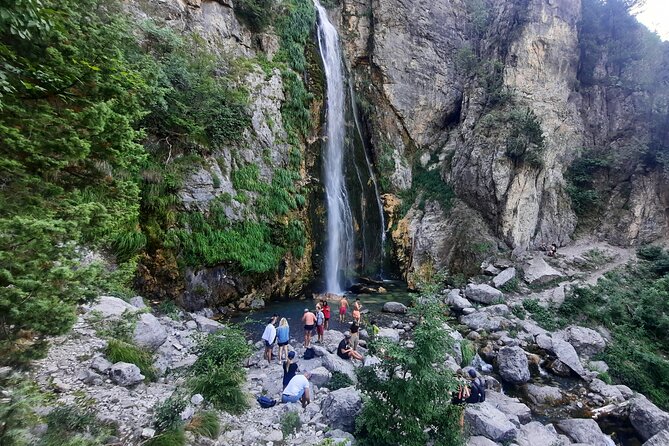
Then you head to Grunasi Waterfall, located on the western slope of the Theth valley near Boshi mountain peak. The water falls from about 25 meters down a narrow rocky trough on limestone, feeding into a pond at the base before flowing into the Thethi valley and joining the Shala river.
A detail that makes it worth seeing is how sunlight affects the scene: on sunny days, you can get a rainbow effect near the bottom. This is one of those “bring patience, not pressure” attractions—walk in, find the best view angle, and let the water do its thing.
Blue Eye of Theth: what to expect from the most famous well in the area
Finally, you reach Blue Eye of Theth (often called Blue Eye of Kaprre). This is the most visited natural attraction in Theth, about 7 km from the village center in Kaprre. It’s described as a well formed by the Black River flowing down from Maja e Zeze.
Key facts that matter when you’re standing there:
- the well surface is around 100 m²
- it’s about 4 to 5 meters deep
- the color shifts with season, showing blue and emerald tones
Also, the Black River source is fed mainly by melting snow, and it joins the Shala River at Nderlysa. From there it continues toward the Drin River and eventually back to the Komani Lake system.
Why this stop is valuable on a three-day tour: it gives you a visual “final score” after the hiking and waterfalls. You get a calmer, focused attraction where you can slow down, look around, and absorb what you just earned.
Boge and the ride back: small culture stop, then reset day
On the way back, you include Boge (Bogë), a village in northern Albania connected historically to the Kelmendi tribe area. It’s part of the Malësi e Madhe municipality now, and historically it was a bajrak tied to local boundaries with Shala to the north and Ducaj to the south.
The tour also notes that Boge was made up of two sections—Preçaj and Kolaj—and that Edith Durham recorded 75 families in 1908, all Catholics. Even though this isn’t a long “museum-style” stop, it gives you a sense of how many communities sit along these valley and mountain corridors.
Then you head back to Tirana (or Shkoder). The drive includes short photo stops, so you’re not stuck in one long, silent bus ride after you’ve been on the move for days.
Practical tip: if you want photos, keep a charged phone and a layer ready. Mountain weather can change quickly, and light shifts can happen faster than you expect.
Price and value: what $591.46 covers (and what it doesn’t)
At $591.46 per person for about three days, you’re paying for much more than “entry fees.” This price includes:
- professional guide
- hotel pickup and drop-off
- transport between major points (including ferry and local transfer legs)
- ferry ticket from Komani Lake to Fierze Dam
- local transport from Fierze to Valbone
- transport from Thethi back to Tirana or Shkoder
- all fees and taxes
- breakfast for two mornings, plus accommodation and breakfast for overnights
What it does not include is also clear: dinner, lunch, snacks, and personal spending.
So is it good value? For me, the biggest value point is logistics. Ferry connections and mountain transfers can be tricky when you’re trying to do it yourself, especially if you also want to fit in Valbona Pass timing. Here, the core movement is handled for you, and that usually ends up being worth real money if you’re short on time or traveling with limited local know-how.
Where you’ll want to budget extra: meals beyond breakfast. Mountains create appetite, and you’ll burn calories on Day 2.
Who should book this Komani–Valbona–Theth–Blue Eye tour
This tour fits best if you want:
- a guided, efficient route that connects Komani Lake → Valbona → Valbona Pass → Theth → Blue Eye
- big nature highlights plus a few cultural pauses that explain local life
- safety and organization, meaning you don’t want to guess schedules between transfers
You might want to skip or choose a gentler option if:
- you’re not comfortable with a full-day hike (Valbona Pass is the big effort)
- you hate sharing a group pace, because the plan is timed for multiple stops over three days
If you’re the type who loves walking and can handle elevation, you’ll likely enjoy the balance: waterfall mornings, pass trekking, and the calm final focus on Blue Eye.
Should you book it?
Yes, if you want the classic Albania Alps hit—Komani water drama, Valbona’s valley energy, Theth’s waterfalls and Blue Eye—and you’d rather pay for smooth logistics than figure out connections yourself. The combination of a professional guide, included ferry and transfers, and admissions for key stops makes it feel like a complete package.
I’d hesitate only if you’re uncertain about Day 2 hiking. Be honest about your fitness and your shoe game. If you’re good to go, this is the kind of trip that leaves you feeling like you saw the real mountains, not just the roadside views.
FAQ
How long is the tour?
The tour runs for about 3 days.
What’s included in the price?
The price includes accommodation with breakfast, a professional tour guide, pickup and drop-off, ferry and transport between Komani–Valbone and Thethi–your hotel area, plus all fees and taxes. Breakfast is included for two mornings.
Are meals like lunch and dinner included?
No. Dinner, lunch, and snacks are not included.
Do I get hotel pickup and drop-off?
Yes. Pickup is offered from your location, and there is hotel drop-off at the end.
Is the tour offered in English?
Yes, it is offered in English.
What physical fitness level is needed?
The tour recommends a moderate physical fitness level.
Do I need to buy tickets for each attraction?
Some admissions are included and some attractions are free. Komani Lake and the Tower of Nikoll Koceku have admission tickets included, while several other stops listed are free.
Is there a long hike?
Yes. Day 2 includes the Valbona Pass trail, described as about 9.5 km with significant elevation change, and it’s planned for roughly 7 hours.
What happens if weather is poor?
This experience requires good weather. If it’s canceled due to poor weather, you’ll be offered a different date or a full refund.
More from Our Tirana Review Desk
More Theth and Valbona Treks in the Albanian Alps
More Gjirokaster, Butrint and Riviera Runs
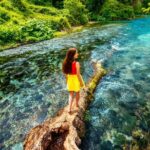
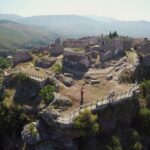
Not quite it? More Tirana tours and Albanian day trips fresh off our review desk
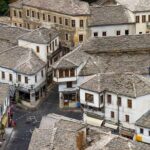


Gjirokaster, Butrint & the Riviera, compared.
 ★ 5.0Gjirokastra UNESCO & Ksamil Beach – From Tirana/Durres/GolemFrom $58117 reviews
 ★ 5.0Hiking Tour of Valbona, Theth & Blue Eye in 3 Days from TiranaFrom $52473 reviews
 ★ 5.0Semi-Private Day Tour of Theth & Blue Eye from Tirana / ShkoderFrom $26152 reviews
 ★ 5.0Semi – Private Tour of Saranda, Ksamil & Blue Eye from TiranaFrom $23548 reviews
 ★ 4.5Gjirokastra, Blue Eye, Ksamil & Saranda – Day Tour from TiranaFrom $19847 reviews
 ★ 4.0Day Tour of Theth & Hike to Blue Eye from Tirana, Durres/ShkoderFrom $6443 reviews
 ★ 5.0Private Day Tour of Saranda Gjirokaster and Butrint from TiranaFrom $25138 reviews
 ★ 5.0Gjirokastra & Bylis Illyrian City Day tour Tirana/Durres/GolemFrom $6536 reviews
Browse the lists this tour appears in