
Reviewed · THETH, VALBONA & THE ALBANIAN ALPS
Self – Guided Peaks of the Balkans tour in 7 days
Crossing three countries on foot sounds wild. In this 7-day, self-guided trek, you follow the Peaks of the Balkans through the Albanian Alps and the Accursed Mountains, with key transport and border paperwork handled for you. I love how remote mountain life feels up close, and I like that the local team behind Choose Balkans (especially Brikena, with help from Sirma) stays reachable so you are not totally on your own.
I also like that the tour mixes big days with real places to recover: guesthouses in villages like Theth and Vuthaj, plus shepherd-hut nights when the trail takes you higher. One caution: the hikes are long and the walking can get tough, and at least one night comes with basic beds (think mattresses, not hotel comfort).
If you are ready for physical work and you pack light, you’ll get a rare kind of trip: mountains first, logistics second, and a finish in Gjakova where history and street life feel present, not staged.
In This Review
- Key highlights from this self-guided Peaks trek
- What self-guided really means on the Peaks of the Balkans
- Price and logistics: what you’re paying for (and what you must budget)
- Day 1: Tamare to Lepushe, then Talijanka over the border to Vuthaj
- Day 2: Theth’s church and tower, plus Arapi and a hard-to-find water stop
- Day 3: The old mule trail to Valbona Pass and the Accursed Mountains feeling
- Day 4: Cerem’s canyon-style hike, optional Zla Kolate, and odd landmarks
- Day 5: Doberdol, a Montenegro border segment, and the shepherd hut mattress test
- Day 6: Gjeravica in Kosovo, three lakes, then 4×4 to Gjakova
- Day 7: Gjakova’s bazaar and Hadum Mosque before returning to Tirana
- Fitness, packing, and the small choices that make or break this trek
- Weather and border crossings: how to keep it calm
- Should you book the Peaks of the Balkans self-guided trek?
- FAQ
- How long is the self-guided Peaks of the Balkans tour?
- Where does the tour start and what time?
- Where does the tour end?
- What is the maximum group size?
- What kind of accommodation is included?
- Are breakfasts included?
- Are lunch and dinner included?
- Does the tour include transport and border paperwork?
- Do I get a mobile ticket?
- Is it possible to rent a private room?
Key highlights from this self-guided Peaks trek
- Border crossings that are part of the hike, not a separate headache
- Real stays in guesthouses and shepherd huts, often in tiny mountain villages
- Daily support in your pocket, with Brikena and Sirma checking in and helping when needed
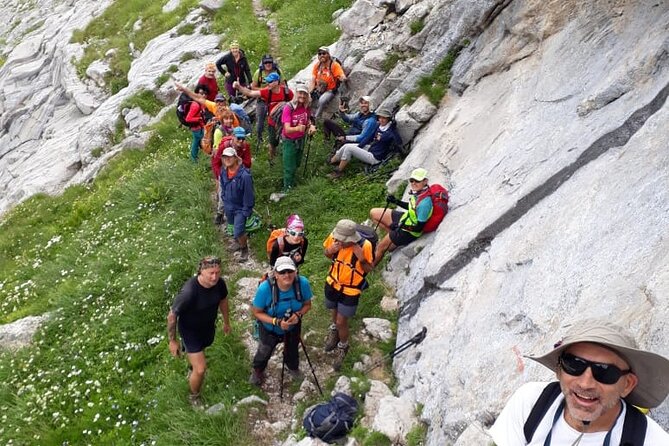
- Long trekking days (often 7–8 hours), for people with strong physical fitness
- Transport and cross-border pass included, which makes the self-guided format actually workable
What self-guided really means on the Peaks of the Balkans
This is called self-guided, but it is not completely DIY. You still do the hiking on your own, carrying your belongings and following the plan. The big help is that included transport and paperwork remove the most stressful parts: getting between trailheads, crossing borders with the right permits, and handling road taxes and petrol.
The tour runs with a small group size limit (max 10 travelers), and that matters because the accommodations are set up for a tight number of people at each stop. You’ll also use a mobile ticket, which keeps things simple at the start of the journey.
If you like the freedom of choosing your pace but you don’t want to figure out every van, border step, and handoff alone, this format fits well. It is also clear from the way the tour is described that you need a strong fitness level and some hiking experience. This is not a “walk in nature and call it a day” trip.
More Theth and Valbona treks in the Albanian Alps we have logged from Tirana
Price and logistics: what you’re paying for (and what you must budget)
The cost is $1,237.53 per person for 7 days, and it is easier to judge the value by looking at what is included.
What you do get included:
- Shared accommodation in traditional guesthouses or shepherd huts
- Local transport in key parts of the route (from Tirana to Lepushe, Gerbaj to Vuthaj, and later legs tied to the trail and pickup points)
- Transport from Gropat e erenikut to Gjakova (day 6) and from Gjakova back to Tirana at the end (day 7)
- Cross border pass, road taxes, petrol
What you do not get included:
- Lunches, dinners, drinks, and snacks (one meal is noted as about 12–15 euros)
- The transfer from the bus terminal to your hotel on the last day
- Entry tickets/tourist taxes (not listed as included)
- Souvenirs and personal spending
That last point is worth thinking about. When you are eating in small mountain villages, you usually cannot rely on fancy menus or easy store stops. Plan on spending extra for evening meals and snacks, especially because you are out hiking all day and you cannot always control when you arrive somewhere.
Also, since you carry your belongings during the trek, you should treat packing like part of the strategy. The tour specifically recommends you pack lightly, and it notes that excess luggage transport or storage may cost extra.
Day 1: Tamare to Lepushe, then Talijanka over the border to Vuthaj
Day 1 sets the tone fast. You begin with a start in Tirana at 6:00 am, then you move into the mountains. Tamare is your first hiking stop, and you’ll spend about 2 hours there as you begin the Peaks route in the Dinaric Alps that stretch from Slovenia down toward southeast Albania.
Next comes Lëpushë (Lepushe) for another 2-hour stretch. Lëpushë is known for spring yellow flowers, and you’ll get a chance to taste regional bio food during the tour. That small culinary detail matters more than it sounds: mountain treks can blur into “hike, eat, sleep,” and this kind of local stop gives the day a softer landing.
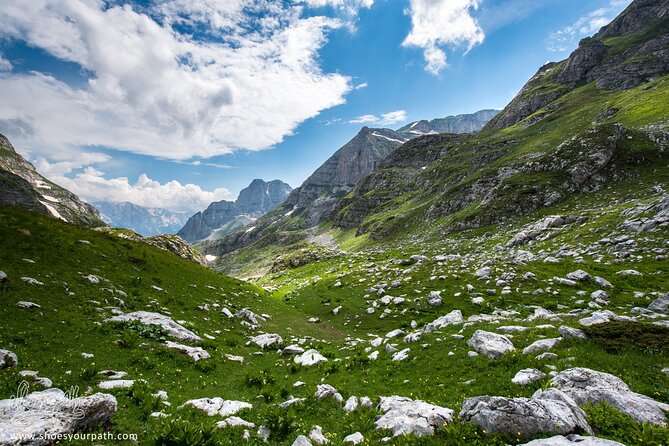
The main wow moment arrives with Talijanka peak. From this viewpoint, you cross from Albania into Montenegro, and the gray, sharp mountain scenery is described as something that even experienced hikers notice. You can also see Lake Plav from the peak.
Afterward, you take a minivan for the last 40 minutes to Vuthaj in Montenegro. Then you can choose how to spend the evening: walk about 40 minutes to the Ali Pasha springs or simply rest and replay the views. You sleep in a guesthouse in Vuthaj.
Practical note: Day 1 has a lot of movement and a border step, so give yourself a little grace. Your legs will feel better if you do not rush early.
Day 2: Theth’s church and tower, plus Arapi and a hard-to-find water stop
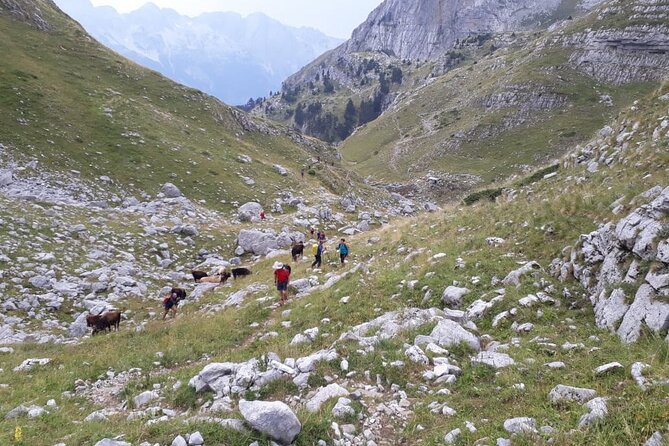
Day 2 switches back to Albania. You trek from Vuthaj toward Theth and cross the border again. One added element here is a hidden water place, and the description is honest: it is hard to find if you do not know the exact location. That is exactly the kind of detail that turns a trail into an experience.
You also pass by the Arapi peak (2217 m) near Jezerca Peak (2694 m). You’ll likely see shepherd huts along the route, which gives you a glimpse of how life works away from the main roads.
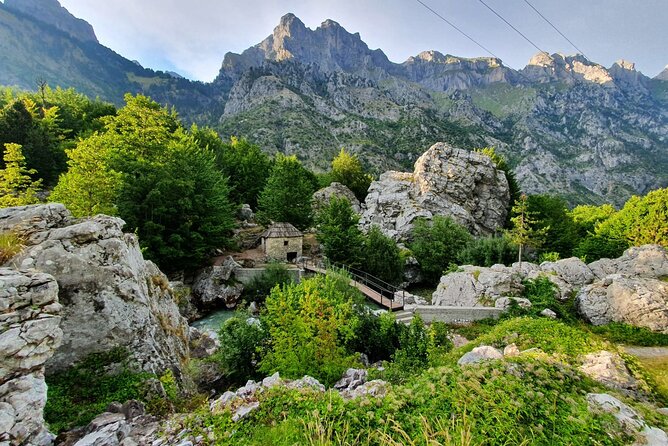
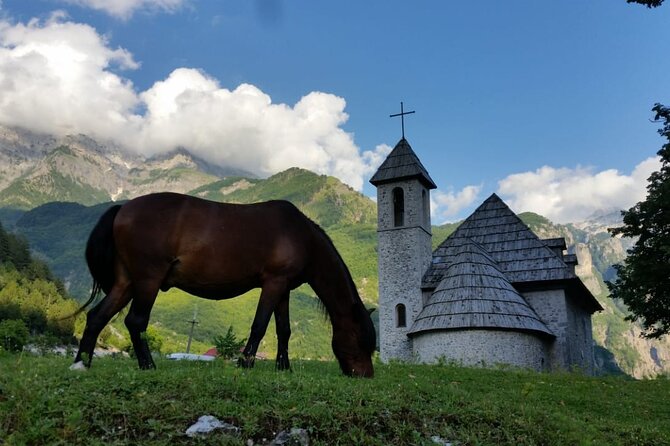
When you reach Theth, you visit the Old Church and the Lock in Tower, a local symbol tied to the village. Both are framed as places with stories that stretch back through centuries.
The day is long: the trek is about 8 hours, and it sits in remote terrain. This is where good footwear and realistic pacing pay off. If you try to “win” the mountain, you’ll pay for it the next day.
Overnight is in a guesthouse in Theth, which is a welcome reset after the bigger crossing day.
Day 3: The old mule trail to Valbona Pass and the Accursed Mountains feeling
Day 3 is a classic mountain day. Trekking to Valbona from Theth takes about 6 to 8 hours through remote terrain. The route follows an old mule trail, so you get that older, rougher sense of a path that has served locals for a long time.
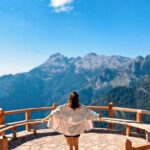
A key moment comes mid-route when you can see Theth valley on one side and Valbona valley on the other. Then the Valbona Pass delivers the big view: you get looks into the Balkan Peaks and the Accursed Mountains, known locally as Bjeshket e Nemuna.
The Accursed Mountains area is mentioned as a national park tied to Kosovo locations near the borders with Albania and Montenegro. On this day, you may also see shepherds and flocks passing by, which is one of those “you had to be there” details that makes the mountains feel lived-in, not just photographed.
You reach the pass with an “adrenaline” feel in the description, and then you settle into the night in a Valbona guesthouse.
If you want a trip that feels physically meaningful, not just scenic, this is one of the core days.
More guided Tirana tours with a local at the wheel
Day 4: Cerem’s canyon-style hike, optional Zla Kolate, and odd landmarks
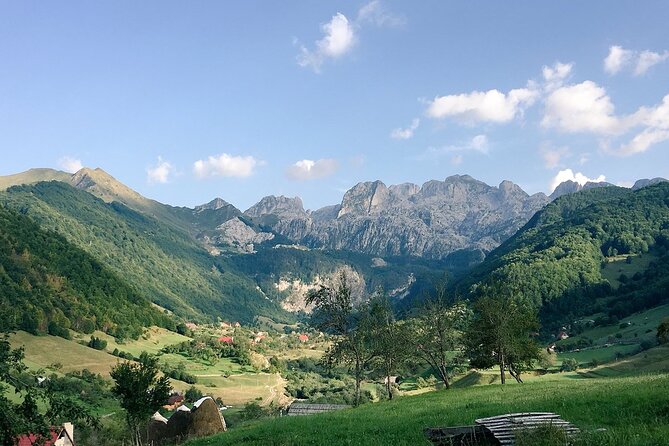
Cerem is another mountain base with a different flavor. You use transport to get to the starting point before your hike, then you walk through forests and meadows.
As you gain elevation, the trail moves into an area that looks like a canyon, and the tour notes you might see snow there even in summer. That detail matters for packing: expect conditions to change by altitude, not just by season.
You can also choose an optional extension: hike to the highest peak of Montenegro, Zla Kolate, and add about 3 hours (which would put you at around 10 hours total). This is a good option if you’re feeling strong and want the extra summit payoff.
Along the trail, you pass some unusual features:
- A stone surface that looks like the face of a miserable old man
- A cave with extremely cold wind, and no one knows the exit
Those odd, local landmarks are what help a trek feel specific to this route instead of generic “mountain hike #4.”
You end at shepherd huts in Cerem at about 1300 m for overnight.
Potential drawback: if you choose the Zla Kolate option, your day gets long fast. Make that decision based on your energy, not on the thrill of checking boxes.
Day 5: Doberdol, a Montenegro border segment, and the shepherd hut mattress test
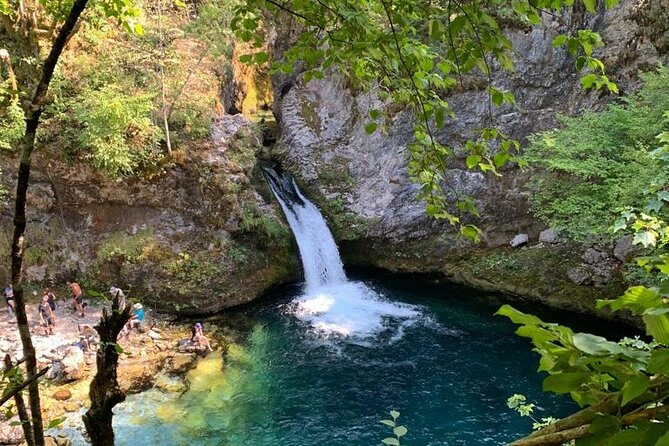
Day 5 is another long one, about 7 hours. You hike from Cerem to Doberdol following a mule track.
For roughly two hours, the route crosses the border to Montenegro. Then it continues through pine forests with seasonal berries mentioned like blueberries, blackberries, and raspberries. Those small foraging possibilities add variety, and they also remind you that this is not just about summits.
The tour also points out that the trail passes the only National Reserve in Albania, with brown bears and the last population of about 40 lynxes in the Balkans. You probably will not see those animals on the trail, but the fact that the reserve exists tells you the area is protected and taken seriously.
The highest point on this day is noted as around 2100 m. You can also stop for coffee or a drink at a shepherd hut village, which is a nice mid-hike morale break.
You end at Doberdol (about 1800 m) for another night in a shepherd’s hut. Here is the part to plan for: the beds are described as basic. You will get mattresses, not hotel beds.
If you are the type who packs for comfort, this is where you should decide in advance how much you can tolerate.
Day 6: Gjeravica in Kosovo, three lakes, then 4×4 to Gjakova
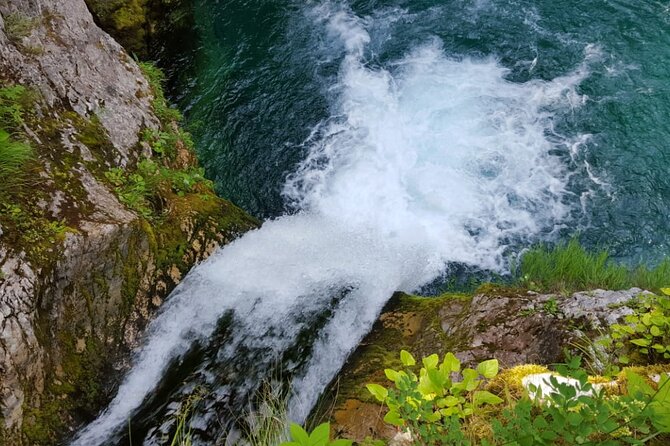
Day 6 is the “back toward civilization” day, but only after another big mountain hit. You hike to Gjeravica, the highest peak of Kosovo and part of the Accursed Mountains area. It is also described as the second highest peak of the Accursed Mountains (as referenced through Albanian Alps framing).
From the top, you get views to the Accursed Mountains on one side and the Sharr Mountains on the other. Then you can swim in three lakes fed by alpine and glacier waters. One lake stands out as heart-shaped, based on the tour description.
The hiking time listed here is about 4 hours. That is shorter than previous days, so it can feel like a breather without losing the altitude payoff.
After that, you visit Erenik (Gropat e erenikut) for about 1 hour, then head toward Gjakova. From Junik onward, the tour notes that you go by 4×4 wheel drive to reach the city. Overnight is in a hotel in Gjakova. After several nights in simple mountain accommodation, a real hotel bed feels like a prize.
You also have included transport on this day segment (Gropat e Erenikut to Gjakova), so you are not stuck trying to arrange rides at the last minute.
Day 7: Gjakova’s bazaar and Hadum Mosque before returning to Tirana
On day 7, you recharge and then do a short city tour. Gjakova is where the trip changes pace from mountains to streets.
The city has the oldest and largest bazaar of Kosovo. The tour description notes that the bazaar was destroyed across the Balkan wars, World War II, and the Kosovo war, but it was rebuilt again to its old state. Practically, that means you’ll see something that is functional and current, not just ruins.
You’ll also see the clock tower and the Hadum Mosque, built in the 16th century. The mosque is highlighted for surviving wars and for showing early Islamic architecture in the Balkans, with arabesque decorations.
After the city time, you transfer back to Tirana. The end point is listed as East Terminal Lundër 1, Albania.
One logistics detail: the included listing does not cover the transfer from the bus terminal to your hotel on the last day. So plan on taking a taxi or local bus yourself.
Fitness, packing, and the small choices that make or break this trek
This tour is clear that you should have strong physical fitness and good hiking condition. It is also clear you carry your belongings during the trek. That means the packing decision is not a chore; it is part of your hike.
A helpful clue from past experiences: people who misjudged elevation combined with heavy backpacks found the trip more challenging. So aim for light and practical. Bring layers for changing conditions. Day 4 is specifically described as having snow in a canyon-like area even in summer, so plan for cool air at higher points.
If you need more comfort, the tour offers a private room option for an extra 40 euros per night per room based on availability. That can be a good trade if you know the shepherd hut beds will be harder than you expect.
Luggage is also addressed: you can arrange excess luggage transportation or pre-arrange storage in Tirana, but it costs extra. Luggage transportation might be available depending on availability, with a minimum fee noted (770€ for one person, or 385€ per person for groups).
Weather and border crossings: how to keep it calm
Mountain trips are weather-dependent. The schedule can be affected or adapted due to weather, acts of God, labor strikes, bank holidays, or temporary closures. That is normal for this region and this kind of terrain.
The other “wild card” is that you cross borders multiple times. The tour handles that through a cross border pass and includes the right transport legs. You still want to move steadily, follow instructions, and keep your documents organized like you actually mean it.
Also remember: you start early at 6:00 am. If you treat the morning like an afterthought, you’ll feel it by mid-day. I’d rather you show up ready than “wake up on the trail.”
Should you book the Peaks of the Balkans self-guided trek?
Book it if you want big mountain days across Albania, Kosovo, and Montenegro, and you like the idea of independence with real support. The combination of guesthouses and shepherd huts is part of the charm, and the included transport and cross-border pass make this doable without turning your trip into a logistics project.
Skip it if you want luxury comfort, very short walks, or all-inclusive meals and transfers. At least one accommodation is described as basic, and the hiking days can be long.
If you do book, I’d go in with a “prepared but flexible” mindset: pack light, expect snow at altitude on day 4, and budget for lunches and dinners.
FAQ
How long is the self-guided Peaks of the Balkans tour?
The tour is about 7 days.
Where does the tour start and what time?
It starts in Tirana, Albania, at meeting point 8RJ3+WV5, with a start time of 6:00 am.
Where does the tour end?
It ends at East Terminal Lundër 1 in Albania.
What is the maximum group size?
The tour has a maximum of 10 travelers.
What kind of accommodation is included?
You get shared accommodation in traditional guesthouses or shepherd’s huts. Rooms accommodate 2–5 travelers.
Are breakfasts included?
Breakfast is listed as optional (shown as Optional[6]).
Are lunch and dinner included?
No. Lunches, dinners, drinks, and snacks are not included. One meal is noted as about 12–15 euros.
Does the tour include transport and border paperwork?
Yes. Included local transport is listed for multiple route segments, and there is also a cross border pass plus road taxes and petrol.
Do I get a mobile ticket?
Yes. The tour features a mobile ticket.
Is it possible to rent a private room?
Yes. Private rooms are possible for an extra 40 euros per night per room, based on availability.
More Tirana Tours and Albanian Day Trips
More from Our Tirana Review Desk
More Theth and Valbona Treks in the Albanian Alps
Not quite it? More Tirana tours and Albanian day trips fresh off our review desk
Theth, Valbona & the Albanian Alps, compared.
 ★ 5.0Shala river & Komani lake -Day trip departure from Tirana/ShkodraFrom $62309 reviews
 ★ 5.0Albanian Alps and Theth Village Day Tour from TiranaFrom $76116 reviews
 ★ 5.0Hiking Tour of Valbona, Theth & Blue Eye in 3 Days from TiranaFrom $52473 reviews
 ★ 5.0Semi-Private Day Tour of Theth & Blue Eye from Tirana / ShkoderFrom $26152 reviews
 ★ 4.0Day Tour of Theth & Hike to Blue Eye from Tirana, Durres/ShkoderFrom $6443 reviews
 ★ 5.0Day tour of Theth from TiranaFrom $15433 reviews
 ★ 5.0Self-guided: Peaks of the Balkans Tour in 8 daysFrom $1,36632 reviews
 ★ 5.0Semi-Private Hiking Tour; Theth, Valbona & Koman Lake in 3 DaysFrom $75128 reviews
Browse the lists this tour appears in