
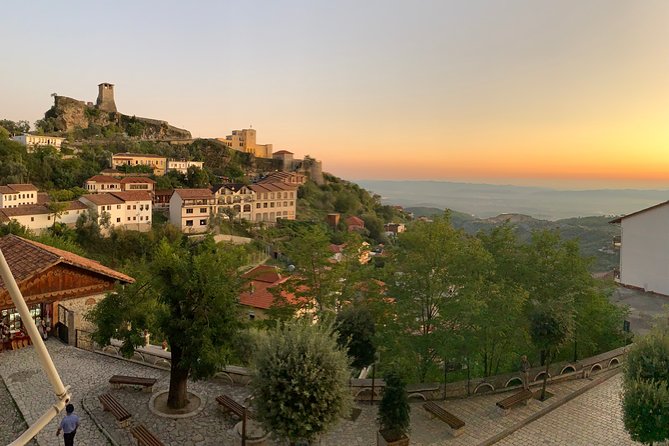
Reviewed · GJIROKASTER, BUTRINT & THE RIVIERA
4-Days UNESCO Towns and Albanian Riviera Tour
Albania is the kind of trip that surprises fast. This 4-day route links UNESCO towns with Albanian Riviera time, using an air-conditioned vehicle and an English-speaking guide for a smooth, no-rush pace. You’ll like the built-in focus on real places (not just photo stops), plus the way the itinerary pairs hill towns with sea towns. One thing to consider: the day-to-day structure moves you around a lot, so each stop is timed, not leisurely.
My favorite parts are the guided Ottoman details in Gjirokaster and the way the trip slows down when you reach the coast—Saranda first, then Qeparo. If you get guide Genci, you can also expect a calm, professional approach and good practical tips for where to eat when meals aren’t included. The main drawback is that some big-name sights get shorter stops, so you’ll want to arrive with good expectations about time on the ground.
In This Review
- Key things to know before you go
- Tirana Day 1: Squares, bunker scars, and the odd Pyramid
- Belsh: a quiet break in the middle of lakes
- Berat: castle-town charm with real staying power
- Gjirokaster Day 2: Ottoman rooms, stained glass windows, and a family guide
- The Gjirokaster castle and a steep-time reality
- Butrint National Park and Saranda: archaeology, then seaside life
- Saranda check-in and free time by the sea
- Qeparo Beach and Porto Palermo: coastal calm with fortress stops
- Porto Palermo Castle: Ali Pasha’s dramatic sea fort
- Llogara Pass: a quick “stop for the view”
- Vlorë: a 10-minute taste of independence
- Durres Day 4: Roman amphitheater magic and Byzantine walls
- The Amphitheatre of Durrës: Roman grandeur, found the odd way
- Venetian Tower and city walls: Anastasius to Justinian
- Air-conditioned comfort, small group pacing, and what that means for you
- Price and value: $806.76 for four days that actually include the hard parts
- Where this tour shines most (and where you might want a different pace)
- Should you book this UNESCO towns and Albanian Riviera tour?
- FAQ
- FAQ
- What is the duration of the tour?
- What does the price include?
- Is pickup available, and what time does the tour start?
- How many people are in the group?
- What languages is the tour offered in?
- Are entrance tickets included for the main stops?
- Can I cancel for a full refund?
Key things to know before you go
- Max 8 people means you’re not lost in a crowd
- Air-conditioned transport helps a lot on long drives
- Gjirokaster + Skenduli House brings Ottoman interiors to life with a family guide
- Butrint National Park is history you can walk through, not just read about
- Coastal downtime in Saranda and Qeparo breaks up the inland touring
- Roman Durrës ends the trip with a strong ancient finish
Tirana Day 1: Squares, bunker scars, and the odd Pyramid
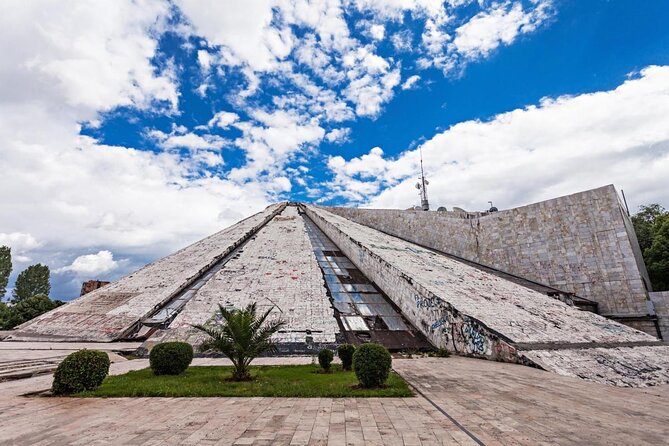
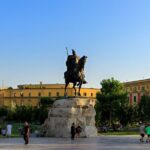
Day 1 starts in central Tirana with a proper orientation walk. You’ll cover Skanderbeg Square and the main boulevard area, plus the mix of landmarks that makes Tirana feel like a city still stitching itself together. Expect to see the mosque, the bunker, Mother Theresa Square, and the blloku area—the neighborhood that’s basically Tirana’s social magnet. You also get a look at the national park area and the Mosaic of Tirana, which is a quick way to understand how the city uses art and public space to tell its story.
One of the most unusual stops is the Enver Hoxha Pyramid. It’s described as monstrously unattractive, and once you’re there, that reaction makes total sense. It was built under Enver Hoxha’s regime and later used for events, but today it’s covered in graffiti and surrounded by encampments. The good part for you: the stop is only about 10 minutes, so you’re not stuck in discomfort too long, but you’ll still get an explanation so you understand what you’re seeing.
If you want to go deeper, you can add the National Historical Museum. Since it’s optional, treat it as a bonus. If you’re more tired than curious after all the walking, you can skip it and save energy for the road.
More Gjirokaster, Butrint and Riviera runs down south we have taken from Tirana
Belsh: a quiet break in the middle of lakes
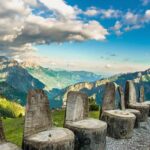
After Tirana, you stop in Belësh, a small town set amid lakes. This is not the kind of place that grabs you with monuments. It’s more of a breather: agricultural land, local atmosphere, and that odd feeling that you’ve found a stop you didn’t know you needed. If you like seeing how people live away from the big tourist circuit, you’ll enjoy Belësh.
Berat: castle-town charm with real staying power
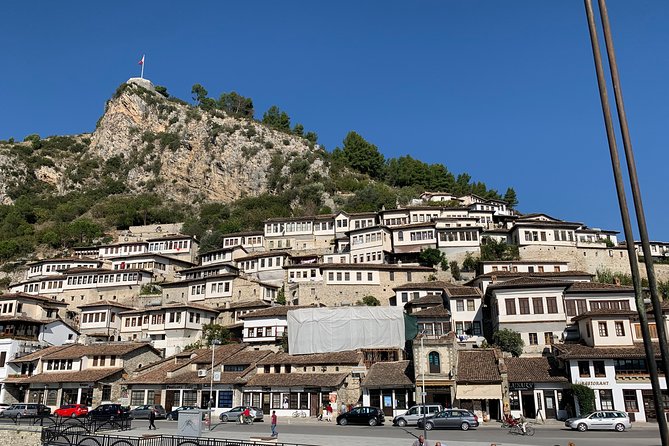
Then comes Berat, one of Albania’s classic hill towns. You’ll spend about 2 hours here, and the big reason is the castle area and the overall authentic feel. Berat’s strength is that it’s not one single sight—it’s a whole town you can wander around. If you like viewpoints, old stone streets, and the sense that the place has layers (Ottoman-era and earlier), Berat usually clicks fast.
If there’s a drawback for you, it’s that 2 hours is enough for the essentials but not enough to “live” there. So if you’re the type who could happily get lost for half a day, plan for a future return.
Gjirokaster Day 2: Ottoman rooms, stained glass windows, and a family guide
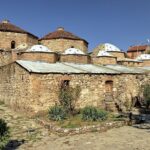
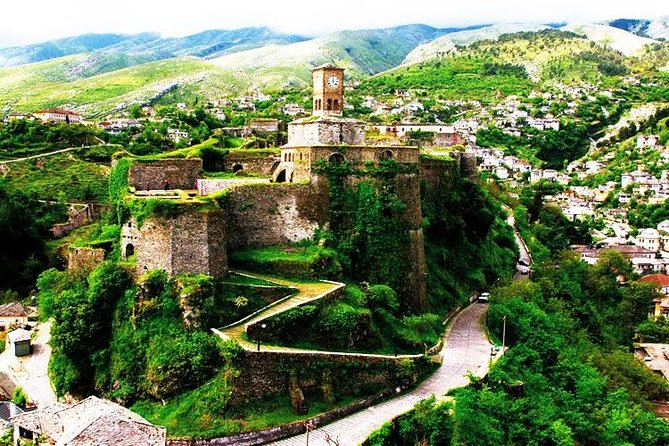
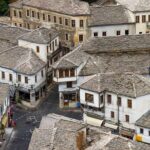
Day 2 is where the trip sharpens. You start in Gjirokaster, a town that feels like it’s built to be looked at—especially from up high. The main star is the visit to Skenduli House, an Ottoman-era home restored and kept in the same family for generations. You’ll tour it with a guide, and the details matter here.
This is the kind of visit that rewards attention. You’ll hear about the house’s early-1700s origins and partial rebuilding in 1827. But the standout specifics are inside: there’s a room used only for wedding ceremonies, and the house has about 15 windows, many with stained glass. It’s a reminder that these homes weren’t just “where people lived.” They were social stages, full of ritual and status.
It’s also practical: you won’t be wandering alone. The guide helps you connect the dots fast, so you don’t leave thinking you saw pretty rooms but couldn’t say why they mattered.
The Gjirokaster castle and a steep-time reality
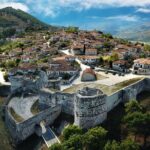
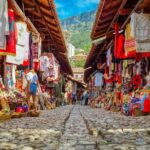
Next you head to Gjirokastra Bazaar / the castle area. The castle is framed like a stone ship along the hillside, built across an approximately 1100-foot-high slope. You’ll spend around 2 hours total, including getting there and back.
Here’s the useful consideration: castle time can feel longer than you expect because you’ll likely walk a bit on uneven ground. Wear shoes you trust. If you’re sensitive to steep slopes, take your pace seriously—rest stops are limited and your time buffer depends on the group.
More multi-day Albania tours, north to south, we have travelled from Tirana
Butrint National Park and Saranda: archaeology, then seaside life
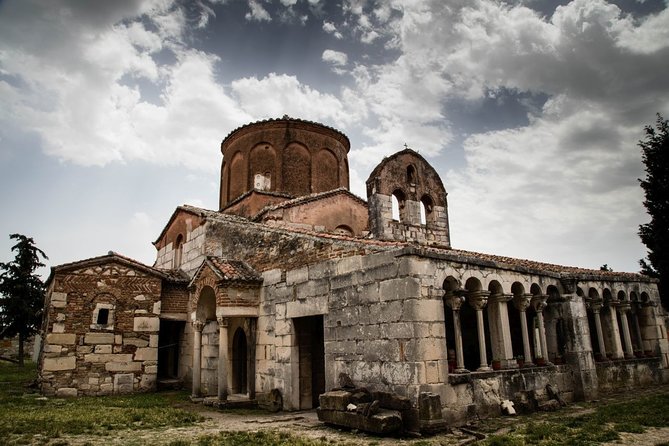
After lunch, the tour shifts from hill towns to something very different: Butrint National Park. You’ll focus on top archaeological areas inside the park, and this is one of those places where history isn’t behind glass.
The story you’re given centers on Butrint moving through eras:
- Ancient Greek city life, then Roman period
- Later becoming a bishopric in Epirus
- Human presence stretching back to prehistoric times
- A decline at the end of antiquity
- Abandonment after a major earthquake flooded parts of the city in the Middle Ages
That sequence is valuable for you because it explains why you’re looking at ruins that don’t all match. You’re not just seeing “old stones.” You’re seeing layers of occupation and collapse.
Saranda check-in and free time by the sea
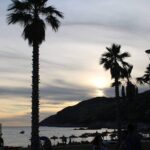
Once you check in, you get free time by the sea in Saranda. Saranda is described as the unofficial capital of the Albanian Riviera. During summer, it can feel like everyone from Tirana drives down for beach days and nightlife. Your plan here is simple: use the time to reset, walk along the promenade, and grab a meal without rushing back for the next explanation.
If you like your evenings flexible, this kind of free time is worth its weight in gold. If you prefer museums only, you might find the “sea time” too relaxed. But the balance is the point: you’ve earned it after a day full of towns and stone.
Qeparo Beach and Porto Palermo: coastal calm with fortress stops
Day 3 turns into a classic Riviera road trip. You begin with Qeparo Beach, set near Himara. The drive route is short—about 13 km of road with Mediterranean views—and that matters because you get scenery without losing half the day in the car.
Qeparo’s main advantage is comfort. The beach has fine sand, and the sea is shallow for the first meters, unlike some nearby rocky spots. That makes it especially friendly for families, but it also works for you if you want a calmer swim without fighting waves and sharp rocks. There’s also an old pier built on rocks, which is the kind of detail that makes a beach feel like more than a swimming strip.
Porto Palermo Castle: Ali Pasha’s dramatic sea fort
Next is Porto Palermo Castle, also linked with Ali Pasha. It’s a 19th-century fortress in a bay just south of Himara. The inside is described as dark, but the reason you go is the walk through battlements with sea views.
This is one of those stops where the timing works. It’s long enough (about 2 hours) for you to wander, but not so long that it steals your beach momentum. Bring a light layer. Coastal forts can turn chilly when the wind shifts.
Llogara Pass: a quick “stop for the view”
Then there’s Llogara Pass, a high mountain pass in the Ceraunian Mountains. You’ll have a short photo stop for views over the Albanian Riviera. This is not the day to expect deep hiking. Treat it like a moment to reset your brain and take a few photos from the high vantage point.
If you hate rushed viewpoints, you’ll still be fine here because the stop is explicitly short. It won’t derail the rest of the day.
Vlorë: a 10-minute taste of independence
Finally on Day 3 you reach Vlorë and the Monument of Independence. You’ll get about 10 minutes in the historic center area, near the building connected with the first Albanian government in 1913.
This stop is compact by design. The benefit is you don’t lose energy right before the final day’s big ancient sights. The trade-off is that you won’t have time to explore Vlorë in depth, so treat it as a “pulse check,” not a full day.
Durres Day 4: Roman amphitheater magic and Byzantine walls
On Day 4, the tour anchors itself with major ancient remains in Durrës.
The Amphitheatre of Durrës: Roman grandeur, found the odd way
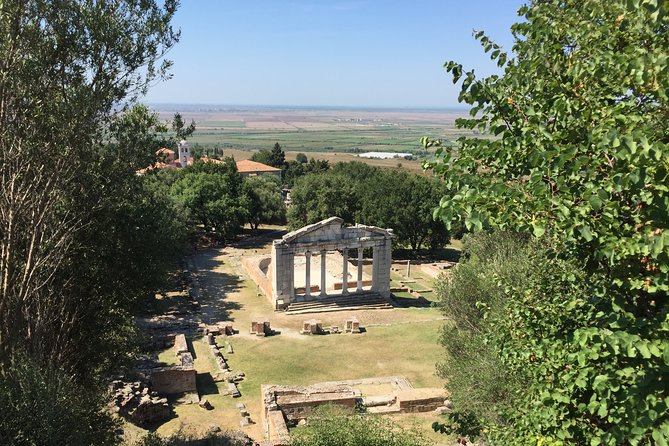
First is the Durrës Amphitheatre, described as one of the most majestic of the ancient world and among the ten most beautiful Roman amphitheaters. You’ll spend about an hour here, and it’s the kind of place where you can feel the scale even without a long lecture.
A fun detail you’ll hear is how it was discovered in 1966: an archaeologist named Vangjel Toçi supposedly noticed a fig tree that had fallen a few meters underground, which led to excavations. Whether you love legends or not, the point is: this amphitheater was “found,” then slowly understood, which adds a sense of real human effort behind the ruins.
Venetian Tower and city walls: Anastasius to Justinian
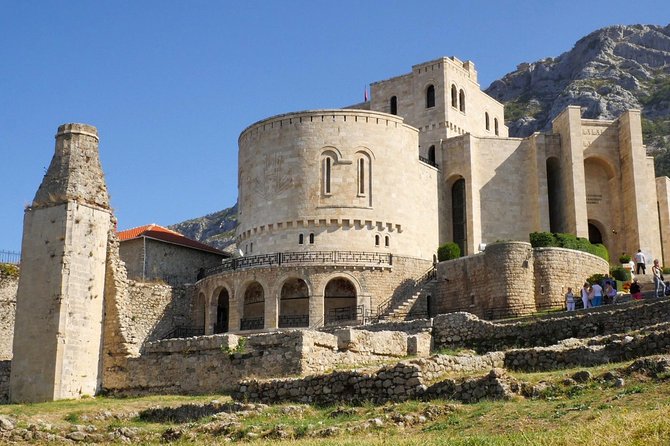
Next is the Venetian Tower of Durrës, plus the surrounding city walls. The walls you see today are linked to Anastasius I, with observation towers added later under Justinian. You’ll get about an hour total, and the useful thing here is that the walls aren’t explained as dead architecture. They’re tied to defense—how the height and breadth helped protect the city from invaders.
If you like panoramic old-town views, Durrës can deliver a lot quickly. If you only like fully restored monuments, some parts may feel more “archaeology” than “theme park.” That’s not a bad thing. It’s the authenticity.
Air-conditioned comfort, small group pacing, and what that means for you
The tour runs with a maximum of 8 travelers, and that size is a big deal in practice. It keeps questions easy, lets the guide manage timing without feeling chaotic, and usually means you spend more time listening and less time waiting.
You also travel in an air-conditioned vehicle, which isn’t a luxury detail—it’s real comfort, especially in warmer months or during long road stretches between inland towns and the coast.
Pickup is offered. You’ll start at 8:00 am, and the guide waits holding a letter with the company name. They usually pick you up from the airport or port, and your pickup location can be adjusted if you request it in advance.
Two more practical touches: the tour uses mobile tickets, and it’s offered in English. That reduces friction when you’re not trying to figure out where to go alone.
Price and value: $806.76 for four days that actually include the hard parts
At $806.76 per person, you’re paying for a lot that can be expensive to organize yourself: vehicle transport, a guided route, included accommodation, and some meals. You’re also not paying for every ticket individually, since several stops list admissions as free or included (like the castle/house visits and the Durrës amphitheater).
Here’s how I’d think about value. If you tried to piece this together alone, you’d likely spend money on:
- multiple hotel nights,
- driver/vehicle costs for long distances,
- paid guides (especially in Ottoman houses and archaeology areas),
- and entrance fees that add up fast.
This tour’s value is strongest if you want structure but still like seeing places on the ground. If you prefer to plan day-by-day yourself and build your own “slow version” with more time in fewer towns, you might find it pricier than your DIY style. But if you want Albania in one organized arc, this is the kind of price that starts making sense.
Where this tour shines most (and where you might want a different pace)
This is a great fit if you want a balanced Albanian sampler:
- UNESCO-linked inland towns and heritage stops
- a real slice of coastal life in Saranda and Qeparo
- strong ancient finales in Durrës
- and a guide who keeps things calm, not frantic
If you’re the type who loves details, you’ll probably appreciate Skenduli House’s wedding room and stained glass windows. And if you’re in it for views, the Llogara Pass viewpoint and the coastal fortress stops deliver.
Where it might not fit is if you want maximum time in each town. Many stops are about 1–2 hours, and a few are explicitly brief (like the 10-minute explanation at the Pyramid and the 10 minutes in Vlorë’s historical center). You’ll still see a lot, but you won’t have hours and hours for wandering on your own.
Should you book this UNESCO towns and Albanian Riviera tour?
I’d book it if your priority is a well-paced route that mixes UNESCO-style heritage with real sea time—without you having to coordinate transport, hotels, and guide logistics.
Book it especially if:
- you want a small group experience,
- you like guided context (so the ruins and old houses make sense),
- and you’re excited by the inland-to-coast rhythm: Tirana → Berat/Gjirokaster → Butrint/Saranda → Riviera beaches → Durrës.
Consider a different option if you know you hate timed sightseeing and want fewer stops with more free hours. In this itinerary, the trade-off for coverage is that each stop gets a slice, not a whole day.
FAQ
FAQ
What is the duration of the tour?
The tour runs for 4 days (approx.).
What does the price include?
The tour price is listed at $806.76 per person and includes accommodation and some meals for a hassle-free trip.
Is pickup available, and what time does the tour start?
Pickup is usually offered from the airport or port. The tour starts at 8:00 am.
How many people are in the group?
The maximum group size is 8 travelers.
What languages is the tour offered in?
The tour is offered in English.
Are entrance tickets included for the main stops?
Many stops list admission as free or included (for example, the Amphitheatre of Durrës is listed as admission included, while several others are listed as free).
Can I cancel for a full refund?
You can cancel up to 3 days in advance of the experience for a full refund.
If you cancel less than 3 full days before the start time, the amount paid will not be refunded.
More from Our Tirana Review Desk

More Multi-Day Albania Tours, North to South
More Gjirokaster, Butrint and Riviera Runs

Not quite it? More Tirana tours and Albanian day trips fresh off our review desk




Gjirokaster, Butrint & the Riviera, compared.
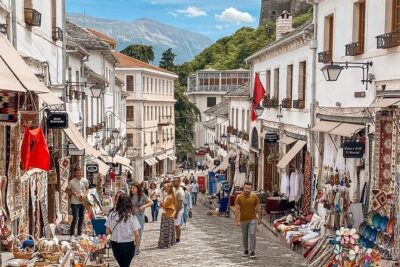 ★ 5.0Gjirokastra UNESCO & Ksamil Beach – From Tirana/Durres/GolemFrom $58117 reviews
 ★ 5.0Hiking Tour of Valbona, Theth & Blue Eye in 3 Days from TiranaFrom $52473 reviews
 ★ 5.0Semi-Private Day Tour of Theth & Blue Eye from Tirana / ShkoderFrom $26152 reviews
 ★ 5.0Semi – Private Tour of Saranda, Ksamil & Blue Eye from TiranaFrom $23548 reviews
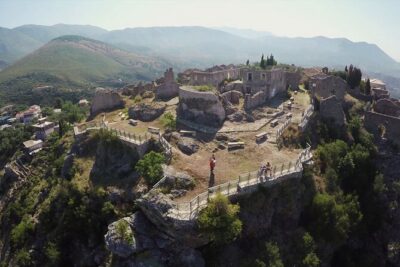 ★ 4.5Gjirokastra, Blue Eye, Ksamil & Saranda – Day Tour from TiranaFrom $19847 reviews
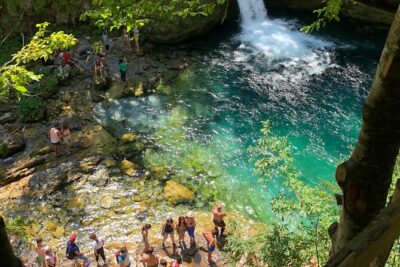 ★ 4.0Day Tour of Theth & Hike to Blue Eye from Tirana, Durres/ShkoderFrom $6443 reviews
 ★ 5.0Private Day Tour of Saranda Gjirokaster and Butrint from TiranaFrom $25138 reviews
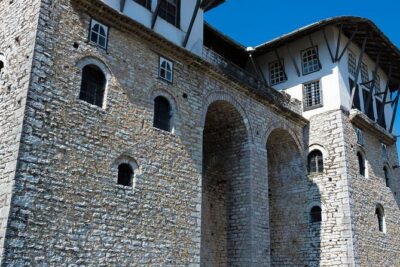 ★ 5.0Gjirokastra & Bylis Illyrian City Day tour Tirana/Durres/GolemFrom $6536 reviews
Browse the lists this tour appears in