
Reviewed · BEST OF ALBANIA MULTI-DAY TOURS
Small Group Tour; Pearls of Albania in 8 Days (3 UNESCO Sites)
Eight days, and Albania feels wonderfully manageable. This small-group route links northern castles, mountain villages, and coast highlights in one smooth plan, with UNESCO stops that make the story of Albania feel real. I like the way the tour handles the practical stuff (pickup, private vehicle, breakfast stays). I also like the range: hill towns like Shkodra and Gjirokaster, plus water-and-ruins days around the Blue Eye and Butrint.
The main thing to consider is pace and driving time. You’re covering a big chunk of the country, so expect long transits between regions, and plan for a “do a lot each day” rhythm.
Key points worth your attention
- Hotel pickup and drop-off in Tirana keeps the start and finish painless
- Max 10 people means your guide can actually answer questions
- Three UNESCO sites (Berat, Gjirokaster, Butrint) without fuss
- Blue Eye + Ksamil gives you a clear water break from castles and museums
- Breakfast included for 7 mornings helps you start early and move on
In This Review
- Price and logistics: what $2,278 buys you
- Small group and private vehicle: how the route stays comfortable
- Day 1 in Shkodra: Venetian masks, Illyrians, and Rozafa Castle
- Day 2 in the Albanian Alps: Theth National Park and the Lock-in Tower
- UNESCO Berat: 1001 windows, living inside the walls, and the Onufri connection
- UNESCO Gjirokaster: the Stone City and how houses became fortresses
- Blue Eye, Ksamil, and Butrint: water wonder then Roman-and-prehistory ruins
- Himare and Dhermi: the Riviera side of Albania without the rush
- Vlore, Muradie Mosque, and Durres: independence, Ottoman architecture, and Roman ruins
- Tirana on the last day: Skanderbeg Square, BUNKART 2, and Blloku food
- Who should book this Albania loop (and who might want a different pace)
- FAQ
- FAQ
- How many UNESCO sites are included?
- What’s the group size?
- Does the tour include hotel pickup and drop-off?
- What’s included in the price?
- Are entry tickets included for all stops?
- What meals are not included?
- What’s the start time and meeting point?
- Can I book a single room?
- Do I need my own travel insurance?
- Is the itinerary fixed?
Price and logistics: what $2,278 buys you
At $2,278.09 per person for about 8 days, this isn’t a budget trip. But it’s also not just a “sit on a bus” package.
Here’s the value math I see: you’re getting private transportation with a guide through the trip, hotel pickup and drop-off in Tirana, and bed-and-breakfast accommodations for all overnights (with breakfast included for 7 mornings). You’re also paying once for the main sights: the tour lists entry tickets for the sites that are visited, plus tourist taxes, road taxes, and petrol.
What’s not included matters: lunches, dinners, drinks, and snacks are on you. If you like dining out (and in Albania, that can be a highlight), build that into your budget.
One more practical note: if you want a single room, there’s a 45 Euros extra charge per night in a 3-stars hotel accommodation. That can change the real price fast, so do the math before booking.
Small group and private vehicle: how the route stays comfortable
A group capped at 10 travelers is a big deal in Albania’s smaller towns and older streets. Narrow lanes, castle staircases, and quick photo stops go better when the group isn’t huge. You’ll usually be able to pause without the whole line stretching out behind you.
The private vehicle also helps because this itinerary jumps across regions: northern lakes and mountain scenery one day, the Albanian Riviera the next, and then you come back to Tirana. With private transport, you’re not timing yourself around public schedules.
You’ll also have a professional tour leader throughout, and the tour includes a guide-led flow between sights—so you spend less time figuring out where to go, and more time actually looking at what’s in front of you. If your guide happens to be Eduart, that name shows up in positive feedback for a reason: the explanations stick, and the route feels more like a story than a checklist.
More multi-day Albania tours, north to south, we have travelled from Tirana
Day 1 in Shkodra: Venetian masks, Illyrians, and Rozafa Castle
You start in Tirana with hotel pickup in the morning, then head north to Shkodra. This is a smart first-day choice: Shkodra is old, layered, and compact enough to get your bearings fast.
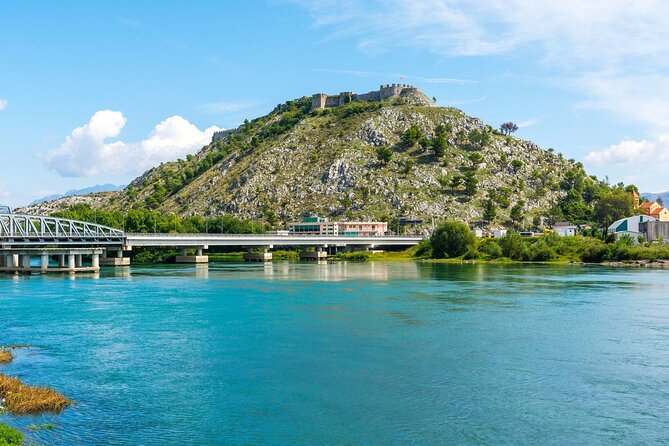
In Shkodra, the tour focuses on the big picture. The city sits in the north-west of Albania and shares its name with the biggest lake in the Balkans. It’s also one of the oldest continuously inhabited places in the country, with a Shkodra Castle wall dating to the 1st millennium BCE. The Roman historian Livy even cited Shkodra as the capital of the Illyrian king Gent, who fought Romans in 168 B.C.
Then comes Rozafa Castle, with those famous views over the lake system and the point where three rivers meet on their way toward the Adriatic. Rozafa is one of those places where you understand why people built forts here: the scenery is dramatic, but the strategic reason is obvious too.
If your timing lines up, you may see extra culture. Shkodra has Venetian influence in its architecture, and the tour notes that carnival energy can appear in February. There’s also a nice local detail: many Venetian masks are said to be handmade in Shkodra, which adds meaning when you spot them around town.
Practical takeaway: wear shoes you trust. Even when the walking time is “only” an hour, castles and old streets tend to be uneven.
Day 2 in the Albanian Alps: Theth National Park and the Lock-in Tower
Day 2 shifts from city history to mountain life. You drive through changing northern scenery—rivers, wild fields, and rugged high areas—and then turn into Theth National Park.
This is where Albania stops feeling like just a highlight reel and starts feeling lived-in. The tour describes the area’s history of cultivating medicinal herbs, and if your dates fall in May–June, you might see lavender fields that create a Provence-like feel.
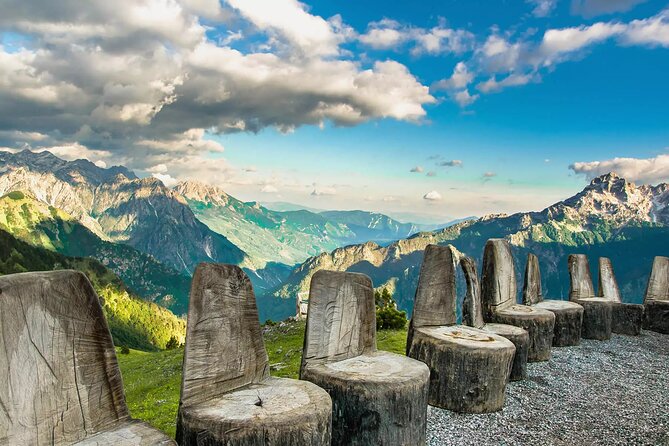
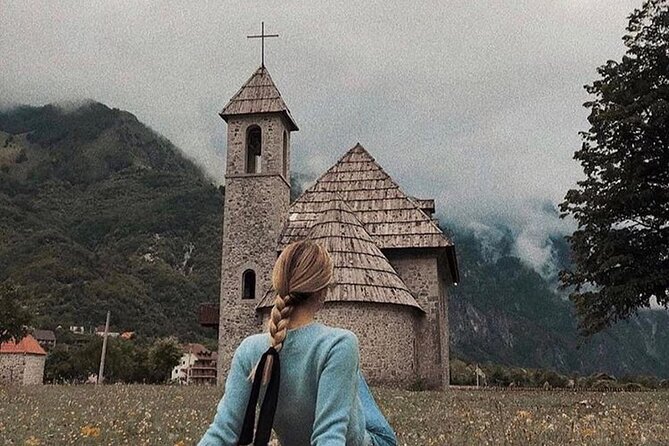
The route to Theth goes over a steep pass at Qafa e Thores (about 1,700 meters), which the tour says is a top photo spot for views of the Albanian Alps. Once you arrive, you visit the Old Church and the Lock in Tower—the lock tower is a symbol of Theth, and the tour’s framing emphasizes how these buildings connect to stories that have lasted for centuries.
Real talk: mountain days can mean cooler air and changing weather. The tour doesn’t promise specific conditions, so bring layers you can add or remove without stress.
At the end of the day, you overnight in Shkodra, which keeps logistics simpler than hopping between tiny base towns.
UNESCO Berat: 1001 windows, living inside the walls, and the Onufri connection
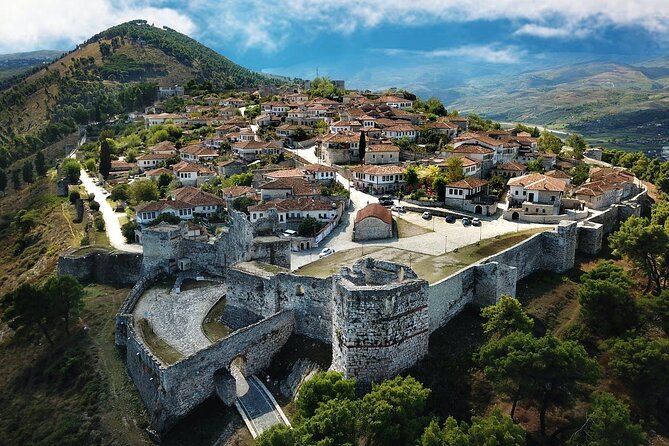
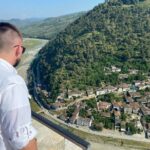
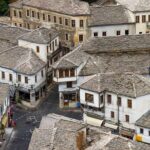
Day 3 brings you to Berat, a UNESCO site known as the town of 1001 windows. The walking experience here is the point: the old stone streets are narrow, and the medieval houses sit high on steep hillsides. It feels like windows stack upward in layers.
Berat’s story also helps you read the place. The city began as an Illyrian settlement in the 6th–5th centuries B.C. Later, in the 3rd century B.C., it became a castle city called Antipatrea. One of the tour’s key details is that residents still live inside the castle walls—so you’re not just looking at preserved ruins. You’re seeing a town that still functions.
The stop list is well chosen:
- Berat Castle for the medieval overview and the blend of churches, mosques, and town life
- National Iconographic Museum Onufri, connected to Onufri, the painter linked to a distinctive reddish color used in church art across the Balkans
- Gorica Bridge and the surrounding neighborhood feel for a slower pace
If you’re worried this is just “another UNESCO city,” this is the kind of UNESCO that avoids that trap. Berat makes the architecture feel like a daily reality, not a museum display.
UNESCO Gjirokaster: the Stone City and how houses became fortresses
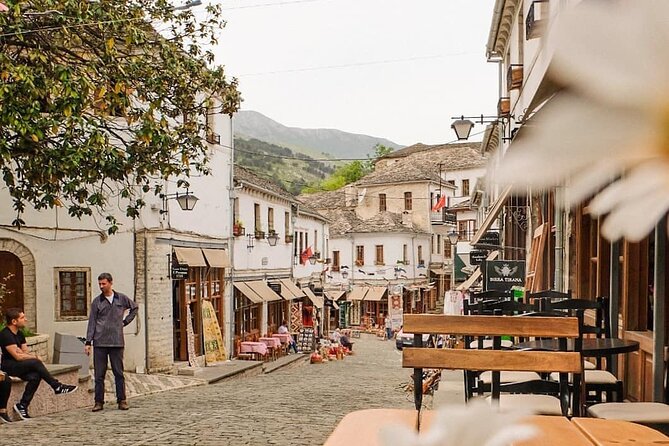
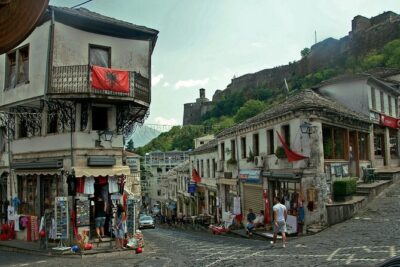
Day 4 is another UNESCO hit: Gjirokaster, also called the Stone City. It sits in southern Albania on the eastern side of Mali i Gjere. The tour explains Gjirokaster as a fortified place where the houses themselves read like small fortresses.
Gjirokaster Castle anchors the visit. The tour notes the castle origin dates to the 4th century A.D., and the town is described as one of the best-preserved medieval settings in the Balkans.
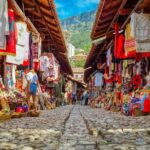
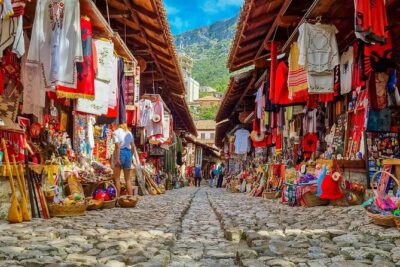
You’ll also spend time in the Gjirokastra Bazaar, which matters because it’s where craft tradition shows up. You pass through an old bazaar and see handmade work by local artisans—ideal if you like buying something meaningful rather than generic souvenirs.
Then comes Skenduli House, presented as one of the best-preserved houses with original, authentic details. This type of house visit can be hit or miss on tours, but here it’s paired with castle + bazaar, so you get context for how daily life fit inside a defense-focused town.
One extra culture note: Gjirokaster becomes a center for Albanian folklore and traditional music every five years, where ensembles gather in the stone city to perform dances, music, and costumes. If your dates don’t line up, you still walk away with a strong sense of what that tradition is attached to—place, not just performance.
Blue Eye, Ksamil, and Butrint: water wonder then Roman-and-prehistory ruins
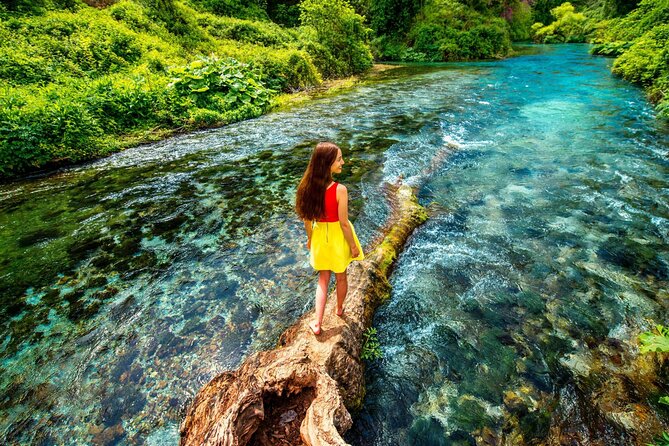
Day 5 starts with a natural stop that’s unusually specific: the Blue Eye. From Mali i Gjere, the spring feeds a water source that the tour says reaches depths divers have gone to (up to 50 meters so far). The water temperature is described as never above 10 degrees, and you can visit the spring area.
This is the kind of stop where your camera might overdo it—because the water is crystal-clear—but it’s also a good mental reset after castle days. Quick note: cold water temperatures don’t mean you’ll be swimming. This is about seeing it.
Next you reach Ksamil, described as a Riviera standout with white sandy beaches and clear water. The tour points out the view of four islands, giving that postcard feeling people look for in coastal Albania.
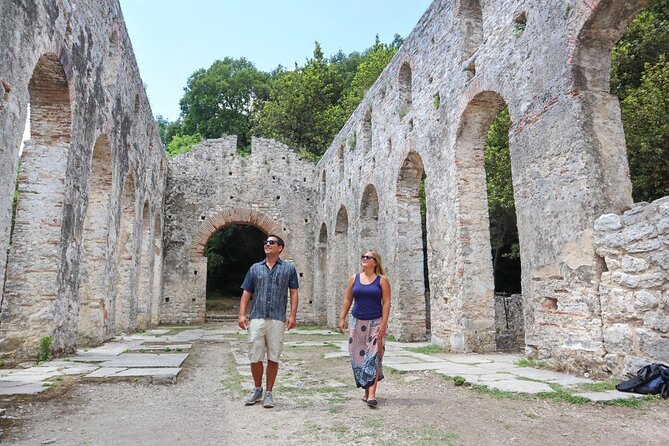
Then you close the day at Butrint National Park, another UNESCO site and the tour’s big archaeological stop. Butrint is called Albania’s most important archaeological site, and the tour notes it was the first Albanian site added to UNESCO. The ruins are the headline, but the surrounding natural setting is part of why the whole area works.
If you like ancient cities that feel connected to nature (instead of fenced-off), Butrint is the right sort of UNESCO.
Himare and Dhermi: the Riviera side of Albania without the rush
Day 6 is the drive along the Albanian Riviera, passing places like Llamani, Dhermi, and Palasa. The tour paints a clear picture of small seaside villages clinging to rock faces, with grapevines and fruit trees mentioned along the way.
You start with Himara, a town near mountain peaks covered in deep green forests and next to long beaches. The focus isn’t just scenery. You get time for a seaside walk and a chance to eat local food with influences from neighboring Greece—so your meal tastes part of the story, not an afterthought.
The tour also highlights the promenade for easy browsing and fresh juice, plus handmade souvenirs.
Then you move on to Dhermi, described as a beach area known for hidden coves and pebble beaches with clear water. The tour gives free time to enjoy sunshine, which is where this day earns its keep. After historic days, you get to do the simplest thing well: sit, look, and relax.
You overnight near Vlore, which makes the next day’s coastal city time easier.
Vlore, Muradie Mosque, and Durres: independence, Ottoman architecture, and Roman ruins
Day 7 begins with the seaside promenade called Lungomare, where the Adriatic and Ionian seas meet. It’s a “walking hour” kind of stop, with the bonus of a coffee break and views of Sazani Island and the Karaburun Peninsula.
Then comes Vlore, tied directly to modern Albanian identity. The tour says Vlore is known as the City of the Flag, because independence was declared there on 28 November 1912. You visit Flag’s Square and the Independence Monument.
You also visit Muradie Mosque, built in 1537 and described as well preserved. This is one of those places where Ottoman architecture feels less like an abstract “style” and more like a real structure in a real city.
The day ends with Durres, with a change of pace again. The tour drives past a mix of older landmarks: an amphitheater, Roman ruins, and a Venetian Tower. You then head to the promenade by the sea called Vollga for a coffee with sea views, and you get the local tip for a classic treat: traditional ice cream.
This mix works. You leave with a sense of Albania at different layers—Ottoman, Roman, and the modern national story—all within one day.
Tirana on the last day: Skanderbeg Square, BUNKART 2, and Blloku food
Day 8 brings you back to Tirana, and it’s a good finish because the city has variety. The tour notes that Tirana blends Ottoman, Italian, and communist-style architecture, and it’s a place to wander without feeling like you must follow a strict “museum-only” plan.
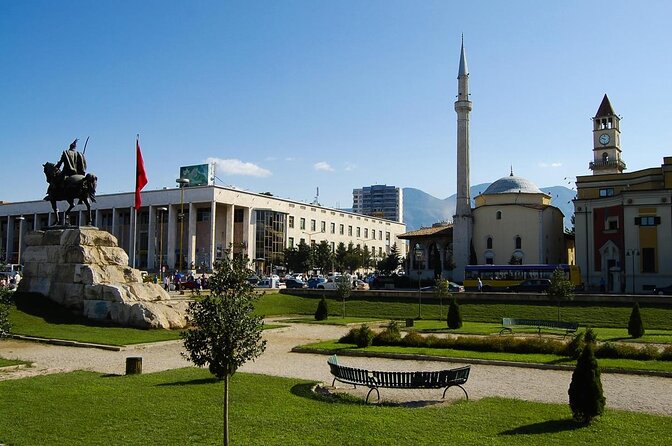
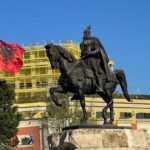
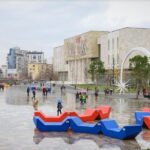
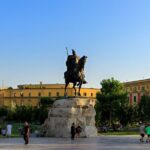
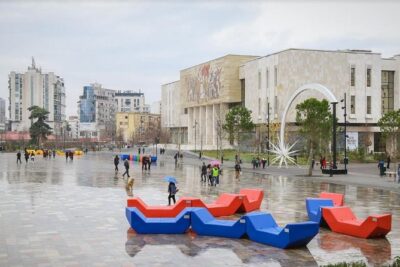
You start with quick discovery time, then head to Skanderbeg Square, the city’s central hub. The square sits surrounded by the National Museum, the Bank of Albania, the Opera house, and key landmarks like the Skanderbeg Statue and Ethem Beu Mosque.
Next is BUNK’ART 2, described as a video museum built into a nuclear bunker. It was originally designed to shelter the communist supreme leader Enver Hoxha and close party members. The tour adds an important detail: it stayed strictly secret to the general public until 2016, when it became a museum.
After that, you walk toward Tirana Castle, now turned into a pedestrian street area centered around Rruga Murat Toptani—where modern life and older traditions overlap.
Your final stop is Blloku, presented as a colorful, lively neighborhood and a food destination ranging from street food to higher-end options. This is a smart way to end: you’re not ending on another lecture. You’re ending on what you can taste.
Who should book this Albania loop (and who might want a different pace)
This tour is ideal if you:
- Want three UNESCO sites without building your own routing puzzle
- Like a small-group feel and guided explanations rather than solo guessing
- Enjoy a balanced mix: castles + churches + markets + a natural spring + a coast day
It may be less ideal if you:
- Hate long drives and prefer one region at a time
- Expect lots of free time every day (the schedule is sight-focused)
- Don’t want to manage meals on your own since lunches and dinners aren’t included
My take on value: if you want history with clear context and you’d rather pay for the logistics than wrestle with them, this route makes sense. The $2,278+ price feels more reasonable when you factor in the private transport, breakfast lodging, and entry tickets packaged into the plan. If you’re trying to keep costs tight, you’ll likely feel the missing lunches and dinners.
FAQ
FAQ
How many UNESCO sites are included?
Three UNESCO sites are part of the route: Berat, Gjirokaster, and Butrint.
What’s the group size?
The tour has a maximum of 10 travelers.
Does the tour include hotel pickup and drop-off?
Yes. Pickup and drop-off in Tirana are included.
What’s included in the price?
Accommodation and breakfast for the overnights, private transportation, a professional tour leader, hotel pickup/drop-off in Tirana, entry tickets for the sites visited, tourist taxes/road taxes/petrol, and 7 breakfasts.
Are entry tickets included for all stops?
Entry tickets are listed as included for the sites that the tour will visit, with some stops marked as free.
What meals are not included?
Lunches, dinners, drinks, and snacks are not included.
What’s the start time and meeting point?
The start time is 9:00 am, and the meeting point is Choose Balkans – Albania Tour Operator, 3rd Floor, Bulevardi Dëshmorët e Kombit Twin Towers, Tower 2, Tiranë 1001.
Can I book a single room?
Yes, single room occupancy is possible for an extra 45 Euros per night per person in a 3-stars hotel accommodation.
Do I need my own travel insurance?
Yes. You are responsible for having your own health/travel insurance.
Is the itinerary fixed?
The schedule may be adjusted due to weather, acts of God, labor strikes, bank holidays, temporary site closures/renovations, or other external forces outside the company’s control.
More Tirana Tours and Albanian Day Trips

More from Our Tirana Review Desk
More Multi-Day Albania Tours, North to South
Not quite it? More Tirana tours and Albanian day trips fresh off our review desk


Best of Albania Multi-Day Tours, compared.
 ★ 5.0Bike or E-Bike Tour Tirana: Highlights & Grand Park Guided CycleFrom $42124 reviews
 ★ 5.0Private 4 Day Tour of Albania from North to the SouthFrom $83836 reviews
 ★ 5.0Private Kosovo Tour from Tirana: Prishtina & Prizren HighlightsFrom $15431 reviews
 ★ 5.0Discover the Best of Albania: 7 Days of Highlights & Hidden GemsFrom $20425 reviews
 ★ 5.0Small Group Tour; Gems of Albania, Kosovo & N. MacedoniaFrom $2,36123 reviews
 ★ 5.0The truest face of CommunismFrom $9018 reviews
 ★ 5.0Best Places To Visit in Albania Tour in 5 daysFrom $66215 reviews
 ★ 5.0Albanian Highlights – UNESCO sites ,Nature and Food tourFrom $97313 reviews
Browse the lists this tour appears in