
Reviewed · BEST OF ALBANIA MULTI-DAY TOURS
Bike or E-Bike Tour Tirana: Highlights & Grand Park Guided Cycle
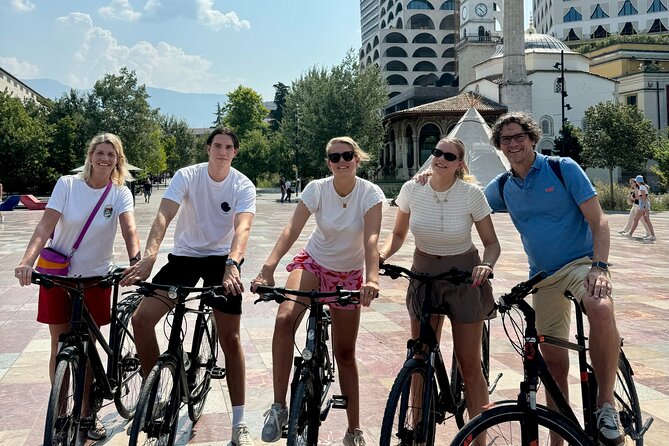
Tirana clicks into place on two wheels. This guided ride strings together classic sights, communist-era reminders, and modern art in one smooth loop, with guides like Denis and Owen explaining what you’re seeing in clear English. I especially like the mostly flat route and the way the tour lands you in Grand Park for an easy breather.
If you’re sensitive to city noise, the only real heads-up is that even with lots of bike-lane time, parts of the central route can feel traffic-heavy and crowded with cars and pedestrians.
You start and finish near the Old Bazaar, and it’s set up as a private experience for your group (so you don’t get stuck waiting for strangers). The whole thing runs about 2 to 3 hours, and you can handle it even as a first-time biker.
In This Review
- Key highlights you should care about
- Why Tirana is such a smart city for a bike tour
- Meeting at the Old Bazaar: start in the right kind of neighborhood
- Skanderbeg Square and the Clock Tower: Tirana’s power center
- Enver Hoxha Pyramid and Bunk’Art 2: communist-era memory on the route
- Tirana Castle area and Roman/Illyrian traces near the center
- Postbllok and the Berlin Wall fragment: freedom themes you can see
- Namazgah Mosque and Mother Teresa Square: religion and identity in public space
- Grand Park: the easy win at the end
- Reja The Cloud and the Fortress of Justinian: modern art meets old stone
- Air Albania Stadium: modern Tirana’s new centerpiece
- Bikes, timing, and what $42.33 really gets you
- How to get the most out of your guide (Denis is one example)
- Should you book this Tirana bike tour?
Key highlights you should care about
- Bike lanes do a lot of the work: The ride is typically flat, with cycling space most of the way.
- You get context fast: You’ll hear how Tirana’s political eras changed the city, not just what the buildings are called.
- Grand Park is the payoff: Lake views, walking paths, and the park’s sights close out the tour.
- Historic stops are practical, not museum-only: You pass major sites and learn on the move, without needing lots of tickets.
- Guides bring personality: In past rides, guides like Denis have added personal moments, like sourcing snacks on the fly.
Why Tirana is such a smart city for a bike tour
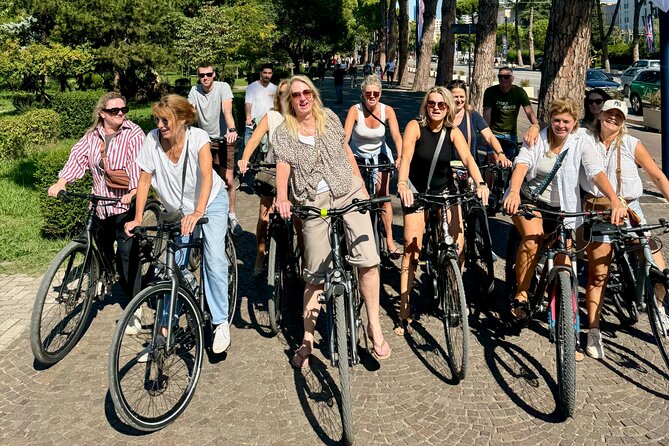
Tirana is the kind of city where it helps to have a plan. Streets can feel like they shift fast between eras—Ottoman traces, communist monuments, then quick cuts to new architecture and public art. A bike tour helps you cover distance without the fatigue of nonstop walking, and you’re moving at a pace that lets stories stick.
This ride also makes sense because it’s designed to be easy to manage. The route is mostly flat, and the cycling stays in safer zones more often than you’d expect. You still need to pay attention in busier central sections, but the overall feel stays relaxed and focused on seeing.
Most of the tour’s stops are free to access, so your money goes toward the guiding and logistics rather than entrance fees. And since the tour runs about 2 to 3 hours, it works well on a day when you want to get your bearings quickly.
More multi-day Albania tours, north to south, we have travelled from Tirana
Meeting at the Old Bazaar: start in the right kind of neighborhood
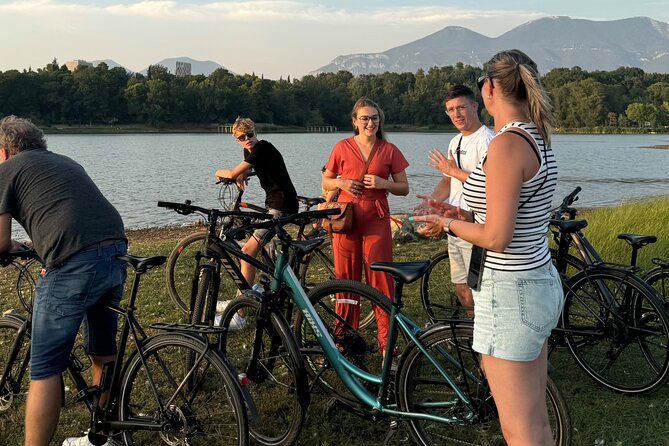
Your tour starts back at the Old Bazaar area (near 8RJF+3PR, Rruga Qemal Stafa). This matters. Starting in a central, lived-in area means you begin in Tirana’s everyday energy—not an out-of-the-way meeting point.
From there, you roll out through places that feel close together, which helps the tour stay efficient. The Old Bazaar itself is popular for daytime browsing, cafes, market energy, and street art—so even if you come in curious, you’ll already be surrounded by clues about local life.
Practical tip: if you’re arriving from a hotel or another part of town, aim to get there early enough to settle in. It’s easy to miss meeting beats when you’re scanning side streets.
Skanderbeg Square and the Clock Tower: Tirana’s power center
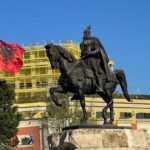
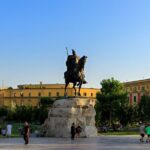
Next you hit Skanderbeg Square, the big open plaza named after Gjergj Kastrioti Skanderbeg. This is where the city’s story becomes visible in stone and scale—surrounded by key institutions, with an 11-meter statue anchoring the space.
The useful part isn’t just that the square is famous. It’s that the names, buildings, and statue create a frame for everything you’ll see later. You’ll learn how national identity gets represented in public space, and why Tirana places hero imagery at the heart of civic life.
Then the tour moves to the Clock Tower area. It’s a simple stop on paper, but it’s a great example of how the city grew. You’ll hear how the tower was once Tirana’s tallest landmark until 1970, and how it sits near the Skanderbeg statue—so you can connect “development” with “where the city chooses to mark time.”
Enver Hoxha Pyramid and Bunk’Art 2: communist-era memory on the route
If Tirana has a hard edge, it shows up clearly in the Enver Hoxha Pyramid stop. It was built as a museum dedicated to Enver Hoxha, and it later shifted into a modern cultural and innovation hub. The value here is that you’re not just looking at a monument—you’re learning how Albania reuses major symbols when regimes change.
There’s also an optional chance to climb on top for a city view, if you feel up for it. Even without the climb, the building works as a visible reminder of the past political mood.
After that, you pass Bunk’Art 2, housed in a former nuclear bunker from the communist period, built to protect government officials during nuclear attack scenarios. It’s the kind of place that’s hard to fully grasp from photos, so seeing it from the bike route gives you a strong mental anchor without turning the tour into a long museum day.
This part of the ride is where good guiding matters most. If your guide is strong, you’ll walk away with a clear sense of how fear, power, and propaganda shaped the city’s landscape.
Tirana Castle area and Roman/Illyrian traces near the center
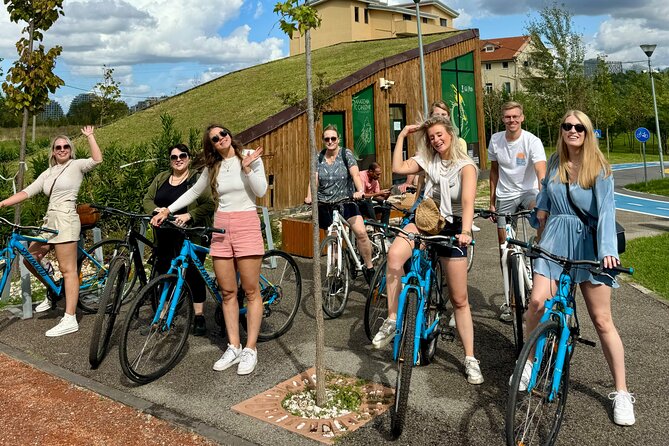
Then comes a more surprising shift: Tirana Castle and the nearby Toptani Castle area. You cycle through Pedonalja, one of the city’s popular pedestrian streets, where shops and cafes line up with colorful buildings—an easy shift from “big monuments” to street-level life.
One of the most compelling details here is the excavation work near the castle area. Recent digs uncovered ancient Illyrian and Roman remains, including parts of a Roman wall and other foundations over 2,000 years old. The point for you isn’t to become an archaeologist—it’s to realize Tirana keeps layers. The city didn’t start when it became a capital, and the bike route makes that idea feel immediate.
Potential drawback to keep in mind: you’re cycling, so you won’t be lingering the way you would in a museum. If you love stopping and reading slowly, choose one or two spots to focus on and let the rest be quick context.
More Tirana bike days we have pedalled out
Postbllok and the Berlin Wall fragment: freedom themes you can see
At Postbllok, you’ll encounter two heavy reminders of the 20th century. First is a Berlin Wall fragment—an actual section gifted to the Albanian people by the German government. It’s meant to symbolize freedom and the end of Cold War division, and it’s one of those objects that forces quiet attention even when you’re just passing by.
Then you get Postbllok Checkpoint nearby, built from concrete elements tied to communist-era labor camp memory, including pillars from a labor camp, a bunker typical of the era, and a mine shaft from the infamous Spaç labor camp. This isn’t light sightseeing, but it’s educational in a direct way: you get the physical evidence of a system that tried to control people’s lives.
This section can hit hard, so it’s worth mentally prepping yourself. If you’d rather focus on more upbeat sights, you can still appreciate it, but keep your expectations balanced.
Namazgah Mosque and Mother Teresa Square: religion and identity in public space
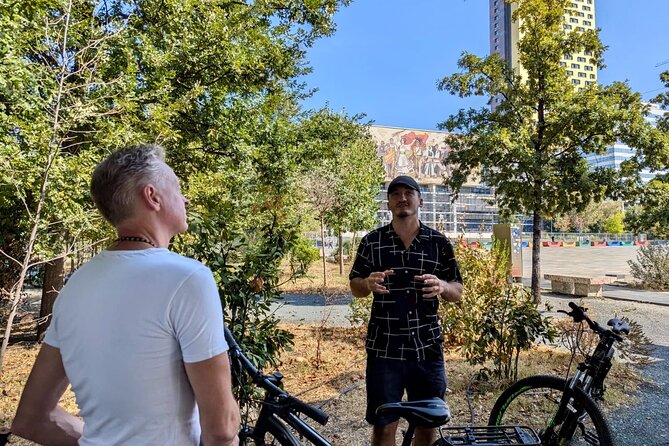
The tour continues past the Mosque of Namazgah, newly opened and the largest mosque in Albania, one of the largest in the Balkans. You’ll hear how Albania is often highlighted for long-running religious coexistence, where Muslims, Catholics, and Orthodox Christians lived together peacefully for centuries. On a bike, this information lands in a way that feels practical: you see how faith shows up in city planning and daily life.
Then you roll toward Mother Teresa Square (Sheshi Nënë Tereza), named after the Albanian-born nun and Nobel Peace Prize laureate. This stop works well because it connects Albanian pride with global impact. And it’s a nice change of pace after the heavier political memory earlier in the tour.
Grand Park: the easy win at the end
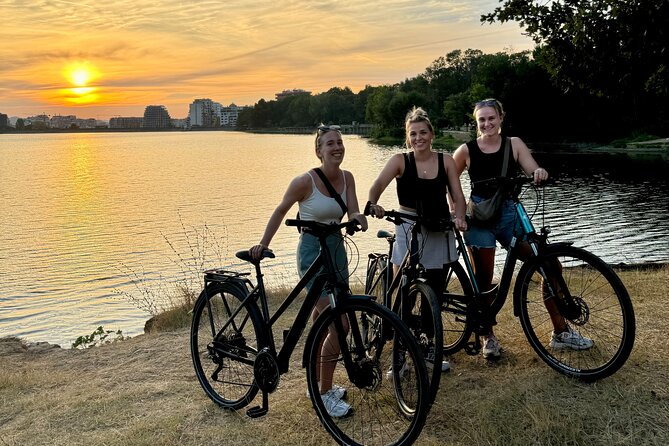
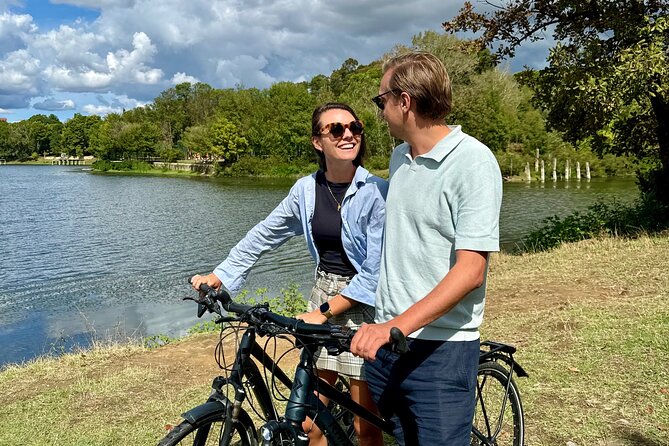
Eventually, you get to the Grand Park (Parku i Madh), one of Tirana’s big green breaks. It spans over 1.5 million square meters and includes an artificial lake created in 1955. You’ll also hear the park was designed by architect Valentina Pistoli, plus it includes memorials, an amphitheater, and Tirana’s only zoo.
This park segment is more than scenery. It’s where the tour resets your energy. After cycles through squares and historical markers, the park gives you space to relax, talk, and absorb the city at a slower speed.
If you want to extend the feeling, you can easily keep walking around the lake area on your own after the tour ends. Just keep an eye on your meeting time if you plan to do more activities right away.
Reja The Cloud and the Fortress of Justinian: modern art meets old stone
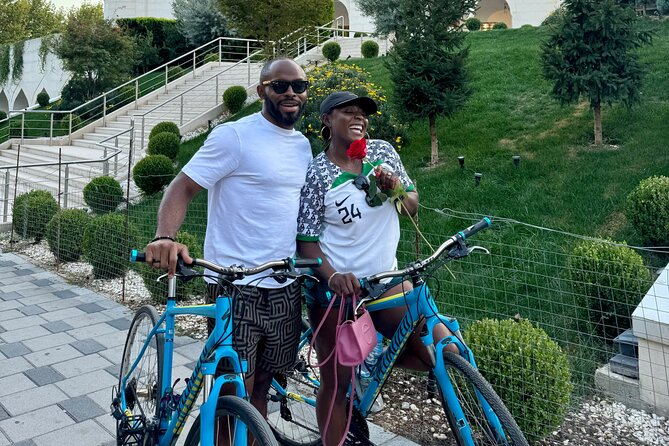
Before the finish, you pass Reja, The Cloud, a modern art installation by Sou Fujimoto. It’s a walkable, see-through structure made of white steel rods, and it’s a popular photo stop near the National Gallery. It’s also a nice reminder that Tirana isn’t stuck in past stories—public space can still be playful and experimental.
Then you get to the Fortress of Justinian, a small remnant of Byzantine-era walls near the city center. Today you’ll see restored stone wall sections and a courtyard with cafes nearby. This is a short stop, but it connects well with what came earlier: layers again, from Byzantine into later eras, all within easy reach.
Air Albania Stadium: modern Tirana’s new centerpiece
You also cycle past Air Albania Stadium, Tirana’s national stadium. It opened in 2019 and has a red-and-black design tied to the national flag. The area includes a Marriott hotel, shopping spaces, and offices, which gives you a quick look at how sports and business are fused into the city’s current center.
This stop is mostly about atmosphere and contrast. You’re not there to watch a match—just to see how the modern city projects itself when it wants to look forward.
Bikes, timing, and what $42.33 really gets you
At about $42.33 per person for a 2 to 3 hour guided ride, you’re paying for route planning, guiding, and the ability to cover key sights quickly. Because many stops have free admission listed, the value leans heavily toward interpretation rather than entry fees.
Group discounts are available, and the tour is offered in English. It’s also run as a private tour, meaning only your group participates. That’s a big deal if you want questions answered without feeling rushed by larger groups.
You’ll see mixed bike formats. One past note said e-bikes weren’t available on that particular day, while other feedback highlighted great e-bikes. Best move: if e-bike comfort is important to you, ask ahead so you’re not surprised on arrival.
Timing note: the ride is designed to end back at the meeting point. That keeps things simple if you’re planning lunch or another afternoon activity right after.
How to get the most out of your guide (Denis is one example)
This kind of tour works best when the guide connects dots. Names you might recognize from past rides include Denis, Owen, Gancy, Arid, and Bram. What they tend to have in common is clear English and a focus on explaining culture and Albanian history in a way that fits the pace of cycling.
One memorable kind of detail that shows up in guide style: in one ride, the guide climbed a tree to find huckleberries to try. That’s not the point of the tour, but it tells you how guides think—small moments that make the city feel lived-in instead of narrated.
Also, guides seem ready to adapt. If you want extra time near Grand Park or you’d rather go slower through a busy street segment, expect the ride to adjust to your comfort.
Should you book this Tirana bike tour?
Book it if you want a fast, friendly way to see Tirana’s most important landmarks without doing a pile of walking. It’s especially worth it for first-timers who want the “what am I looking at” explanations for both Ottoman-era remnants and communist-era memory sites, followed by the payoff of Grand Park.
Skip or reconsider if you’re uncomfortable with any bike riding in busy central areas, since the route includes parts where cars and pedestrians share space. And if the weather is iffy, plan on flexibility—this experience needs good weather to run smoothly.
If you want one practical strategy: schedule this early in your trip. Get your bearings, learn the city’s major eras, then use the rest of your days to go deeper where the tour sparks your curiosity.
More Tirana Tours and Albanian Day Trips

More from Our Tirana Review Desk
More Multi-Day Albania Tours, North to South
Not quite it? More Tirana tours and Albanian day trips fresh off our review desk



Best of Albania Multi-Day Tours, compared.
 ★ 5.0Private 4 Day Tour of Albania from North to the SouthFrom $83836 reviews
 ★ 5.0Private Kosovo Tour from Tirana: Prishtina & Prizren HighlightsFrom $15431 reviews
 ★ 5.0Small Group Tour; Pearls of Albania in 8 Days (3 UNESCO Sites)From $2,27829 reviews
 ★ 5.0Discover the Best of Albania: 7 Days of Highlights & Hidden GemsFrom $20425 reviews
 ★ 5.0Small Group Tour; Gems of Albania, Kosovo & N. MacedoniaFrom $2,36123 reviews
 ★ 5.0The truest face of CommunismFrom $9018 reviews
 ★ 5.0Best Places To Visit in Albania Tour in 5 daysFrom $66215 reviews
 ★ 5.0Albanian Highlights – UNESCO sites ,Nature and Food tourFrom $97313 reviews
Browse the lists this tour appears in