
Reviewed · TIRANA CITY WALKING TOURS
Tirana by locals
Tirana can feel like two cities in one. This walking tour threads together Skanderbeg Square, communism-era landmarks, and today’s street life without making it heavy or hard to follow. You walk with a local guide who connects the architecture, the politics, and the everyday rhythms in between.
I really like how the route is compact but meaningful. Two things I’d happily put on your must-see list are Enver Hoxha Pyramid and the House of Leaves Museum, because both show the country’s darker chapters in real, physical form.
One thing to consider: the tour is short (about 1 to 2 hours), so you won’t get hours inside every site. Also, since it runs best with good weather, plan on rescheduling if the day is rainy.
In This Review
- Key things to know before you go
- Skanderbeg Square: Tirana’s outdoor living room
- The “mixed history” vibe around Enver Hoxha’s Pyramid
- House of Leaves Museum: communism shown as a lived system
- Blloku: from restricted villas to coffee-and-cocktail culture
- Polytechnic University of Tirana: student energy with real names and dates
- Tour length, group size, and how that affects your experience
- Price and value: what $17.36 really buys you
- Guides make the difference: Eri, Leo, and Mimmi energy
- Practical advice: footwear, weather, and timing
- Who should book this Tirana by locals walk?
- Should you book this tour?
- FAQ
- How long is the Tirana walking tour?
- What is the meeting point and where does the tour end?
- How much does it cost per person?
- What’s included in the tour price?
- Which stops are free to visit?
- Is the tour ticket mobile?
- Is it suitable for most people?
- What happens if the weather is bad?
Key things to know before you go
- Skanderbeg Square highlights: Et’hem Bey Mosque, Clock Tower, and the National Theater linked to Nikita Khrushchev’s era
- Enver Hoxha Pyramid stop: a stubborn communism symbol that still looks raw and un-restored
- House of Leaves Museum context: an old espionage/information building turned into a museum
- Blloku area change: former restricted government space now full of coffee, boutiques, cocktails, and pubs
- Polytechnic University timing: you’ll see student life without a long detour
Skanderbeg Square: Tirana’s outdoor living room
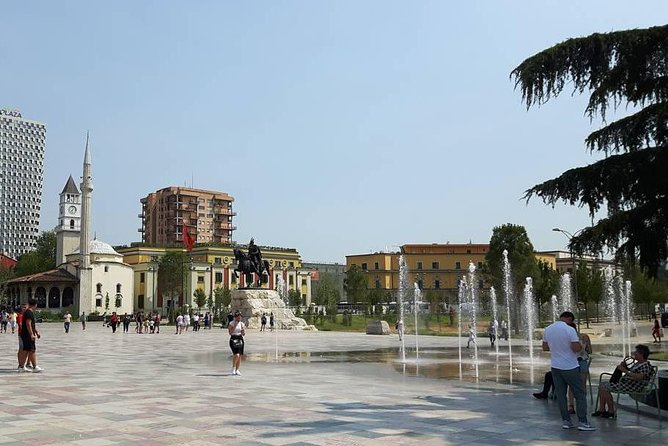
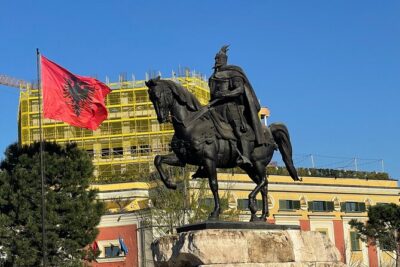
You start in Sheshi Skënderbej (Skanderbeg Square), which is smart. This is where you can get your bearings fast, and the big landmarks are close enough that your guide can point out what matters without rushing you. The square is more than a photo stop. It’s an easy place to understand how Tirana layers power, faith, and public life in one view.
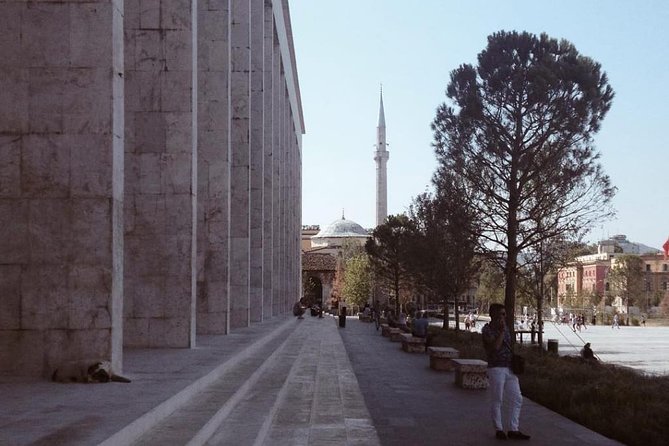
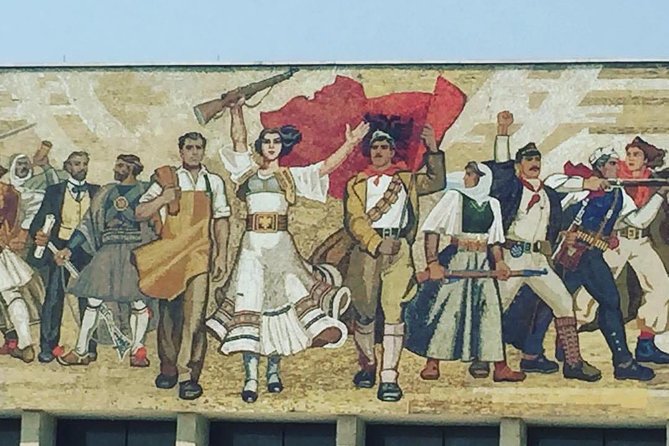
Here’s what you’ll run into right away: the Et’hem Bey Mosque, the Clock Tower of Tirana, and the National Theater of Opera and Ballet. One detail your guide will likely make you notice is that the first brick for the theater was placed by Nikita Khrushchev (yes, that Khrushchev). That one fact makes the whole square feel like a crossroads of influences, not just Albanian history.
Then you’ll also be able to spot the National Bank of Albania from the area as you walk the square. It’s one of those visuals that quietly says modern Tirana is about finance, offices, and institutions—not only monuments.
One practical note: because the square is the hub for a lot of city activity, wear shoes that handle uneven pavement and be ready for crowds around landmark corners, especially if you arrive near other group tours.
More Tirana walking tours through the boulevards and back lanes



The “mixed history” vibe around Enver Hoxha’s Pyramid
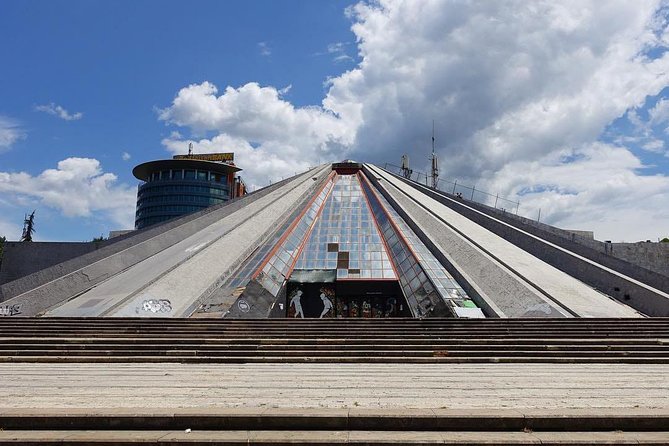
After the square, you head to the Enver Hoxha Pyramid, and it’s a strong pivot in tone. Skanderbeg Square is about public grandeur. The pyramid is about a particular kind of power—and it still looks like it hasn’t been fully processed by time.
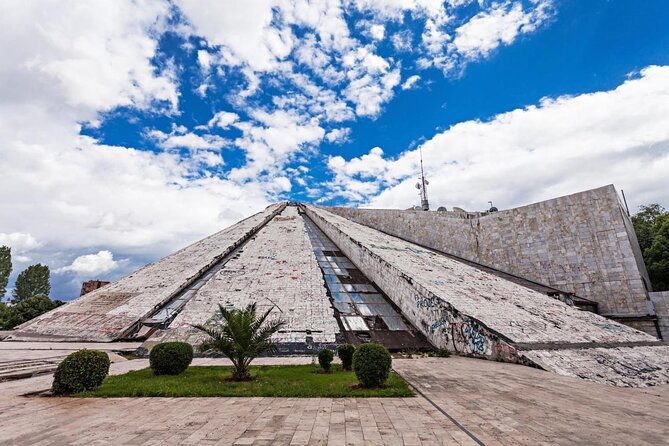
What makes this stop worth your attention is the story your guide is likely to emphasize: the pyramid resisted attempts to be destroyed by previous governments, so it remains there, un-restored. That matters. It turns a single building into an argument about memory—what gets repaired, what gets erased, and what gets left standing as a reminder.
Also, it’s hard to fake this kind of place. You’re not looking at a concept; you’re looking at a structure. Even from outside and in short time on the route, you can read the mood. Your guide will help you connect it to communism-era priorities and why the site became a visible contradiction inside a modern city.
Drawback to flag: since the tour is short, you don’t get a long, slow “sit with your thoughts” moment here. If you want deep architectural analysis, you may want to budget extra time on your own after the walk.
House of Leaves Museum: communism shown as a lived system
Next comes the House of Leaves Museum, and this is the point where the tour shifts from architecture to human reality. The museum uses a space that used to function as the National Intelligence Agency—an espionage house—so the setting itself carries weight.
This stop is designed to communicate harsh communism-era life to both young people and foreigners. In other words, the museum isn’t only for history nerds; it’s built to help you understand how control worked day to day. Expect the tone to be serious. Even if you only have limited time, your guide’s framing can make the exhibits easier to grasp, because they’ll connect what you see to the broader context of who had access, who didn’t, and why information mattered so much.
One practical consideration: the House of Leaves Museum is listed as a key highlight, but the information provided does not clearly say whether its admission is included the same way as the first two stops. So if you’re trying to budget tightly, confirm what’s covered when you book. Plan for the possibility of an entry fee at this stop.
Blloku: from restricted villas to coffee-and-cocktail culture
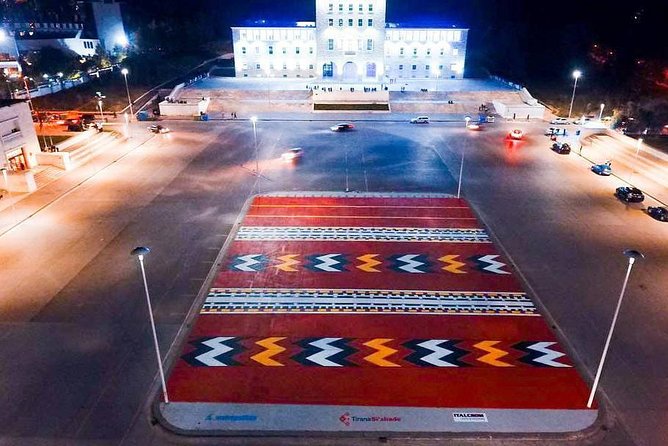
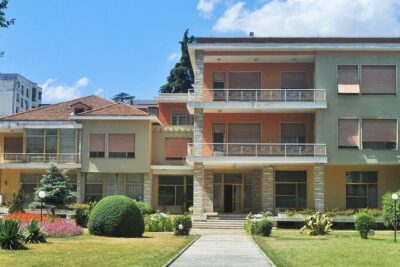
Then you shift into Blloku, which is where Tirana gets lighter, louder, and more social. The area was once reserved for government officials and was off-limits to the general public. Now it’s full of coffee shops, boutiques, cocktails bars, and pubs—and you can feel the change just by walking.
This is a useful stop for anyone who worries that Tirana only means heavy sites. Blloku helps you see the flip side: what happens to space after politics changes. It’s not just about new businesses; it’s about new rules about who belongs where.
Your guide will connect the district’s present-day energy to the past, including the connection to Enver Hoxha’s villa area. The contrast is the point. One block can hold an entire timeline, from guarded access to casual strolls.
Tip for enjoyment: take a moment to look at signage and storefront styles. They’re small, but they show how Tirana’s “now” speaks a different design language than the communist-era structures you saw earlier.
Polytechnic University of Tirana: student energy with real names and dates
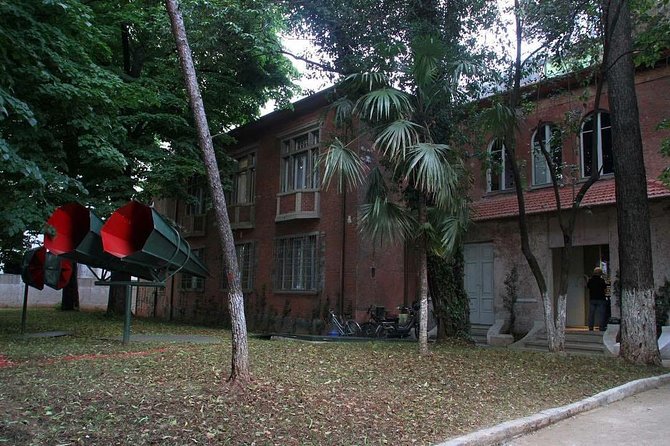
The final stretch brings you to the Polytechnic University of Tirana, which is older and bigger than many people expect. It’s the oldest and the second largest university in Albania after the University of Tirana, founded in 1951.
Your guide can tell you the scale too: about 10,000 students now attend, coming from Albania, Kosovo, Macedonia, and Montenegro. That regional mix is a useful detail because it frames Tirana as a regional education hub, not only a national capital.
This stop is free, and it works well as a release valve after the museum. You’re still learning, but you’re learning about current life—future careers, classrooms, and student movement—rather than solely reflecting on past systems.
Keep expectations reasonable: you’ll get a short look as you move through. If you want to go deeper (campus tours, longer conversations), you’ll need extra time beyond this walking route.


Tour length, group size, and how that affects your experience
This tour runs about 1 to 2 hours, with a start time of 9:00 am and a meeting point at Skanderbeg Square. That short window is both a strength and a limitation.
It’s a strength because you’ll cover major anchors in a single session: square, pyramid, museum stop, then Blloku and the university. It’s also ideal if you’re arriving in the morning and want an orientation walk that gives you context for the rest of the day.
It’s a limitation because none of the stops are given “all day” attention. You’ll see key parts and learn the connections, but you won’t have time for deep research at every building. If you’re the kind of person who likes to read every plaque and linger, consider adding your own follow-up visit to the site that hits you hardest.
Good news: the group size is capped at 15 people, which usually means you can hear your guide and ask questions without getting lost in a crowd.
Price and value: what $17.36 really buys you
At $17.36 per person, the price is low enough that it doesn’t feel like you’re paying mostly for logistics. You’re paying for local guidance and for access to key moments in the city.
The biggest value comes from focus. With a professional guide, you’re not just walking between landmarks—you’re getting the “why” behind them, like the Khrushchev connection at the theater and the persistence of the pyramid through attempted destruction.
Also, some admissions are listed as included for parts of the route (Skanderbeg Square and the pyramid), while other areas are free (Blloku and Polytechnic). That mix matters because you’re less likely to feel nickel-and-dimed mid-walk.
One more value signal: it’s a mobile ticket, so you don’t need to hunt down paper confirmations. You just show up.
Possible downside on value: the House of Leaves Museum entry fee may or may not be covered the same way as other stops (the details provided only explicitly mention included tickets for the first two stops). So if you’re comparing total cost, check your booking details for what’s included versus what you pay on-site.
Guides make the difference: Eri, Leo, and Mimmi energy
The quality of this experience often comes down to your guide’s style. The information you shared includes examples of local guides who make the tour feel personal and easy to follow.
Eri is described as patient and professional, taking as many photos and videos as you want. Leo is described as kind, bright, and highly professional—exactly the kind of person who can explain a complicated past without making it confusing. And Mimmi is described less like a lecturer and more like a friend who walks you through Tirana as locals experience it, with a sense of story at every stop.
So, if your goal is to leave Tirana with understanding (not just photos), this tour’s guide factor matters.
Practical advice: footwear, weather, and timing
This is a walking tour, so plan like a walker. Comfortable shoes beat fashion. Bring water, especially if you’re starting at 9:00 am on a warm day.
The experience requires good weather. If it’s canceled due to poor conditions, you’ll be offered a different date or a full refund. Translation: don’t schedule this as your one and only plan unless you have a backup day.
If you rely on public transportation, you’re close to it (the meeting point is near public transport). Service animals are allowed as well.
And if you’re planning ahead: it’s commonly booked about 70 days in advance, which suggests popular dates can fill up.
Who should book this Tirana by locals walk?
Book it if you want:
- A short, structured introduction to Tirana’s main anchors
- Clear explanations connecting communist-era spaces to today’s neighborhoods
- A guide-led way to understand the city without needing a guidebook marathon
Skip it (or plan a follow-up) if you want:
- Long museum time or deep, quiet study inside each building
- A more slow-paced route with extra stops beyond the listed highlights
- A flexible day when weather could change fast
Should you book this tour?
Yes, if you want a smart first look at Tirana in under two hours, guided by someone who can connect the dots between square landmarks, the communist-era imprint, and the modern feel of Blloku. The price is reasonable for what you gain—especially the combination of public landmarks, serious museum context, and a neighborhood that shows how rules and daily life changed.
If you’re sensitive to heavy themes, go anyway but accept that the House of Leaves Museum will likely affect the mood. And if you’re a slow linger type, bring extra time afterward for the stop that you can’t stop thinking about.
FAQ
How long is the Tirana walking tour?
It lasts about 1 to 2 hours.
What is the meeting point and where does the tour end?
You start at Skanderbeg Square (Sheshi Skënderbej, Tiranë, Albania) and the tour ends back at the same meeting point.
How much does it cost per person?
The price is $17.36 per person.
What’s included in the tour price?
A professional guide is included. Some admissions are listed as included for specific stops, while other areas are free.
Which stops are free to visit?
Blloku and the Polytechnic University of Tirana are listed as free.
Is the tour ticket mobile?
Yes, you receive a mobile ticket.
Is it suitable for most people?
Most people can participate.
What happens if the weather is bad?
The tour requires good weather. If it’s canceled due to poor weather, you’ll be offered a different date or a full refund.
More from Our Tirana Review Desk
More Ways to Walk Tirana on Foot


Not quite it? More Tirana tours and Albanian day trips fresh off our review desk







Tirana City Walking Tours, compared.
 ★ 5.0Walking Tour of TiranaFrom $18646 reviews
 ★ 5.0Local food experience & walking tour of TiranaFrom $60192 reviews
 ★ 5.0Tour a Piedi di TiranaFrom $20174 reviews
 ★ 5.0Best of Local Food & City Tour of Tirana – Food & Drinks IncludedFrom $72160 reviews
 ★ 5.0Berat Walking TourFrom $1886 reviews
 ★ 5.0Tirana Hidden Treasures Sightseeing TourFrom $1660 reviews
 ★ 4.5City Tour of Tirana & Dajti Mountain with PickupFrom $6059 reviews
 ★ 5.0Tirana Walking Tour: History, Culture &Gems by a Passionate GuideFrom $3652 reviews
Browse the lists this tour appears in