
Reviewed · TIRANA CITY WALKING TOURS
Tirana Walking Tour: History, Culture &Gems by a Passionate Guide
Tirana makes sense fast on foot. This small-group walk with Albiona connects downtown Tirana’s big landmarks with real stories, all in English, in about 3 to 4 hours. You start at the city’s central heart and end back where you began, so you don’t need to figure out the route on your first day.
I especially like the mix of sights and meaning. You’ll get a traditional rakia shot, plus stop-by-stop context that helps you read the city instead of just snapping photos. One thing to consider: some stops are brief, and the Museum of Secret Surveillance ticket is not included, so you may want a little extra time and cash for that add-on.
In This Review
- Key things that make this tour worth your time
- Getting your bearings fast in central Tirana
- Skanderbeg Square to the Clock Tower: the city’s center, unpacked
- Markets and spiritual sites: Pazari i Ri and Teqja Pazari
- Tombs, old houses, and the street of Murat Toptani
- Communist-era memory in Blloku: Postbllok to the Enver Hoxha villa
- Religion after suppression: Saint Paul and the Orthodox Cathedral
- A socialist-era pause, plus the Pyramid and other modern landmarks
- Price and value: why $36.20 can feel like a bargain
- What to expect from Albiona’s guiding style
- Tips for your feet, your time, and your attention
- Should you book this Tirana walking tour?
- FAQ
- How long is the Tirana Walking Tour?
- Where does the tour start and end?
- What is the price of the tour?
- Is the tour in English?
- How many people are in the group?
- What is included in the price?
- Which admission tickets are included or not included?
- Do I need good weather for the tour?
- Is a mobile ticket provided?
- Are there any basic participation rules I should know?
- Is free cancellation available?
Key things that make this tour worth your time
- Start at Skanderbeg Square so you quickly understand Tirana’s layout
- Albiona’s storytelling style keeps you oriented without turning it into a lecture
- Rakia tasting is included, a small moment that tastes like place, not just history
- Ottoman and Venetian architecture meet on the same route, especially around Et’hem Bej Mosque and the Clock Tower
- You’ll hit major communist-era sites in the Blloku area, not just the pretty facades
- Bunk’Art 2 is part of the walk, while the Museum of Secret Surveillance is separate
Getting your bearings fast in central Tirana
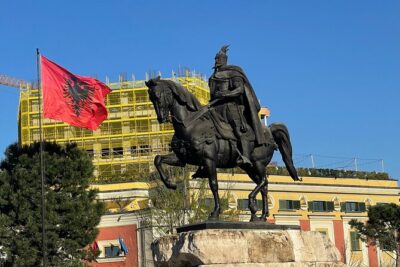
If you only have a day or two in Tirana, this walk is a smart way to get your mental map lined up. You start at Skanderbeg Square, the central public space named for the national hero, and you move outward from there in a route that stays in the city’s core.
The payoff is practical. After a tour like this, you can look at streets and squares and know what you’re seeing. And because the group is capped at 11 travelers, you’re not stuck listening at the back while your feet get ignored.
The pace also matters. Most stops are short, which is perfect for first-time orientation. If you’re the type who wants 45 minutes in a single building, you might feel a little itchy. But if you prefer “see a lot, learn the why,” this format fits.
More Tirana walking tours through the boulevards and back lanes


Skanderbeg Square to the Clock Tower: the city’s center, unpacked
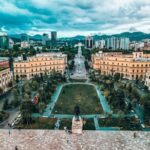
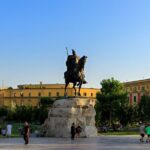
You begin at Skanderbeg Square, a place that feels like the middle of everything. You’ll hear why it matters and how Tirana’s identity took shape around its public spaces.
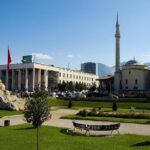
Next comes Et’hem Bej Mosque. From the outside, it looks restrained. Inside, the mood changes fast. Expect detailed frescoes with floral and natural motifs, plus colorful depictions that create a calm, almost storybook atmosphere—trees, waterfalls, and bridges inside a mosque setting is the kind of contrast Albania does well.
From there, it’s a quick hop to the Clock Tower, about 35 meters tall. It’s a strong visual landmark, and the architecture blends Ottoman and Venetian influences. That mix is a theme you’ll keep noticing as you walk—Tirana isn’t one era frozen in time. It’s more like layers that learned to coexist.
A short stop follows at Sheshi Sulejman Pasha (Sulejman Bargjini Square). This is smaller than Skanderbeg Square but still important as a public hub tied to Tirana’s founder. These kinds of squares are where the city’s daily rhythm lives.
Markets and spiritual sites: Pazari i Ri and Teqja Pazari
After the monuments, you shift into everyday Tirana life at Pazari i Ri, the New Bazaar. This is where the city shows its practical side. Expect colorful stalls with fresh produce and local goods—spices, crafts, and traditional Albanian foods. Even if you don’t buy anything, this stop helps you understand that Tirana isn’t only memorials and cathedrals. It’s a place where people shop, taste, and talk.
Then you head to Teqja Pazari, a Bektashi religious site. The teqe (Bektashi monastery) connects to the Bektashi Order, a Sufi Muslim group known for mysticism and progressive values. For me, this stop works because it adds nuance. It’s not just about the building. It’s about how Albania’s spiritual history has more than one thread.
If you’re the kind of traveler who loves context, you’ll appreciate the way these stops connect. A market tells you what people need. A teqe tells you what people value. Put them on the same walk, and Tirana becomes easier to interpret.
Tombs, old houses, and the street of Murat Toptani
A few steps later you’ll see Kapllan Pasha’s Tomb, designated as a cultural monument by Albania in 1948. It’s an octagonal structure from the early 19th century, built with carved stone and decorated plant motifs. You’ll also hear the story of who was buried here and how the tomb fits into Tirana’s political history.
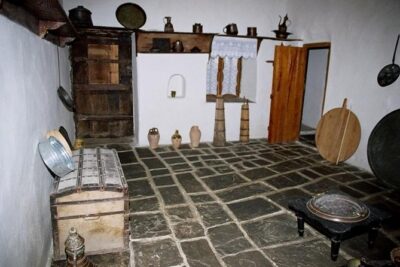
Next is the Ethnographic Museum of Tirana / Toptani Sarajet Old Typical House. This is a short stop, but it’s useful. It gives you a glimpse of traditional Albanian domestic life—how people lived before the city’s later transformations. When time is limited, these “snapshot” museum moments help you avoid reducing Albania to only big political turning points.
Then you walk along Rruga Murat Toptani, a street that blends historical charm with modern appeal. It’s the kind of place where you can look up, notice details, and realize the city doesn’t only exist in landmarks. It exists in streets you’ll actually walk later.
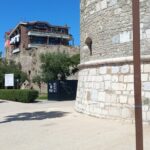
The route also includes Tirana Castle. Here, you’re looking for contrasts: ancient ruins next to modern attractions. The short stop is ideal if you want the vibe and a starting point for return visits later, not if you want a full day archaeologist mode.
Communist-era memory in Blloku: Postbllok to the Enver Hoxha villa
This is the emotional center of the tour for many people, and it’s handled in a way that’s more educational than dramatic. You’ll see Postbllok – Checkpoint Memorial near the entrance of the Blloku neighborhood. The installation functions as an open-air reminder of Albania’s communist past. It’s a symbol of the oppressive regime and what it meant in daily life.
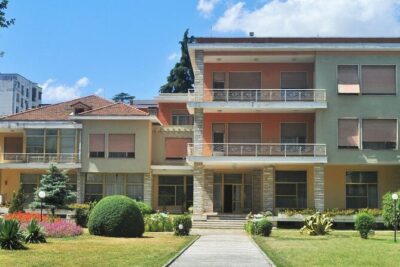
Then the walk moves toward Shtepia Partise Enver Hoxha, the former villa of Enver Hoxha in the Blloku area. This is tied to a real power structure—once off-limits to ordinary citizens—so the space itself helps explain how control worked. You don’t have to agree with the politics to understand the impact; the place tells part of the story.
After that, you’ll spend time in Blloku itself. This neighborhood has changed a lot. It went from restricted elite space to a lively social area that now anchors downtown life. That shift matters because it shows what people do after a heavy chapter: they remake the spaces, reuse them, and build community again.
Two more stops expand the picture. Shallvaret gives another look at older neighborhoods and how Tirana’s past connects to present-day city life. And nearby, the route includes a major site tied to the communist era’s legacy in memory and architecture.
That’s where Bunk’Art 2 comes in. This is an immersive experience in the sense that it’s a real physical structure repurposed from a former bunker used during communism. It’s a strong stop because you can see how fear, secrecy, and politics left material traces. If you don’t like taking in heavy themes, this might be the part where you slow down. It’s also the part where you’ll likely remember the details later.
Finally, you’ll reach the Museum of Secret Surveillance (Shtëpia me Gjethe / House of Leaves)—but note it is marked as a ticket not included. If you want to go deep on this theme, you’ll likely want to plan for that extra entry. If you’re not sure, at least treat it as a signpost. The tour is designed so you understand why that museum exists in the first place.
More Tirana walks worth putting your boots on for

Religion after suppression: Saint Paul and the Orthodox Cathedral
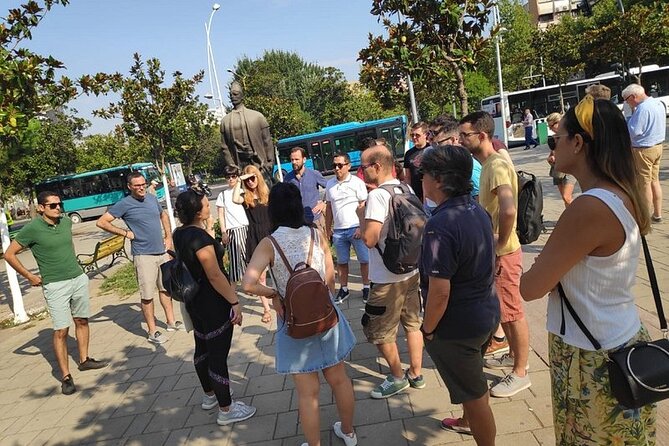
Tirana’s religious story is part of why the city feels like it’s always reinventing itself. You’ll visit Saint Paul’s Cathedral. Even with a short stop, you get a sense of architectural beauty and a calmer spiritual atmosphere.
Next, the route includes the Orthodox Cathedral of Resurrection. This cathedral is tied to Albania’s religious revival after decades of suppression under Enver Hoxha’s regime. The key context you’ll hear is clear: in 1967, Albania declared itself the world’s first atheist state, and religious practices were banned. Many religious institutions were destroyed or repurposed.
After the fall of communism in the early 1990s, rebuilding began. The Resurrection Cathedral was constructed between 2001 and 2012 and officially consecrated on June 24, 2012. So when you stand there, you’re looking at more than a building. You’re seeing a marker of recovery.
This section is valuable because it doesn’t treat religion like decoration. It frames faith as part of cultural survival. And that makes the rest of the tour click.
A socialist-era pause, plus the Pyramid and other modern landmarks
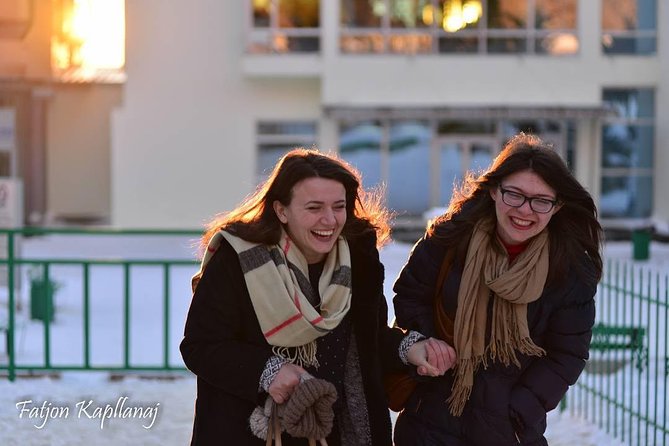
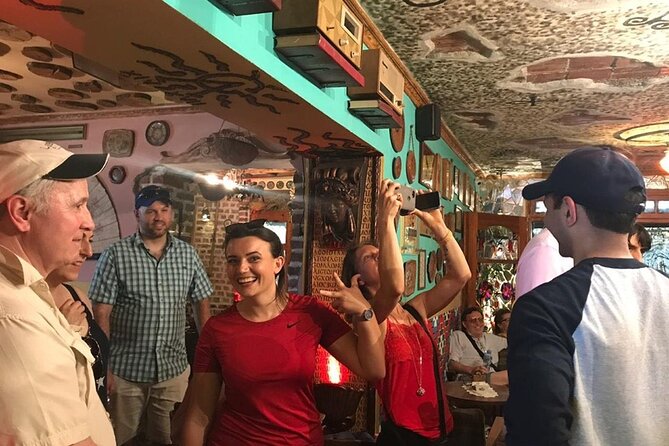
The tour brings in Komiteti Bar (Komiteti Kafe Museum), which connects socialist-era culture with Albanian hospitality. It’s a smart break in the middle of a heavy theme stretch. You get a moment to sit, reset, and still keep learning. This kind of pacing is one of the reasons the tour works so well when you’re new to the city.
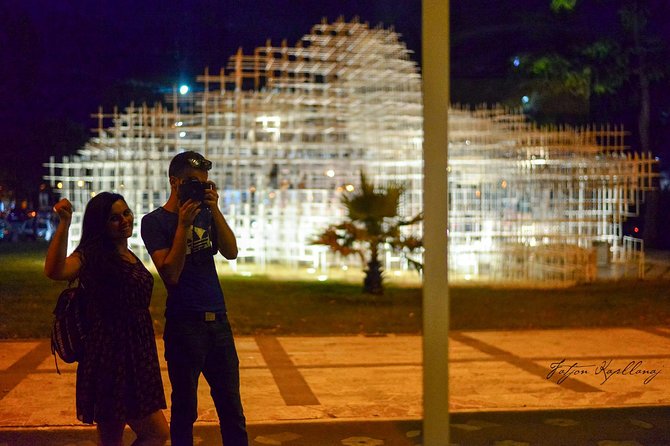
Then you head to the Pyramid of Tirana. It’s known for a unique blend of historical significance and later transformation. Even in a brief stop, you’ll get the basic story: this is a landmark that reflects political ambition, then later became something else as the country changed.
You finish with a more grounded civic beat at the Bank of Albania, the central bank of the country. Established in 1925, it’s one of Albania’s older financial institutions. The idea here is to remind you that Tirana’s story isn’t only monuments and ideology. It’s also institutions and everyday systems that keep the country running.
Price and value: why $36.20 can feel like a bargain
At $36.20 per person, this tour is priced like a practical orientation walk, not a pricey museum day. For your money, you get a guide-led route across a wide range of Tirana’s identity—from Ottoman architecture to communist memory spaces—plus an included rakia shot.
The value gets clearer when you look at what’s included versus what isn’t. Many key stops are marked as free admissions, which means the cost goes primarily toward the guide’s time, route planning, and the connections between sites. The one meaningful exception is the Museum of Secret Surveillance ticket, which is not included. So you can treat that as optional depth rather than part of the base price.
Also, the group size (max 11) affects value. You’re more likely to actually ask questions and get answers that match your interests, instead of getting the “tour script readout” experience.
What to expect from Albiona’s guiding style
Albiona’s impact shows up in small things: she gives enough detail to make you understand the city, but she leaves room for conversation. In the tour experience you’re provided, flexibility matters too. When timing gets thrown off by real-world issues like traffic, the tour can still be kept enjoyable and efficient rather than abandoned.
That flexibility is a big deal on foot tours. Tirana can have its own timing rhythm, and you don’t want to lose the day because one schedule slipped. Having a guide who can adjust without rushing you makes the difference between a checklist and a lived-in experience.
The other thing I like is balance. The tour includes the hard parts of Albania’s 20th-century story—yet it also frames the country’s resilience and strength. You end up with a more complete emotional picture than if you only visited monuments.
Tips for your feet, your time, and your attention
This is a walking tour, and the stops are designed around short time windows. Wear comfortable shoes and expect to move. Bring water if it’s warm. And if you’re sensitive to heavy topics, give yourself permission to slow down at the memory-focused stops like Postbllok and the Enver Hoxha villa areas.
If you’re visiting Tirana in the evening or late in the day, note that this route is built for daytime orientation. It won’t replace a later wander, but it will set you up to enjoy evening streets with more context.
Should you book this Tirana walking tour?
Book it if you want a high-value first-day framework: central squares, Ottoman and Venetian architecture cues, markets, and the communist-era landmarks that shape how Tirana thinks about itself. The included rakia tasting is a nice bonus, and the small group size helps the guide keep things human.
Skip or consider carefully if you need long museum time in one place, or if you strongly prefer purely scenic stops over politically historical ones. Also, if you’re determined to see the Museum of Secret Surveillance, plan on extra time and an additional ticket since it’s not included.
If your goal is to understand Tirana instead of just pass through it, this is the kind of guided walk that pays off all trip.
FAQ
How long is the Tirana Walking Tour?
It lasts about 3 to 4 hours.
Where does the tour start and end?
It starts at Skanderbeg Square (Plaza Tirana) and ends back at the same meeting point.
What is the price of the tour?
The tour costs $36.20 per person.
Is the tour in English?
Yes, the tour is offered in English.
How many people are in the group?
The group size is capped at a maximum of 11 travelers.
What is included in the price?
You get the included rakia tasting shot.
Which admission tickets are included or not included?
Most listed stops are marked as free admission, but the Museum of Secret Surveillance ticket is not included.
Do I need good weather for the tour?
Yes. The experience requires good weather, and if it’s canceled due to poor weather, you’ll be offered a different date or a full refund.
Is a mobile ticket provided?
Yes, it’s listed as a mobile ticket.
Are there any basic participation rules I should know?
Confirmation is received at booking time, service animals are allowed, it’s near public transportation, and most travelers can participate.
Is free cancellation available?
Yes. You can cancel up to 24 hours in advance for a full refund.
More Tirana Tours and Albanian Day Trips
More from Our Tirana Review Desk

More Ways to Walk Tirana on Foot


Not quite it? More Tirana tours and Albanian day trips fresh off our review desk





Tirana City Walking Tours, compared.
 ★ 5.0Walking Tour of TiranaFrom $18646 reviews
 ★ 5.0Local food experience & walking tour of TiranaFrom $60192 reviews
 ★ 5.0Tour a Piedi di TiranaFrom $20174 reviews
 ★ 5.0Best of Local Food & City Tour of Tirana – Food & Drinks IncludedFrom $72160 reviews
 ★ 5.0Berat Walking TourFrom $1886 reviews
 ★ 5.0Tirana Hidden Treasures Sightseeing TourFrom $1660 reviews
 ★ 4.5City Tour of Tirana & Dajti Mountain with PickupFrom $6059 reviews
 ★ 5.0Premium Walking Tour of Berat with Expert GuidesFrom $2043 reviews
Browse the lists this tour appears in