
Reviewed · TIRANA CITY WALKING TOURS
Tour a Piedi di Tirana
Tirana has a talent for storytelling. On Tour a Piedi di Tirana, I like how the route stitches together major squares, churches, mosques, and dictatorship-era landmarks into one easy walk, with a licensed guide leading the way. I also love the pace and format: short stops (about 10 minutes each) where you get the key context without turning the whole day into a classroom. One thing to think about is that this is a walking tour through several parts of central Tirana, so you’ll want comfy shoes and good energy for a solid 2 hours 30 minutes.
If you care about Albania beyond the postcard, this tour is built for you. Some of the best guide moments (especially with Martin and also Ilir, based on past group experiences) focus on clear, human explanations of what you’re looking at and why it mattered. The main drawback isn’t the walking; it’s that the tour depends on weather and the tour operator’s minimum group size, so you may need flexibility if conditions are bad.
In This Review
- Key highlights you’ll feel right away
- Getting oriented fast in Tirana’s center
- Skanderbeg Square and Et’hem Bej Mosque: your Tirana “map”
- Skanderbeg Square (free, about 10 minutes)
- Et’hem Bej Mosque (free, about 10 minutes)
- Bunk’Art 2 and Justinian’s Fortress: memory through walls
- Bunk’Art 2 (free, about 10 minutes)
- Fortress of Justinian (free, about 10 minutes)
- Parliament and Namazgah Mosque: power and faith in the open
- Parliament of Albania (free, about 10 minutes)
- Mosque of Namazgah (free, about 10 minutes)
- Tanners’ Bridge and Saint Paul Cathedral: the city’s everyday layers
- Tanners’ Bridge (free, about 10 minutes)
- Saint Paul Cathedral (free, about 10 minutes)
- Enver Hoxha’s Pyramid, Postbllok checkpoint memorial, and the Bllok area
- Enver Hoxha’s Former Residence (free, about 10 minutes)
- Enver Hoxha Pyramid (free, about 10 minutes)
- Postbllok – Checkpoint Monument (free, about 10 minutes)
- The Bllok area (free)
- Taiwan Pool (Pishina Taiwan), youth park energy, and the churches of Albania
- Taiwan Pool (Pishina Taiwan) (free, about 10 minutes)
- Orthodox Autocephalous Church of Albania (free, about 10 minutes)
- House of Leaves and the walk back to Skanderbeg Square
- House of Leaves (free, about 10 minutes)
- Ending at Skanderbeg Square (free, about 5 minutes)
- Price and value: why $20.93 works here
- Who should book this walking tour?
- Final verdict: should you book?
- FAQ
- How long is Tour a Piedi di Tirana?
- Where do I meet the guide?
- Where does the tour end?
- How much does it cost?
- What languages does the guide speak?
- Is admission required for the stops?
- How big is the group?
- Is the tour dependent on weather or group size?
Key highlights you’ll feel right away
- Skanderbeg Square to Et’hem Bej Mosque start: a strong “welcome” combo for understanding Tirana’s center
- Bunk’Art 2 + BunkArt 1 context: you get museum framing, not just a stamp-and-go visit
- Dictator-era sites on the same loop: Enver Hoxha’s Pyramid, Former Residence, and the Postbllok checkpoint memorial
- Namazgah Mosque and multiple faiths: see Islam, Orthodox Christianity, and a Catholic-style landmark in one walk
- Tanners’ Bridge and House of Leaves: everyday city texture mixed with political memory
- Small-group energy (max 25): enough questions time without a chaotic crowd
Getting oriented fast in Tirana’s center
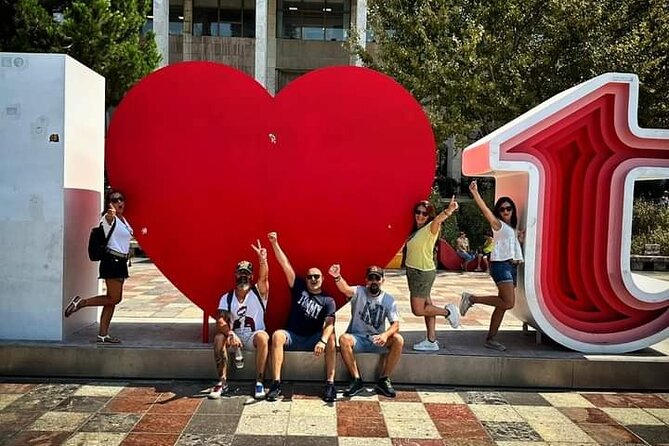
The meeting point is Et’hem Bej Mosque, right by Sheshi Skënderbej. That’s a smart choice, because this whole area is the visual “hub” of Tirana. From your first steps, you’re not just collecting landmarks—you’re learning how the city is laid out and how each place connects to the others.
After a short introduction, the walk moves toward Skanderbeg Square. This is where the tour really earns its keep: you don’t just see the space; you understand why it matters. The square acts like a time anchor. Everything around it feels like it belongs to a bigger story—nation-building, modern civic life, and the way Tirana keeps reinventing itself.
Practical note: even though many stops are “free admission” on this tour, you’ll still want time to look carefully. The best moments are often at street level—details around entrances, façades, and the way people use the space.
More Tirana walking tours through the boulevards and back lanes


Skanderbeg Square and Et’hem Bej Mosque: your Tirana “map”
This opening segment gives you two things you’ll use the rest of your trip: a mental map and a vocabulary for what you see.
Skanderbeg Square (free, about 10 minutes)
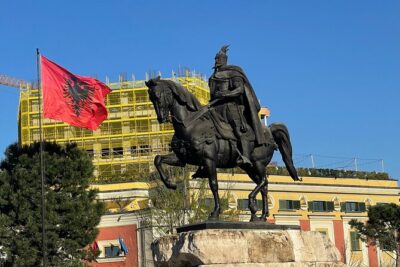
You’ll get an explanation of Skanderbeg Square that frames it as more than a big public space. Think of it as the city’s reference point. When you later see other political or religious landmarks, the tour helps you place them in relation to this civic core.
How to make it count:
- stand back for a moment, then walk in closer
- look for the way streets funnel toward the square, because that affects movement and daily life
Et’hem Bej Mosque (free, about 10 minutes)
The tour then focuses on Xhamia Et’hem Bej, with a straightforward explanation of what the mosque represents. Even if you’re not a religious-history expert, you’ll leave with a better sense of how Islam is woven into Tirana’s public identity.
One consideration: mosques can have rules about clothing and behavior. The tour doesn’t say otherwise, so follow common respect norms—cover up if you need to, keep your voice down, and be mindful in photos.
Bunk’Art 2 and Justinian’s Fortress: memory through walls
After the civic center, the tour shifts into the “history you can walk through.” This is where Tirana feels different from many cities. You’re not only seeing pretty buildings—you’re seeing how power changed daily life.
Bunk’Art 2 (free, about 10 minutes)
You’ll stop at Bunk’Art 2 and get explanations of the two museums: BunkArt 1 and BunkArt 2. Even with a short time window, that context matters. It helps you understand that these aren’t random museum stops. They’re pieces of a larger story about how Albania wanted to define itself—and how life looked under pressure.
The quick takeaway you’ll likely remember:
- museums here are political tools as much as they are exhibits
- knowing there are two related sites helps you interpret what you see during your walk
A drawback to keep in mind: with only about 10 minutes, you’re not going to read every label. Plan to focus on the sections that match your interests (politics, everyday life, or the broader timeline).
Fortress of Justinian (free, about 10 minutes)
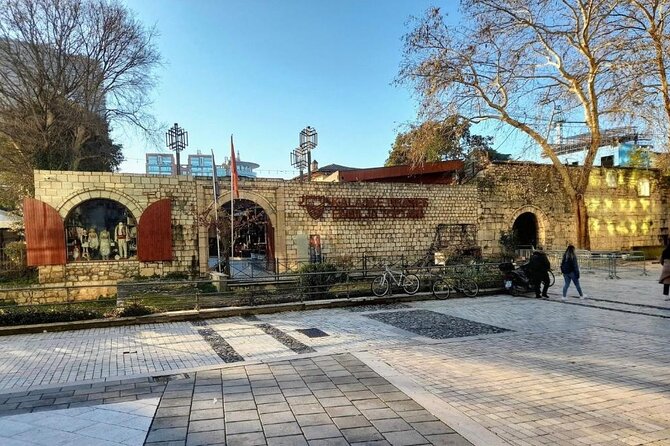
Next comes the Fortress of Justinian, explained as ruins of a Tirana castle area. This is a different kind of history. Instead of one enclosed museum story, you’re looking at traces—stone and structure that survived long enough to become a clue.
This stop rewards slow looking:
- imagine the original scale of the fortifications
- notice how the ruin sits in the city fabric
Parliament and Namazgah Mosque: power and faith in the open
Now the tour gets practical about how Tirana works as a living capital. Two stops in a row—Parliament of Albania and Mosque of Namazgah—show how political authority and religious identity coexist in the same urban space.
Parliament of Albania (free, about 10 minutes)
You’ll hear an explanation of the politic situation in Albania. Even in a short segment, this can help you decode the mood you sense while walking. Albania’s modern political story has deep roots, and the tour’s goal is to give you just enough background so the rest of your trip makes sense.
What I’d suggest for you: if politics are a sensitive subject for you personally, keep an open mind and treat this as context, not a debate. The value here is understanding how locals frame the present.
Mosque of Namazgah (free, about 10 minutes)
The route then goes to Mosque of Namazgah, described as the biggest mosque in the Balkans. That superlative matters, because scale changes how a place functions. A larger religious site becomes an identity landmark, something you spot and remember.
A quick reality check: big mosques can also feel overwhelming if you’re only passing by. Go for the essentials—architecture from outside, then respectful time at the entrance area if allowed.
Tanners’ Bridge and Saint Paul Cathedral: the city’s everyday layers
Not every stop in Tirana is about the big, dramatic eras. This part adds texture. Tanners’ Bridge brings in a bridge-as-history feel, and then Saint Paul Cathedral gives you another angle on Albania’s religious landscape.
Tanners’ Bridge (free, about 10 minutes)
You’ll get an explanation for Tanners’ Bridge. A bridge can seem like just a crossing, but when a guide connects it to local trades or older city life, it becomes a time capsule. It’s the kind of stop that makes Tirana feel lived-in rather than staged for visitors.
Pro tip: take one minute to look at how the bridge lines up with nearby streets. Bridges often control flows and routines.
Saint Paul Cathedral (free, about 10 minutes)
At Saint Paul Cathedral, the tour explains religion in Albania. This is useful for understanding why you see different faith markers close together. Even if you don’t focus on doctrine, you’ll learn how the city’s identity has been shaped by different communities.
Because this is a short visit, don’t expect a full architecture or religious studies session. Expect an orientation.
Enver Hoxha’s Pyramid, Postbllok checkpoint memorial, and the Bllok area
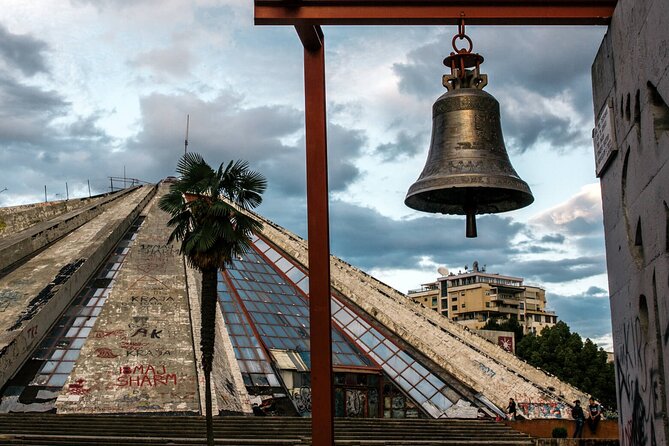
This is the part many people remember most, and it’s not just because the landmarks are striking. It’s because the tour ties them into one connected narrative about dictatorship-era Tirana.
Enver Hoxha’s Former Residence (free, about 10 minutes)
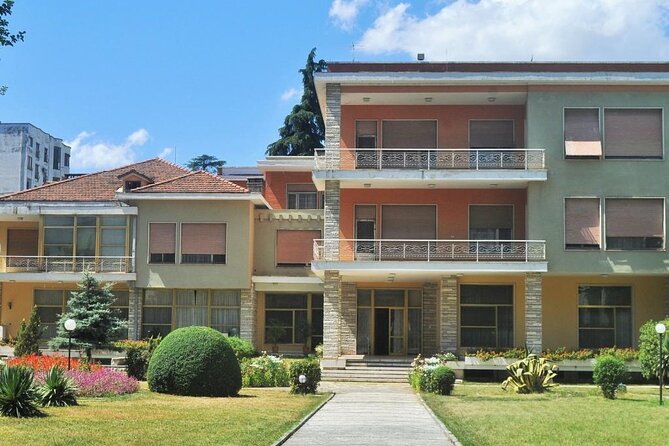
The tour includes Enver Hoxha’s Former Residence with an explanation of the dictator’s home. When you stand near a former residence, the experience changes. You’re not just seeing a building. You’re looking at how a political system shaped proximity—who had access, who watched, and how authority showed itself.
One consideration: this kind of history can feel heavy. If you want a lighter pace, you’ll need a moment to reset as you move from political spaces into public parks and everyday sites later.
Enver Hoxha Pyramid (free, about 10 minutes)
Then comes the Enver Hoxha Pyramid, described as the dictator pyramid. It’s an example of how power can create strange, memorable structures. The tour framing helps you see it as an artifact of ideology rather than only an unusual building.
If you like photo stops, this is one of the best. If you don’t, it’s still worth a look to understand why Tirana carries these symbols.
Postbllok – Checkpoint Monument (free, about 10 minutes)
Next is Postbllok, the Checkpoint Monument. The explanation here is key: checkpoints are about control. They tell you what a government feared, what it tried to limit, and how people moved—or didn’t.
This is also a stop where you might notice the emotional punch of the tour. In a short time, the guide’s job is to connect the physical site to the human reality behind it.
The Bllok area (free)
You’ll also get an explanation for the Bllok area. This part connects the dictatorship-era story to the geography of Tirana. Bllok isn’t explained as a generic neighborhood; it’s framed as a place with meaning in the political system.
If you want a quick memory hook: think of Bllok as the “where power lived” district—and then watch how that idea changes the way you view surrounding streets.
Taiwan Pool (Pishina Taiwan), youth park energy, and the churches of Albania
After the heavy political landmarks, the tour turns toward spaces where life plays out more normally. The stop at Taiwan Pool (Pishina Taiwan) and then religious landmarks give your brain a change of pace while still keeping the “Tirana story” intact.
Taiwan Pool (Pishina Taiwan) (free, about 10 minutes)
The tour explains the Youth Park and Taiwan center in Tirana via the Pishina Taiwan stop. Even in a short visit, it’s a useful reminder that cities aren’t only built by rulers and monuments. People gather. Parks and pools become social equipment.
A practical thought: if it’s hot or bright, take your photos quickly and then step back. This is a short segment, and you’ll do better if you don’t try to linger too long.
Orthodox Autocephalous Church of Albania (free, about 10 minutes)
Then you’ll stop at the Orthodox Autocephalous Church of Albania with an explanation of the Orthodox church. This adds another layer to Albania’s religious map, especially next to the earlier Catholic-associated Saint Paul Cathedral.
What you’ll likely get from this stop is perspective: different faith identities exist side by side, and Tirana’s central streets reflect that.
House of Leaves and the walk back to Skanderbeg Square
The last stretch has two jobs. It wraps up the story, and it gives you a final set of symbols to carry forward.
House of Leaves (free, about 10 minutes)
The tour includes the House of Leaves and explains it. Even without long time inside, the explanation helps you see why it’s worth attention. Places with unusual names often have unusual backstories, and here the point is to decode the symbol rather than treat it as a quirky stop.
Ending at Skanderbeg Square (free, about 5 minutes)
You’ll finish back at Skanderbeg Square, where you started the loop. Ending where you began is practical: you can instantly connect the tour to your next move—coffee, shopping, or another walk toward whatever caught your attention.
This tour is also short enough that you don’t feel trapped. You get orientation and context without losing an entire day.
Price and value: why $20.93 works here
At $20.93 per person for about 2 hours 30 minutes, this is strong value for central Tirana. Here’s why it feels worth the money:
- You get a licensed guide who speaks English and Italian.
- You get an organized route through high-signal stops: Skanderbeg Square, major religious sites, Bunk’Art 2, dictatorship-era landmarks, and more.
- The tour lists free admission for each stop, which matters because you won’t feel nickel-and-dimed while walking.
Also, the group is capped at 25 travelers, which usually helps the questions land and doesn’t turn your guide into a megaphone for a crowd.
If you’re the type who likes to understand what you’re seeing (even for 10 minutes at a time), this price makes a lot of sense. If you’re purely chasing photos, you might still enjoy it, but you’ll benefit less from the explanations.
Who should book this walking tour?
This fits best if you:
- want a fast way to understand Tirana’s main sights without planning a route from scratch
- enjoy political and social context, especially around the Enver Hoxha era
- like mixed stops: squares, museums, mosques, churches, and local city structures
It may be less ideal if you:
- dislike walking long enough to cover many central stops in one session
- need a very deep museum experience (this tour is short at each site by design)
- want zero weight in your itinerary—because the dictatorship-related stops are real history
Final verdict: should you book?
I think you should book this tour if you want orientation plus meaning in one compact afternoon. The route is dense, the guide format is clear, and the balance between civic life and dictatorship-era memory helps you see Tirana as a whole.
If you’re only in town briefly, this is one of the simplest ways to get your bearings fast—literally starting and ending in Skanderbeg Square’s orbit. If your schedule is tight or you hate history topics, you might prefer a lighter theme. But for most first-timers, this is a solid, budget-friendly start.
FAQ
How long is Tour a Piedi di Tirana?
It runs for about 2 hours 30 minutes.
Where do I meet the guide?
The meeting point is at Et’hem Bej Mosque, Sheshi Skënderbej 1, Tiranë 1001, Albania.
Where does the tour end?
The tour ends back at the meeting point.
How much does it cost?
The price is $20.93 per person.
What languages does the guide speak?
The tour includes an English and Italian speaking licensed guide.
Is admission required for the stops?
The tour lists admission as free for each stop.
How big is the group?
The tour has a maximum of 25 travelers.
Is the tour dependent on weather or group size?
Yes. It requires good weather, and it also requires a minimum number of travelers. If it’s canceled due to weather, you’ll be offered a different date or a full refund. If it’s canceled because the minimum isn’t met, you’ll be offered a different experience or a full refund.
More Tirana Tours and Albanian Day Trips
More from Our Tirana Review Desk
More Ways to Walk Tirana on Foot

Not quite it? More Tirana tours and Albanian day trips fresh off our review desk





Tirana City Walking Tours, compared.
 ★ 5.0Walking Tour of TiranaFrom $18646 reviews
 ★ 5.0Local food experience & walking tour of TiranaFrom $60192 reviews
 ★ 5.0Best of Local Food & City Tour of Tirana – Food & Drinks IncludedFrom $72160 reviews
 ★ 5.0Berat Walking TourFrom $1886 reviews
 ★ 5.0Tirana Hidden Treasures Sightseeing TourFrom $1660 reviews
 ★ 4.5City Tour of Tirana & Dajti Mountain with PickupFrom $6059 reviews
 ★ 5.0Tirana Walking Tour: History, Culture &Gems by a Passionate GuideFrom $3652 reviews
 ★ 5.0Premium Walking Tour of Berat with Expert GuidesFrom $2043 reviews
Browse the lists this tour appears in