
Reviewed · TIRANA CITY WALKING TOURS
Tirana City Tour with Hotel Pickup
Tirana clicks fast when you walk it. This hotel-pickup tour strings together Tirana’s main squares, faith landmarks, and Communist-era sites, so the city’s layers make sense quickly. I especially like that it’s small-group and feels easy to follow.
I love the on-foot pacing, with short stops that let you look up close instead of rushing by. I also love how the route links big ideas to real places, including Bunk’Art 2, where the Communist story feels personal and concrete.
One possible drawback: it’s mainly a walking tour, and the weather can turn intense. Bring comfortable shoes and water.
In This Review
- Key highlights at a glance
- Getting your bearings at Skanderbeg Square and Et’hem Bey area
- Ottoman mosque, Orthodox cathedral, and Roman Catholic church: three faiths, one city loop
- Et’hem Bey Mosque (and why 1991 matters)
- Resurrection Cathedral: modern lines with Orthodox tradition
- Saint Paul Cathedral: a newer Roman Catholic landmark
- Tirana Castle (Fortress of Justinian) and the Clock Tower climb
- Fortress of Justinian: the “heart” of medieval Tirana
- Clock Tower: 25 meters of city view
- From the Bronze Age to communism: National Historical Museum and Bunk’Art 2
- National Historical Museum at Skanderbeg Square
- Bunk’Art 2: Communist army life inside a bunker
- Enver Hoxha Pyramid and House of Leaves: where the Communist era got repurposed
- Piramida (Enver Hoxha Pyramid): from museum to NATO base to tech youth center
- House of Leaves: Sigurimi headquarters turned into a museum
- Pazari i Ri: finish with Tirana’s food stalls and coffee culture
- Price, time, and walking logistics for a 3–4 hour intro
- Your guide’s role: why Adi/Adnan matters on this route
- Should you book this Tirana City Tour with Hotel Pickup?
- FAQ
- How long is the Tirana City Tour?
- Is hotel pickup included?
- Is the tour mainly walking or by vehicle?
- Which sites are included on the itinerary?
- How long do you spend at Bunk’Art 2?
- What admission information is provided for the stops?
- What is the cancellation policy?
Key highlights at a glance
- Hotel pickup for less stress: you start where you’re staying, then park and walk.
- Small group (max 15): room for questions and photo stops without chaos.
- Mosques + churches in one loop: Et’hem Bey Mosque, Resurrection Cathedral, and Saint Paul Cathedral.
- Communist-era sites with context: Bunk’Art 2, Enver Hoxha Pyramid, and House of Leaves.
- Great city views built in: Tower of Tirana climb and the top of Piramida.
- End with Tirana’s everyday life: Pazari i Ri market for snacks, shopping, and atmosphere.
Getting your bearings at Skanderbeg Square and Et’hem Bey area
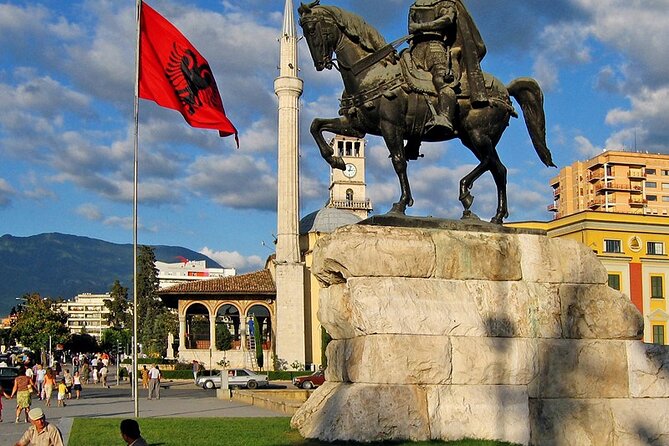
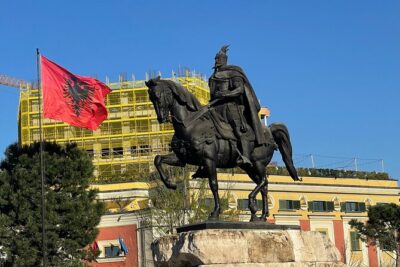
Most first-time visitors get stuck in two modes: either staring at one building too long or taking photos without understanding what they’re looking at. This tour helps you avoid both. It starts at Skanderbeg Square, the big public center of Tirana where locals gather, events happen, and the city’s history shows up in plain sight.
Your guide (people mention Adnan and Adi) sets the tone by talking you through the key landmarks around the square, including the Palace of Culture from the Communist era and the Clock Tower area. If you like learning what buildings mean, not just what they look like, you’ll appreciate how the stories connect to the street outside your feet.
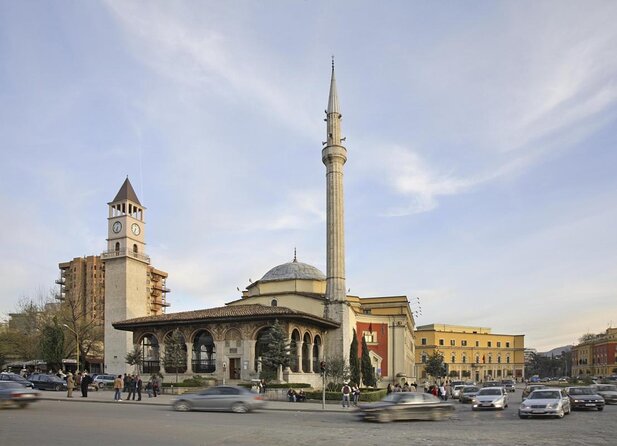
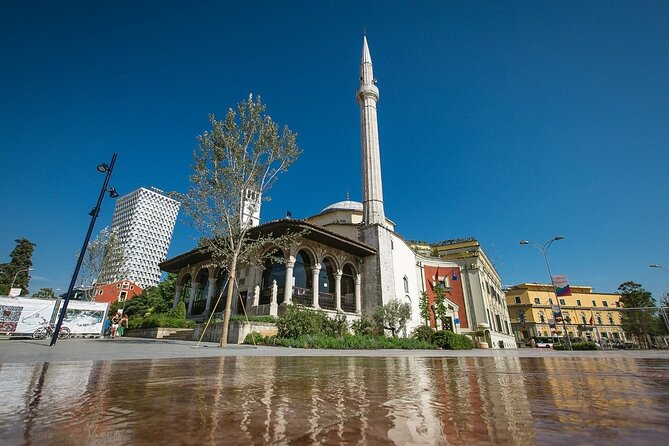
Then you’ll spend time near the Et’hem Bey Mosque. This is one of Tirana’s oldest mosques, with Ottoman architecture that you can actually see in details like carvings and the interior fresco work. The most striking part is the modern history around it: the mosque was closed in 1968 under the Communist regime, then reopened in 1991 after communism fell. One detail that tends to stick is that many Muslim believers joined the reopening, and there was no police intervention—even though religious gatherings were still prohibited by law at the time. That’s not just trivia; it helps explain the emotional weight Tirana carries about faith, freedom, and resilience.
Practical tip: If you want photos, plan to pause inside or at entrances quickly rather than trying to set up after the group moves on. The tour is designed as a steady walk.
More Tirana walking tours through the boulevards and back lanes


Ottoman mosque, Orthodox cathedral, and Roman Catholic church: three faiths, one city loop
One reason this tour works so well as an introduction is the balance of religious landmarks. In a small area, you’ll see three different traditions—without it feeling like a checklist.
Et’hem Bey Mosque (and why 1991 matters)
You’ll get around 30 minutes at Et’hem Bey Mosque. Look for the Ottoman design elements, especially the finer interior details like carvings and frescoes. It’s also worth remembering the reopening story from 1991. That moment tells you something about Albania’s transition after the Communist era: faith didn’t simply resume quietly; people pushed to bring it back, and the city watched.
Resurrection Cathedral: modern lines with Orthodox tradition
Next comes the Orthodox Resurrection Cathedral (part of the Albanian Orthodox Church). This is a large Eastern Orthodox cathedral in the Balkans, and what you’ll notice right away is the mix of modern architecture with traditional Orthodox elements. Inside, focus on the frescoes, icons, and the spacious feel—this isn’t just a photo stop. It’s the kind of place where you naturally slow down.
Saint Paul Cathedral: a newer Roman Catholic landmark
Finally, you’ll visit Saint Paul Cathedral, built in late 2001 for the Roman Catholic Archdiocese of Tiranë – Durrës. The style is more contemporary and sleek, which creates a clear contrast with older Ottoman and older Orthodox architecture you’ve already seen. Expect a calm interior, with enough open space to feel reflective rather than crowded.
Why this matters for your trip: Tirana’s identity isn’t one storyline. In a few blocks you start seeing how different communities share the same streets—and how the city’s modern story grew out of earlier layers.
More Tirana city tours to find your feet




Tirana Castle (Fortress of Justinian) and the Clock Tower climb
After the churches, the route shifts into older city structure—roads, fortifications, and the medieval idea of where Tirana’s center once stood.
Fortress of Justinian: the “heart” of medieval Tirana
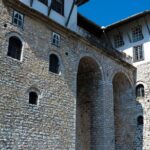
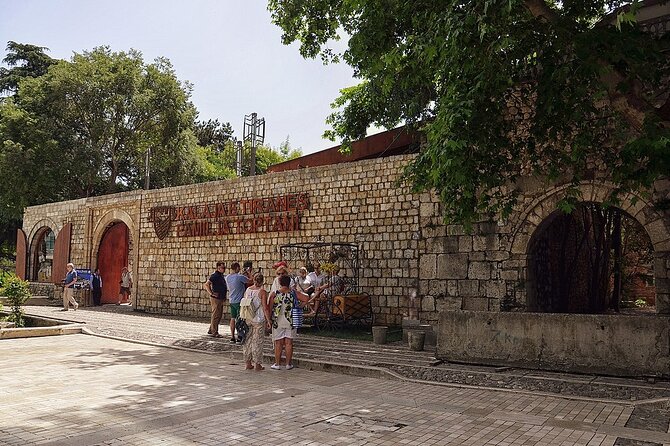
You’ll visit the Fortress of Justinian, also called Tirana Castle. The site dates to before 1300 and is described as a surviving remnant from the Byzantine era. What your guide explains here is the strategic layout: the castle sat at the crossroads of major routes, effectively forming the heart of Tirana in medieval times.
The space has been renovated over the years. Today, it’s been transformed into a modern multifunctional center by the Toptani family, meaning you can rest and move around the area with more than just ruins to look at. That mix of ancient structure and present-day use makes it more than a dead monument.
Clock Tower: 25 meters of city view
From there, you’ll reach the Clock Tower next to the Et’hem Bey Mosque. It has been telling Tirana time since 1822, built by the same person linked to the mosque area: Ethem Bey. The tower is about 25 meters tall, and the best payoff is the panoramic view at the top.
Even if you’re not a big “climb” person, do the ascent if you can. It turns Tirana from flat street scenes into a real map in your head. You’ll see how the city center patterns connect—where the square sits, where major roads funnel, and how far the urban sprawl reaches.
Heat note: The tower climb can feel longer if it’s already warm. Take it slow, and don’t be shy about stepping aside for a breather.
From the Bronze Age to communism: National Historical Museum and Bunk’Art 2
After you’ve walked the religious and historic landmarks, the tour shifts to museums. This is where Tirana becomes less about impressions and more about understanding the timeline.
National Historical Museum at Skanderbeg Square
The National Historical Museum is located right at Skanderbeg Square. It covers Albania’s history from the Bronze Age through to the Communist era. You’ll see artifacts, documents, and exhibits that connect ancient life, national development, and the political shifts that shaped everyday reality.
This stop is useful if you want your later museum visits to feel less random. When you understand the larger historical arc first, Bunk’Art 2 hits harder.
Bunk’Art 2: Communist army life inside a bunker
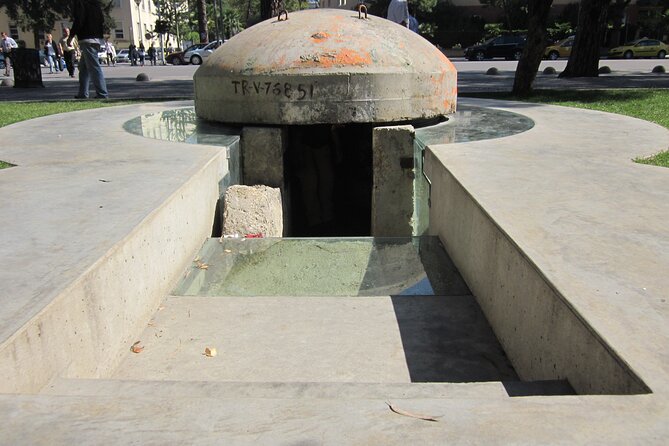
Then comes Bunk’Art 2, built inside a bunker and dedicated to the Communist Albanian army and daily life under that regime. Plan on about an hour here.
The museum focuses on political repression, including the persecution of opponents. A key theme is the secret police (Sigurimi) and how they operated. The exhibits explain methods and tactics used to capture and silence dissent. It’s the kind of museum where you stop reading because you’re thinking, not because you’re finished.
One thing to double-check when you book: the tour highlights say included tickets for Bunk’Art 2, but the stop notes also say admission isn’t included. Because of that mismatch, I’d treat Bunk’Art 2 ticket coverage as something to confirm with the operator before you arrive—so you’re not scrambling at the door.
Best way to get value: Don’t rush Bunk’Art 2. Give yourself a minute or two on the exhibits that feel personal. If your brain is already tired from walking, this is the stop to slow down even more.
Enver Hoxha Pyramid and House of Leaves: where the Communist era got repurposed
These are the most emotionally loaded stops on the route, and they work as a pair: one is about the regime’s big propaganda shape, the other is about the surveillance machinery behind the scenes.
Piramida (Enver Hoxha Pyramid): from museum to NATO base to tech youth center
You’ll visit the Pyramid, originally built in 1988 as a museum dedicated to Enver Hoxha. Designed by Hoxha’s son-in-law and daughter, it was meant to perpetuate the dictator’s legacy.
The building’s history didn’t stop there. During the Kosovo War in 1999, Piramida was repurposed as a NATO base. Today, it’s been transformed into the largest youth center for innovation in computer technology in the region.
You’ll also have a chance to climb stairs to the top. The view over the city center is a strong payoff after hours of street-level learning.
Even if you don’t buy into propaganda, it’s hard not to feel the symbolism: a shape built to glorify one man is now used for future-minded tech work.
House of Leaves: Sigurimi headquarters turned into a museum
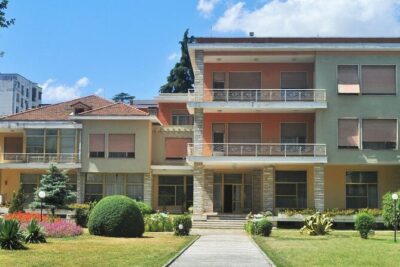
Next is the House of Leaves, once the headquarters of the secret police (Sigurimi). This museum focuses on the operations of the secret police during the Communist era, including the technology and methods used to spy on, pursue, and persecute political enemies.
Expect interactive exhibits. They explain surveillance tactics in a way that makes the system feel real rather than abstract. If you want one sentence that summarizes the purpose, it’s this: you learn how control was maintained—and why fear was such an effective tool.
How to handle the emotion: If you’re sensitive to heavy topics, pace yourself. Take a short break outside the museum if you need air. Your guide can help you prioritize what you want to focus on.
Pazari i Ri: finish with Tirana’s food stalls and coffee culture
After the heavy museums, the tour ends with Pazari i Ri, Tirana’s open-air market. This is a great wrap-up because it returns you to daily life.
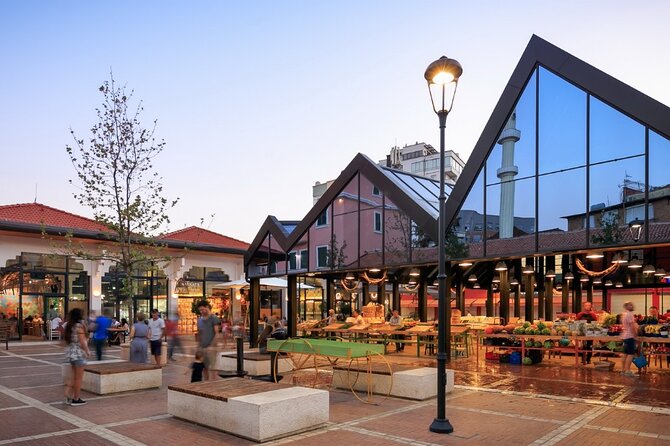
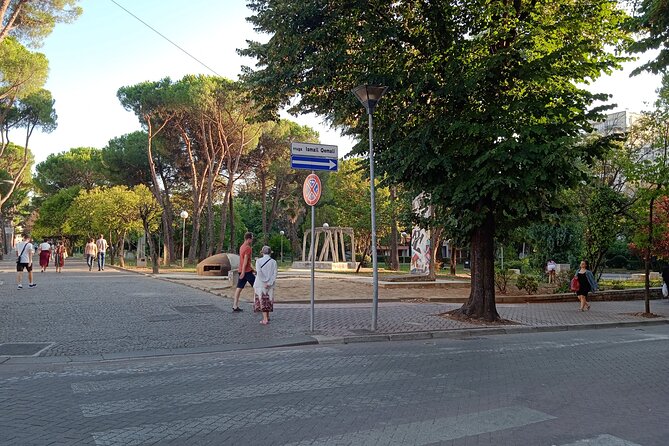
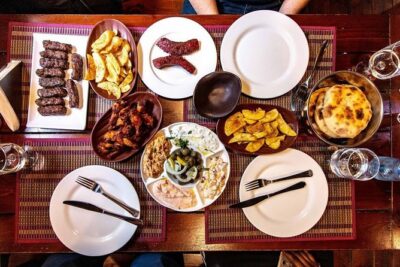
You get around 30 minutes here. The market is known for fresh fruits, local cheeses, olives, spices, and honey. It’s also where you’ll find cafés and restaurants sitting close to traditional stalls in a renovated market square.
You can shop for handmade items and traditional souvenirs. Many people also come looking for local wines or raki, but even if you only snack, the space gives you a feel for how Tirana socializes.
Smart move: If you’re hungry, this is the time to eat. If you’re not, still grab something small—like fruit, cheese, or something with honey—so you don’t head back to your hotel with only museum impressions in your stomach.
Price, time, and walking logistics for a 3–4 hour intro
At $30.04 per person, this is a solid value for an organized introduction to central Tirana. You’re paying for more than someone pointing at buildings—you’re paying for context, timing, and the ability to see a lot without figuring out routes on your own.
The tour is about 3 to 4 hours and has a small-group size of up to 15. It also offers hotel pickup, so you’re not spending your first hours negotiating street taxis or waiting for directions. Many sites along the route also have free admission noted for the churches/mosque/cathedral and the market stop, which helps keep the cost reasonable.
Just remember the main consideration: it’s a walking city tour. Even when pickup happens by car, you park and walk. That’s usually a good thing—Tirana is walkable—but it’s not the best choice if you need lots of seated time.
My practical advice for comfort:
- Wear shoes you can walk in for a few hours.
- Bring water, especially if you’re going in the warmer part of the day.
- If you want photos, keep your camera/phone ready so you can take quick shots without slowing the group too much.
Your guide’s role: why Adi/Adnan matters on this route
This tour’s quality depends heavily on the guide because the route mixes very different themes: Ottoman architecture, Eastern and Western Christianity, then Communist-era systems and their legacies.
People specifically praise Adi (and also mention Adnan) for being patient and able to adjust the pace. That matters a lot when you’re touring by foot and climbing a tower. A patient guide helps you take photos without feeling rushed, and it helps you ask questions that make the city feel less like a list.
One more value-add: some guides give practical food and hangout suggestions around the city, so the tour doesn’t end when you return to your hotel. If you ask, you’ll likely get recommendations that fit what you’ve just seen.
Should you book this Tirana City Tour with Hotel Pickup?
Book it if you want a first-time orientation that covers the big story beats without needing a full day of planning. It’s especially worth it if you like walking tours that teach you what you’re seeing, and if Bunk’Art 2 and the Communist-era museums sound like your kind of learning.
Skip (or adjust expectations) if you want lots of driving between stops or you strongly dislike walking in heat. Also, if Bunk’Art 2 ticket inclusion is important for your budget, confirm the details when you book.
If you’re visiting Tirana for only a short window, this is a smart way to start: you’ll get the architecture, the religious landmarks, and the political history—then you’ll finish with market life, which is where most cities show you who they really are.
FAQ
How long is the Tirana City Tour?
The tour lasts about 3 to 4 hours.
Is hotel pickup included?
Yes. The guide picks you up at your hotel or your location.
Is the tour mainly walking or by vehicle?
It’s mainly a walking tour. Pickup happens by car, but you park and walk between stops.
Which sites are included on the itinerary?
The itinerary includes Skanderbeg Square, Et’hem Bey Mosque, Resurrection Cathedral, Saint Paul Cathedral, Fortress of Justinian (Tirana Castle), the Clock Tower area, National Historical Museum, Bunk’Art 2, Enver Hoxha Pyramid (Piramida), House of Leaves, and Pazari i Ri.
How long do you spend at Bunk’Art 2?
Bunk’Art 2 is listed for about 1 hour.
What admission information is provided for the stops?
Admission is noted as free for several stops (like the mosque/church/cathedral and Pazari i Ri). For Bunk’Art 2, the stop notes say admission ticket not included, even though the tour highlights mention included tickets—so it’s worth confirming what your booking includes.
What is the cancellation policy?
Free cancellation is available up to 24 hours in advance for a full refund.
More Tirana Tours and Albanian Day Trips

More from Our Tirana Review Desk

More Ways to Walk Tirana on Foot
Not quite it? More Tirana tours and Albanian day trips fresh off our review desk






Tirana City Walking Tours, compared.
 ★ 5.0Walking Tour of TiranaFrom $18646 reviews
 ★ 5.0Local food experience & walking tour of TiranaFrom $60192 reviews
 ★ 5.0Tour a Piedi di TiranaFrom $20174 reviews
 ★ 5.0Best of Local Food & City Tour of Tirana – Food & Drinks IncludedFrom $72160 reviews
 ★ 5.0Berat Walking TourFrom $1886 reviews
 ★ 5.0Tirana Hidden Treasures Sightseeing TourFrom $1660 reviews
 ★ 4.5City Tour of Tirana & Dajti Mountain with PickupFrom $6059 reviews
 ★ 5.0Tirana Walking Tour: History, Culture &Gems by a Passionate GuideFrom $3652 reviews
Browse the lists this tour appears in