
Reviewed · BERAT UNESCO DAY TRIPS
Berat Cultural Tour by 1001 Albanian Adventures
Three stops, fast bearings in Berat. This cultural walking tour takes you through the inhabited Berat Castle neighborhood, the Onufri icon collection, and over toward Gorica’s historic Ottoman bridge—without dragging on for a whole day. I like how the route mixes everyday life (churches and mosques inside a real community) with museum time that actually explains what you’re looking at. One thing to plan for: castle and museum entrance tickets are not included, so your final spend will be a bit higher.
I also appreciate the human touch. A certified English-speaking guide (often mentioned as Eri/Erilda) keeps the pace friendly and the explanations clear, so you get real context even in a short window. If you’re trying to make the most of a morning in town, the setup makes sense: you’re walking, seeing, and learning in one connected loop.
The only drawback is the “short tour” tradeoff. You’ll see major highlights, but you won’t get hours to wander deeply on your own, and the experience notes good weather is needed—so if conditions are bad, expect rescheduling or a refund option.
In This Review
- Key highlights you’ll care about
- Berat Cultural Tour by 1001 Albanian Adventures: how the morning is paced
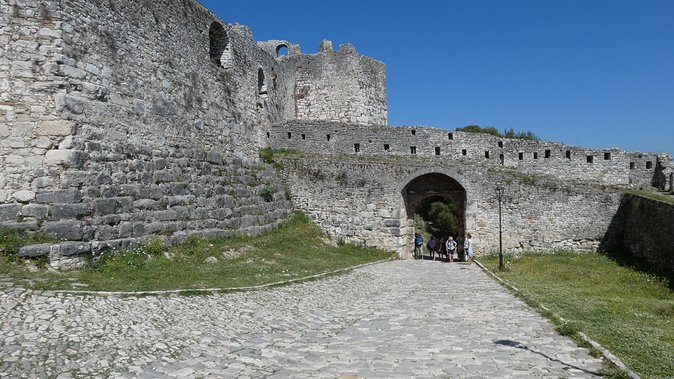
- Berat Castle: inhabited streets, visible architecture, and places of worship
- National Iconographic Museum Onufri: seeing Albanian icons in context
- Gorica Quarter and the Gorica Bridge: Ottoman architecture across the Osum
- Timing and logistics: start at 8:30 and end somewhere else
- Price and value: paying $36.14 plus entrances
- The guide factor: why Eri/Erilda-style guidance helps
- Practical tips so you enjoy every minute
- Should you book this Berat Cultural Tour?
- FAQ
- How long is the Berat Cultural Tour?
- What is the meeting time for the tour?
- Is the tour offered in English?
- Are entrance tickets included for Berat Castle and the museum?
- How many people are in a group?
- Does the tour end in the same place it starts?
- Is this tour dependent on good weather?
Key highlights you’ll care about
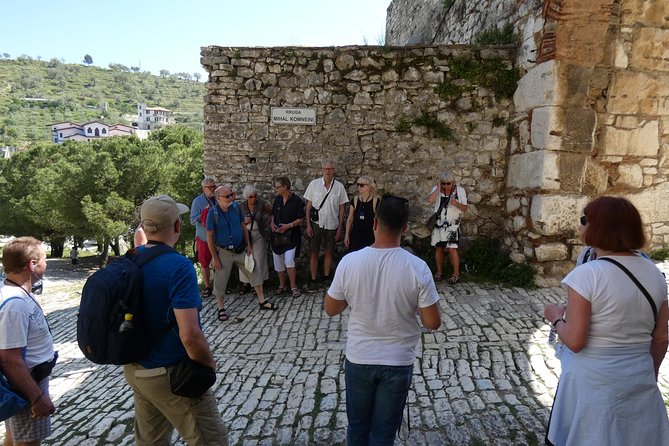
- Inhabited Berat Castle walk: You’re not just looking at ruins; you’re moving through a living neighborhood with churches and mosques.
- Onufri Museum context: 173 objects, including 106 icons tied to key Albanian painters from the 16th–20th centuries.
- Gorica Quarter opposite Mangalem: A preserved-feeling Ottoman-era feel across the Osum River.
- Gorica Bridge details: Seven arches, about 130 meters long, built by Ahmet Kurt Pasha.
- Small group limit: Maximum 25 people, which keeps the tour from feeling rushed.
- English and mobile ticket: Simple to use, plus service animals are allowed.
Berat Cultural Tour by 1001 Albanian Adventures: how the morning is paced
This is the kind of tour that helps you get your head around Berat quickly. You start in Tirana, or rather you’re in Berat for the day, but the structure stays simple: three stops that connect visually and historically. Expect mostly walking, a couple of museum/church interior pauses, and a river-crossing viewpoint moment.
What makes it work for real travelers is the balance. The castle area gives you the “why Berat looks the way it does,” the icon museum adds the “what the art and faith traditions were,” and Gorica completes the “how the quarters face each other” story. You end in a different location than you start, which can actually be a plus—you might finish nearer to where you want to go next.
The timing is also practical. The tour is listed as 1 to 3 hours, and the stop blocks are meaningful: about 1 hour for the castle walk, around 40 minutes for the Onufri museum, and about 20 minutes for Gorica and the bridge. That’s enough time to feel oriented and informed, without exhausting your legs.
More Berat runs up to the thousand-window quarter we have made from Tirana
Berat Castle: inhabited streets, visible architecture, and places of worship
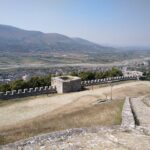
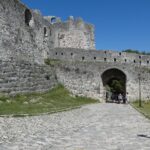
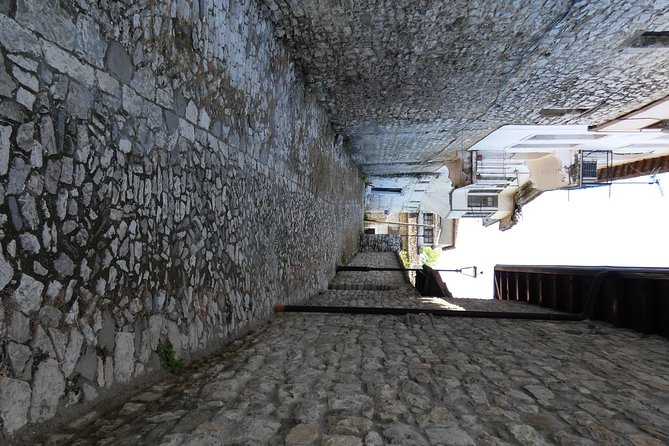
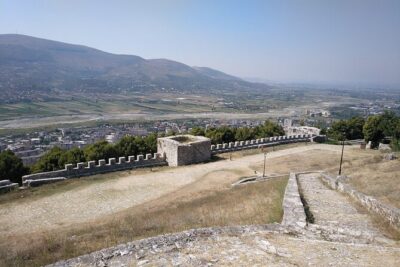
The first stop is Berat Castle, and the important detail is that you’re walking through an inhabited area inside the fortress walls. That changes the whole experience. It’s not a theme-park castle where everything feels empty. You’re seeing how architecture and faith spaces sit together in a community that has continued over time.
As you walk, you’ll notice the castle’s structure and architecture used in the walls, then you’ll move past key religious buildings. The tour is set up to help you interpret what you’re looking at: churches and mosques are part of the same landscape here. That mix is one of the reasons Berat feels distinctive in Albania—this isn’t about one single “monument view,” it’s about how layers of life and belief shape the place.
One practical consideration: castle admission isn’t included. So right before you go in (or at the entrance), you’ll want to budget time for paying the fee on-site. If you’re the type who hates last-minute admin, check your tickets plan ahead of time. Even if the cost is modest, it’s still a separate step.
If you wear walking shoes, you’ll be happier. Castle paths are exactly the kind of uneven surfaces where you appreciate grip and ankle support. Also, bring a light layer. Even if the weather is mild in town, fortress walks can feel breezy depending on the day.
National Iconographic Museum Onufri: seeing Albanian icons in context
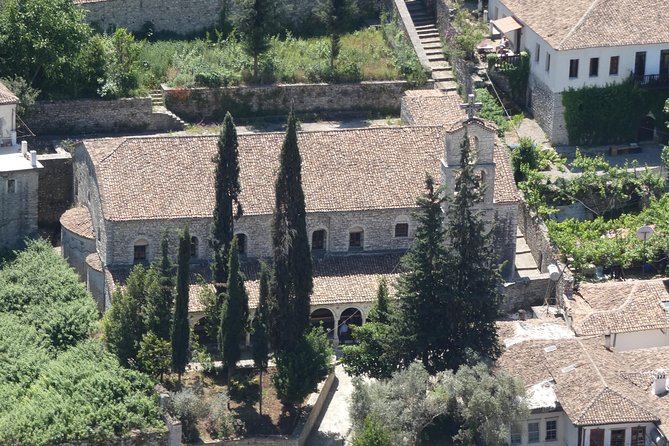
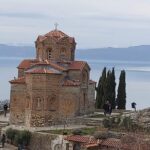
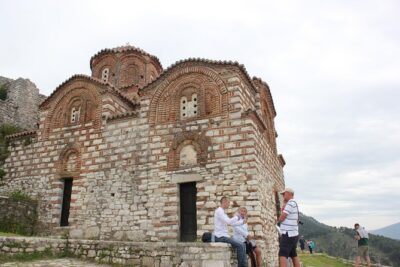
Next you head to the National Iconographic Museum Onufri, located inside the Church of St. Mary of Blachernae on the grounds of the Berat Castle. “Inside a church” matters because it shapes how you understand the icons: these aren’t just flat pictures in a white-room gallery. You’re viewing them within the setting that shaped their use.
This is a small exhibition, and that’s often a good thing. With about 40 minutes, you can actually take in details without feeling like you’re rushing. The museum is named for Onufri, an Albanian painter who led a teaching role in the 16th century, and his influence helps organize what you’re seeing.
Here’s the kind of collection breakdown you can expect (and why it’s useful when a guide is explaining it):
- The museum displays 173 objects in total.
- 106 are icons created by Albanian icon painters from the 16th to 20th centuries.
- You’ll hear about major names such as Onufri and his son Nicola, David Selenica, Kostandin Shpataraku, and Cetirs (spelled out through names including Gjergj, Nicola, Johan, Naum, Gjergj junior).
- The remaining icons include anonymous painters, which helps you understand that icon tradition wasn’t only built by famous figures.
- The other 67 items are liturgical objects, which gives the show a broader religious and cultural frame beyond icon painting alone.
The drawback is the same as the castle: museum admission isn’t included. But the value is that you’re not just paying to enter a room. You’re paying to see a focused collection in a meaningful setting, and your guide can connect names, time periods, and artistic roles so the icons feel less like random images.
A tip: if you’re sensitive to dim interiors, you might want to pack a small flashlight or simply rely on phone brightness. Churches can be darker than you expect, and some people find it easier to take photos carefully rather than straining their eyes.
Gorica Quarter and the Gorica Bridge: Ottoman architecture across the Osum
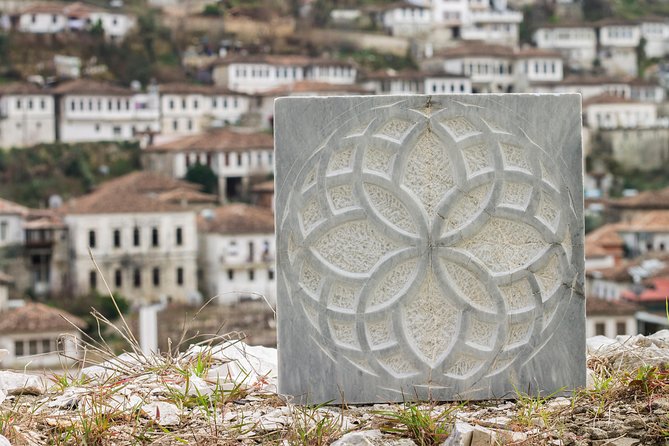
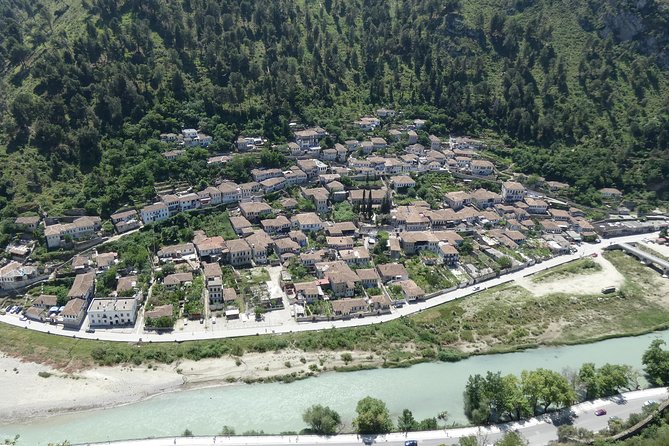
The final stop is the Quarter of Gorica, across the Osum River. The tour frames it nicely: you’re looking at a monumental building ensemble that developed beginning in the mid-16th century, while the modern quarter has preserved a sense of original atmosphere.
A key point here is contrast. Gorica sits opposite Mangalem, so the story isn’t just “here’s another viewpoint,” it’s “here’s how Berat’s quarters face each other.” Even if you only spend about 20 minutes, it can change how the city clicks in your mind—especially if you’ve been looking at the castle and haven’t yet felt the river’s role.
Then comes the star for architecture fans: the Bridge of Gorica. Built by Ahmet Kurt Pasha, it’s described as one of the finest Ottoman monuments in the city. The bridge is notable for its seven elegant arches, spanning roughly 130 meters across the Osum River. The tour also points out why it feels special: the style and shape, plus the use of local white stone, make it look distinct compared with other regional bridge styles.
Because admission is free here, this is the easiest stop to enjoy without extra ticket steps. Your time goes toward walking around, viewing the bridge, and getting a better read on how the Osum acts like a divider and connector at the same time.
If you like photos, you’ll probably want to slow down a bit here. A seven-arch Ottoman bridge is the kind of structure that rewards patience. Take a few shots from different angles if lighting allows.
Timing and logistics: start at 8:30 and end somewhere else
You’re starting at 8:30 am, and that early timing is one of the hidden advantages. In many places, morning is when streets feel calmer and you can hear your guide more clearly. Berat’s castle areas also tend to feel more comfortable before peak daytime crowds.
The tour is capped at 25 travelers, which matters because walking tours can go two ways: either you can hear and move as a group, or you spend the whole time threading between people. A limit like this usually keeps it manageable.
One logistical detail that can affect your day: the tour ends in a different location than where it begins. The exact end point isn’t listed here, so you’ll want to check the final instructions after booking. In practice, that can be great. It might drop you closer to your next stop, dinner area, or hotel route without backtracking.
The tour is also listed as offered in English, and it uses a mobile ticket. That’s simple on your end: keep your phone charged, and don’t plan to rely on finding signal in the middle of the experience.
More Tirana history walks through castles and old quarters



Price and value: paying $36.14 plus entrances
At $36.14 per person, this tour is priced in a very “short but guided” category. You’re paying for someone to:
- connect the architecture to the cultural story,
- explain what specific churches/mosques and icon names represent,
- and keep your time organized across three stops.
That’s usually the right use of money when you only have a limited window in town. Left alone, you can certainly wander Berat on your own—but you might miss the relationships between the quarters, and you’ll likely spend longer figuring out what you’re seeing.
The cost catch: entrance tickets to the castle and the museums are not included. So your total day spend depends on those fees. Because the museum and castle are the two paid components, you’ll want to mentally budget for them as part of the experience rather than treating them as an afterthought.
Still, the value is strong if you care about context. This tour doesn’t try to sell you on a long checklist of stops. It focuses on major touchpoints that explain how Berat works.
The guide factor: why Eri/Erilda-style guidance helps
In a short tour, the guide makes the difference between seeing and understanding. Here, the guiding approach seems built for exactly that. People mention guides by name, especially Eri and Erilda, and describe the experience as friendly, organized, and easy to follow.
A good guide should do three things on a walking tour:
- Point out what matters visually.
- Give you historical and cultural framing that helps you connect it all.
- Offer recommendations that help you keep enjoying the city after the tour ends.
From the details you’re given, this tour is set up to do that. It’s not just a series of “here’s a church, here’s a museum.” The stops are arranged so each one answers the question the last one raises. Castle architecture raises curiosity. The icon museum answers what artistic and religious life looked like in that tradition. Gorica and the bridge show how the city’s physical layout supports the story.
You’ll also see the human-side value: people mention flexibility and helpfulness, including guidance beyond the tour itself. That’s the kind of service that costs less than a “private everything” tour but feels like more than a basic group walk.
Practical tips so you enjoy every minute
A few things will make this go smoother.
Wear shoes for uneven stone. Castle and church grounds can be a bit tricky.
Plan around paid entrances. The castle and museum tickets are separate. If you show up with cash in hand (or know you can pay electronically), you save time and stress.
Use your morning for photos. Gorica’s bridge is a clean architectural subject, and softer morning light can be forgiving.
Expect a weather-dependent experience. The tour notes that good weather is required. If weather changes last-minute, you’ll likely have an alternate date or a refund option. Keep that flexibility in mind if your schedule is tight.
Bring a light layer. Even in warmer months, indoor church spaces and fortress shade can feel cool.
Keep your mobile ticket ready. It’s part of the experience setup, and it reduces back-and-forth at check-in.
Service animals are allowed, so if you travel with one, that’s a plus.
Should you book this Berat Cultural Tour?
I’d book it if you want a high-impact morning in Berat—three connected places, guided in English, with a pace that’s comfortable and not overly long. It’s ideal for first-timers who want orientation fast, and it works well if you like architecture plus religion-plus-city layout in one package.
I’d think twice if you want an unhurried, deep-stroll day. This is timed. You’ll get highlight coverage and smart context, but you won’t linger for hours in one place the way you might if you’re doing independent exploration.
If you’re balancing your time in Albania and you want real value for the money, this is a solid pick. Just remember the simple rule: budget for the entrance tickets and bring your walking shoes. If you do that, you’ll leave with Berat clearer in your head—and a better sense of why these quarters look the way they do.
FAQ
How long is the Berat Cultural Tour?
The tour is listed as approximately 1 to 3 hours.
What is the meeting time for the tour?
The start time is 8:30 am.
Is the tour offered in English?
Yes, it is offered in English.
Are entrance tickets included for Berat Castle and the museum?
No. Entrance tickets to the castle and the museums are not included.
How many people are in a group?
The tour has a maximum of 25 travelers.
Does the tour end in the same place it starts?
No. The activity ends in a different location.
Is this tour dependent on good weather?
Yes. The experience requires good weather, and if it’s canceled due to poor weather, you’ll be offered a different date or a full refund.
More Tirana Tours and Albanian Day Trips

More from Our Tirana Review Desk

More Berat UNESCO Day Trips
Not quite it? More Tirana tours and Albanian day trips fresh off our review desk






Berat UNESCO Day Trips, compared.
 ★ 5.0Berat city UNESCO tour, the Castle & Belshi lake- From TiranaFrom $12804 reviews
 ★ 4.5Berat-Durres and Belsh Lake, day tour from TiranaFrom $22274 reviews
 ★ 4.5Berat Tour Osumi Canyons Exploration Lunch TransferFrom $47212 reviews
 ★ 5.0Berat Osum Canyon & Bogove Waterfall TourFrom $70130 reviews
 ★ 5.0Berat Cooking Class- Traditional Albanian Cooking Class /By VatoFrom $41120 reviews
 ★ 5.0Berat UNESCO & Belshi Lake Full-Day TourFrom $12118 reviews
 ★ 5.0Berat Walking TourFrom $1886 reviews
 ★ 5.0From Tirana; Semi – Private Day Trip to Berat & Belsh LakeFrom $16863 reviews
Browse the lists this tour appears in