
Reviewed · TIRANA CITY WALKING TOURS
Walking tour of Tirana; History & Culture
Tirana makes sense on foot. This 2 to 3 hour walk mixes communist-era monuments with everyday Tirana culture, while you trace the city’s shift from Ottoman times to Enver Hoxha’s rule and then into today. You’ll move at an easy pace, and with a small group (up to 8) you get real time to ask questions.
What I love most is the clear, human scale history—not just dates, but why places matter—and the way the guides work with the group. I’ve heard accounts from guides like Angelo, Markel, and Gjergj, and the common theme is patient explanations and helpful Q&A, even when languages shift (Gjergj has handled both French and English when needed). The main drawback: a couple of the bigger stops have sights where tickets aren’t included, so you may pay extra if you want to go inside.
If you want an efficient first taste of Tirana that doesn’t feel like a rushed checklist, this is a strong pick. Just wear comfy shoes; some stretches are under sun, and you’ll be walking the whole time.
In This Review
- Key highlights you’ll feel right away
- Price and what you’re really buying for $17.97
- The walking pace, the size, and why it matters in Tirana
- Postbllok: understanding the checkpoint monument before you see it
- Blloku and the Enver Hoxha connection: from restricted to stylish
- Orthodox cathedral, House of Leaves, and the question of what to pay for
- Skanderbeg Square: the civic heart with layers of power
- Clock Tower and Et’hem Bej Mosque: details you’ll spot better with guidance
- Tirana Castle: a pedestrian walk where old and new meet
- Namazgah Mosque and the big religious mix that defines Albania
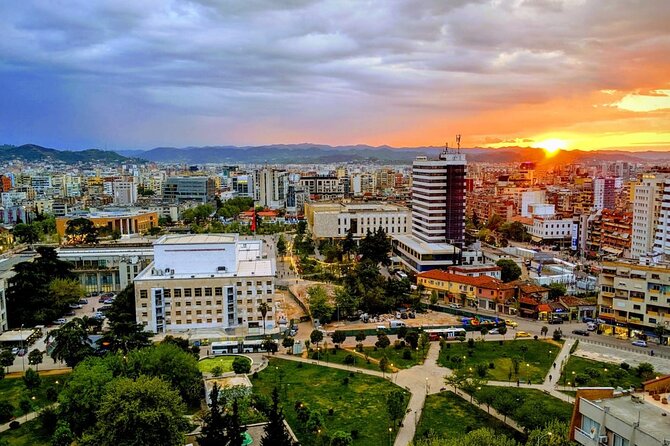
- The Pyramid of Tirana and Rinia Park: ending with modern memory
- Guides like Angelo, Markel, and Gjergj make or break this kind of tour
- What’s included (and what isn’t) so you don’t get surprised
- Who this tour fits best
- Should you book this Tirana walking tour?
Key highlights you’ll feel right away
- Postbllok (Checkpoint Monument): a direct look at how Tirana remembers communist political prisoners
- Blloku neighborhood: formerly restricted, now a place of cafes, boutiques, and colorful street life
- Religious Tirana in one route: mosques and churches together, showing the country’s mix of communities
- Skanderbeg Square and the clock tower area: a central hub of civic buildings and old Ottoman-era echoes
- A memorable finish at the Pyramid and Rinia Park: modern Tirana’s complicated memory, then a breather in the park
Price and what you’re really buying for $17.97
At $17.97 per person for about 2 to 3 hours, you’re paying for guided context more than for museums. Most stops have free admission, so your money goes toward walking smart routes and getting the “why does this place look like this?” answers.
You’re also getting a couple of value boosters: a mobile ticket, group discounts (so it’s cheaper when you book with friends or family), and the tour is offered in English. The small cap of 8 travelers is the quiet superpower here: fewer people means the guide can slow down when you need it, rather than just plow forward.
The only “extra cost” risk is that two major sights list admission as not included: the Orthodox cathedral stop and the Museum of Secret Surveillance. If you want to enter both, budget for tickets on the day.
More Tirana walking tours through the boulevards and back lanes


The walking pace, the size, and why it matters in Tirana
This isn’t a marathon tour. It’s designed as a city stroll with short segments at each stop—enough time to look around and absorb context, but not so long that you lose momentum or energy.
You’ll start at the meeting point in the Twin Towers area: Choose Balkans – Albania Tour Operator, 3rd floor, Bulevardi Dëshmorët e Kombit Twin Towers, Tower 2, Tirana 1001. The tour ends back at the same spot, which makes it easy to plan lunch or your next stop afterward.
If it’s hot when you go, you’ll appreciate that the tour often lands around the 2 hour mark for some groups. One person even called it a perfect duration for walking in heat. Still, I’d pack water and sun protection; the itinerary is mostly outdoor city viewing.
Postbllok: understanding the checkpoint monument before you see it
Your first meaningful stop is Postblloku (Checkpoint Monument). It’s not just a statue or a photo spot. It’s a memorial tied to Albania’s communist-era isolation, and it’s placed in a prominent position—on the main boulevard across from key government buildings.
This is one of the moments where a guide earns their fee. Instead of treating the site like a random monument, you’ll learn what it represents: the political prisoners, the system of control, and the mood of separation that shaped daily life. Even if you know little about Albania before arriving, this stop gives you the emotional context to understand later places—especially Blloku.
Practical tip: take a minute here to stand back and look at how visible the memorial is. It’s a “memory in public” approach, not something hidden away.
Blloku and the Enver Hoxha connection: from restricted to stylish
Next comes Blloku, one of Tirana’s liveliest neighborhoods today. The twist is that it wasn’t always open to normal people. Under the communist system, Blloku was restricted—tied to members of the Albanian politburo. Now it’s known for cafes, boutiques, and colorful street art.
Your guide links the past to the present as you walk: how a neighborhood built for power transitions into a place where you can stroll, shop, and hang out. It’s one of those urban transformations that feels personal once you connect the dots.
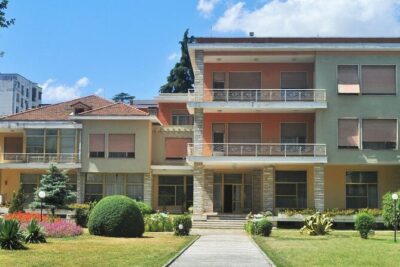
Right along the Blloku area, you also pass by the residence associated with Enver Hoxha, Albania’s communist leader. Even though you’re not here for a long museum-style stop, seeing the area reinforces a simple idea: power wasn’t abstract—it had a physical address, a neighborhood, and a daily rhythm.
What to watch for: street art and the casual energy around you. Then mentally flip that to what the area meant under restriction. That contrast is the whole point.
Orthodox cathedral, House of Leaves, and the question of what to pay for
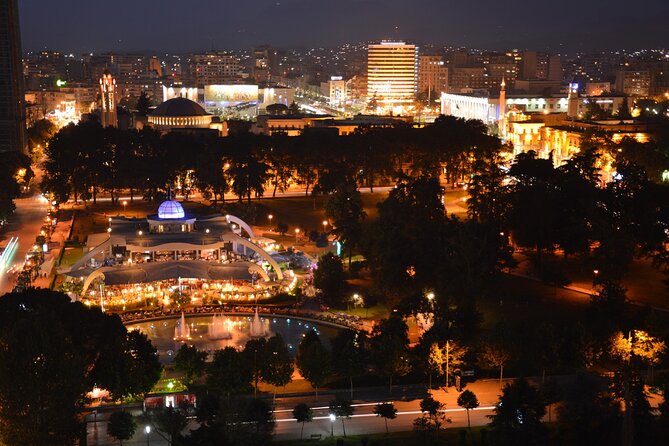
Two stops can involve extra admissions, and it’s worth planning your expectations.
1) You’ll pass by the Resurrection of Christ Orthodox Cathedral (listed as ticket not included).
2) You’ll also stop at the Museum of Secret Surveillance, commonly associated with the House of Leaves name (also ticket not included).
These are the kind of places where you either want a quick look from the outside or you want the full inside experience. The tour handles the walking and framing, but you’ll likely need separate tickets if you want to enter. If you’re the type who likes to spend time inside, build that into your schedule.
If you’d rather keep costs down, you can still use these stops as “context checkpoints.” The guide’s explanation can be enough to make your photos and observations mean something—even without entering.
More Tirana walks worth putting your boots on for




Skanderbeg Square: the civic heart with layers of power
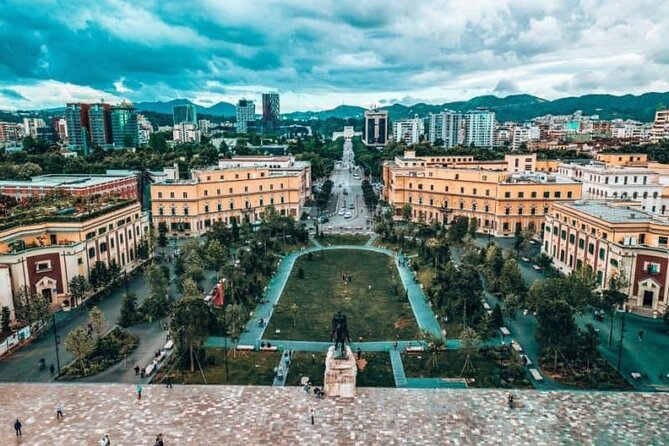
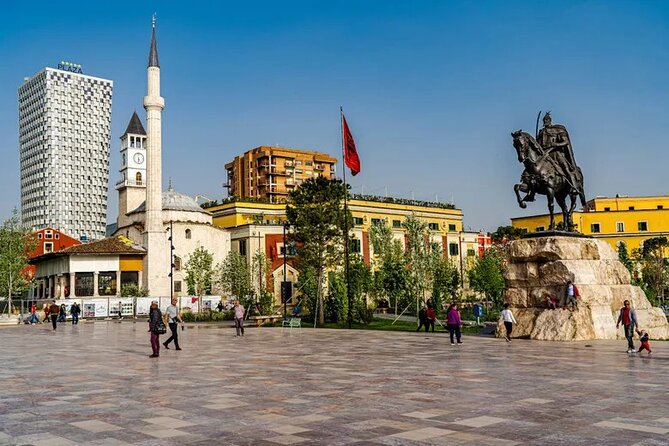
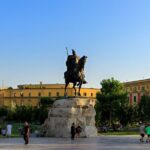
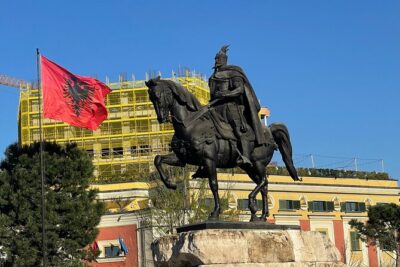
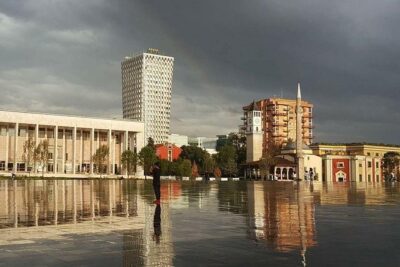
Then you move toward Skanderbeg Square, Tirana’s central hub named after Albania’s national hero Gjergj Kastrioti Skënderbeu.
This is where Tirana feels like a capital. The square is surrounded by major landmarks: the National Museum, the Bank of Albania, the opera theatre, and prominent civic sites like the Skanderbeg Statue and nearby religious architecture. The area also has bars and lively street life around it.
A good guide helps you read the square like a timeline. You start to notice how different eras left physical marks: who built institutions, which names were chosen for heroes and monuments, and how public space functions as a stage.
Practical tip: Skanderbeg Square is a good place to ask questions. It’s central, so you’ll get answers that help you interpret the rest of your Tirana day.
Clock Tower and Et’hem Bej Mosque: details you’ll spot better with guidance
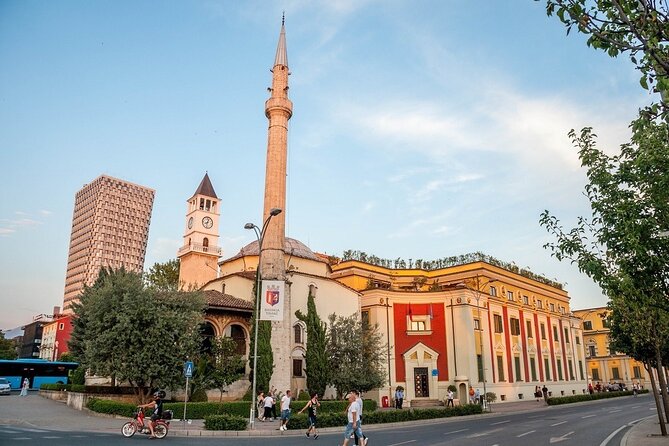
From the square, you walk to the Clock Tower area and then to Xhamia Et’hem Bej (Et’hem Bej Mosque).
The value here is not that these are “random stops.” It’s that they help you connect Ottoman-era architecture with modern city rhythm. When you understand the role of mosques in public and community life, the sight of them becomes more than an exterior photo.
If you’ve never visited Albanian cities before, this is also where you learn to recognize the city’s religious and cultural blend as normal, not unusual. The guide’s commentary ties it all together.
Tirana Castle: a pedestrian walk where old and new meet
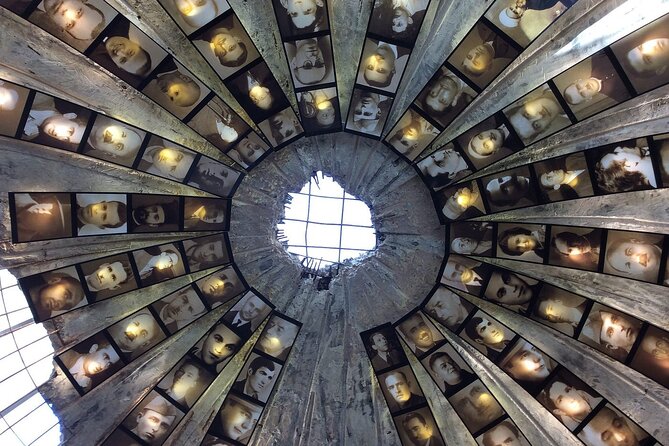
Next comes Tirana Castle, in the city center. Today it’s a pedestrian area, which is a nice change from “closed off” monument vibes. The tour frames it as a place where modern and tradition overlap, and that’s exactly how it feels when you walk it: you’re in the heart of the city, but the setting encourages slow wandering.
This is also a smart breather stop. By now you’ve covered serious political memory and religious architecture. Tirana Castle gives your brain a chance to reset while still keeping you in the center of things.
What to do while walking: pause at good vantage points and compare views back toward Skanderbeg Square. Seeing how the city’s pieces connect makes the earlier stops click.
Namazgah Mosque and the big religious mix that defines Albania
You wrap up the historical-and-cultural story by walking past major religious sites, guided by the theme of Albania’s multiple communities.
You’ll hear about Albania’s religious mix—primarily Muslims (including Sunni and Bektashi), plus Orthodox Christians and Catholics—and how the country navigated major historical shifts from Ottoman influence through the communist era and into today.
Along the route, you pass:
- Namazgah Mosque, described as the largest in the Balkans
- An Orthodox Cathedral
- St. Paul’s Catholic Cathedral
Even without going inside, just moving between them in one walk helps you see Albania as a place where faith diversity is part of everyday geography.
Consideration: if you plan to enter any house of worship, you may need to follow dress or entry rules. The tour itself doesn’t promise access times or inside visits, so treat this as a “see and understand” route unless your guide confirms entry.
The Pyramid of Tirana and Rinia Park: ending with modern memory
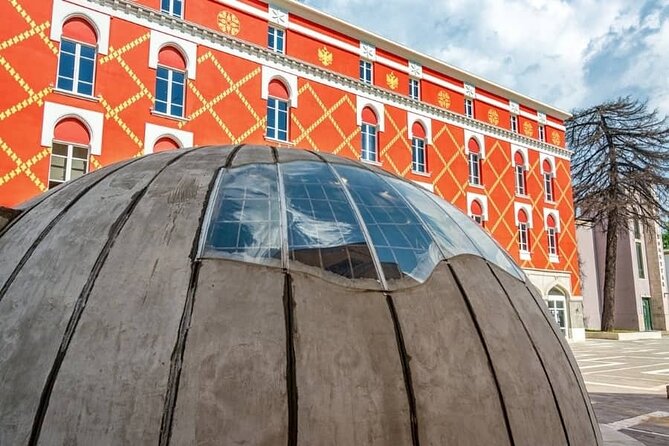
The tour’s finale is Pyramid of Tirana, also called the Piramid of Tirana. This kind of structure sticks in your mind because it feels like a landmark from another political era—big, bold, and hard to ignore.
Then you end with Rinia Park, a short walk where you get a lighter landing after all the heavier themes. Parks are underrated on tours like this. They give you a place to process what you just learned.
By the time you reach Rinia Park, you’ve gone through:
- communist memory (Postbllok, Hoxha connection)
- present-day street life (Blloku)
- major civic space (Skanderbeg Square)
- religious mix across centuries
- and finally a modern monument plus a calm green finish
Guides like Angelo, Markel, and Gjergj make or break this kind of tour
This is the sort of walking tour where a strong guide matters a lot. The best part, based on what I’ve seen in the guide experiences described, is the combination of clarity and patience.
- Angelo’s tour is described as extremely knowledgeable and friendly, spanning Ottoman Empire → communism → modern day.
- Markel is praised for being patient and kind, with a tour pace that works in real conditions like heat.
- Gjergj stands out for depth of knowledge and the ability to adjust, even running explanations in both French and English when needed.
That mix matters because Tirana’s history can feel tangled if someone just rattles off facts. Here, you’re guided to connect the physical sites to the bigger story.
What’s included (and what isn’t) so you don’t get surprised
Included:
- Local companion (the guide)
- Mobile ticket
- Most stops show free admission
Not included:
- Lunch, drinks, snacks, and souvenirs
- Admission tickets for:
- Resurrection of Christ Orthodox Cathedral
- Museum of Secret Surveillance / House of Leaves
- Anything else not clearly listed as included
So your budget is mostly the tour fee, plus optional tickets if you want to go in at those two sites. Bring cash or card depending on what’s accepted, but don’t count on having to pay for only one thing. Plan a little buffer.
Who this tour fits best
This walking tour is ideal if:
- you want a first visit to Tirana with solid context
- you prefer short stops, not museum-heavy schedules
- you like history that’s connected to streets, buildings, and public space
- you’d enjoy a small group where you can ask questions
It may be less ideal if:
- you only want free outdoor sights and don’t want any chance of paying extra for entry
- you strongly dislike walking for 2 to 3 hours in the sun
- you expect a long, inside-the-walls museum day (this is mostly a guided stroll with optional paid entries)
Should you book this Tirana walking tour?
Yes, if you want Tirana to make sense fast. The combination of communist-era memory, Blloku’s transformation, major civic sights, and a clear look at Albania’s religious mix gives you a balanced overview without dragging you through endless indoor stops.
I’d book it early in your Tirana visit, so you can walk around afterward with more confidence. If you’re already museum-heavy that day, you can still keep this as your orientation walk, and decide on the paid admissions on the fly based on your energy and interests.
More Tirana Tours and Albanian Day Trips

More from Our Tirana Review Desk


More Ways to Walk Tirana on Foot


Not quite it? More Tirana tours and Albanian day trips fresh off our review desk






Tirana City Walking Tours, compared.
 ★ 5.0Walking Tour of TiranaFrom $18646 reviews
 ★ 5.0Local food experience & walking tour of TiranaFrom $60192 reviews
 ★ 5.0Tour a Piedi di TiranaFrom $20174 reviews
 ★ 5.0Best of Local Food & City Tour of Tirana – Food & Drinks IncludedFrom $72160 reviews
 ★ 5.0Berat Walking TourFrom $1886 reviews
 ★ 5.0Tirana Hidden Treasures Sightseeing TourFrom $1660 reviews
 ★ 4.5City Tour of Tirana & Dajti Mountain with PickupFrom $6059 reviews
 ★ 5.0Tirana Walking Tour: History, Culture &Gems by a Passionate GuideFrom $3652 reviews
Browse the lists this tour appears in