
Reviewed · THETH, VALBONA & THE ALBANIAN ALPS
Self – Guided Peaks of the Balkans tour in 10 days
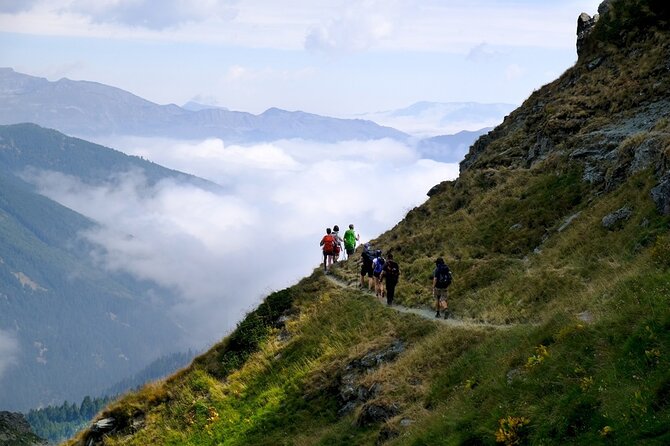
That first 6:00 am start in Tirana sets the tone. This is a tough, scenic mountain trek across the Accursed Mountains, with border hops and local guesthouses that keep you close to daily life. I love the real-in-the-mountains pacing (long hikes, small towns, and backcountry-feeling days), and I love the hands-on local support that keeps the complicated parts from becoming your problem. One thing to consider: it’s not a casual walk. You’ll need solid hiking fitness for long days and high, changeable weather.
This self-guided-style tour (small group, max 10) still runs with planning support: you get transport between trailheads, a cross-border pass, and even a 4×4 ride late in the trip. You also sleep in basic homestays/guesthouses/lodges or shepherd’s huts—usually with shared rooms unless you pay for a private option. If you want hotel comfort every night, you’ll likely feel underwhelmed.
The payoff is the feeling of being far from civilization, then suddenly back in a rebuilt bazaar city like Gjakova. You get dramatic ridgelines, glacier-and-erosion lake scenery, and places like Theth where old church stone and mountain huts still tell their own story. Bring patience for rough logistics days, and you’ll be rewarded.
In This Review
- Key highlights worth bookmarking
- Why Peaks of the Balkans feels different from a typical hike
- Starting at 6:00 am in Tirana, then easing into the Albanian Alps
- Tamarë to Lëpushë: waterfalls, drinkable water, and spring color
- Maja e Berizhdolit (1977m): day 2 in the Accursed Mountains
- What makes this day worth it
- What to watch
- Talijanka peak: the Albania-to-Montenegro crossing that changes the mood
- Why this border-crossing day works
- Consideration
- Theth’s Old Church and the Blue Eye: Days 4–5 of mountain magic
- Blue Eye of Theth: the hike you’ll remember even after the trail dust
- Drawback to consider
- Valbona Pass and the mule trail: a long, remote day (Day 6)
- Why this day matters
- Cerem: forests, snow patches, and an optional Zla Kolate summit (Day 7)
- Doberdol and the Albania national reserve: berries, pine forest, and wildlife stakes (Day 8)
- Consideration
- Gjeravica’s high lakes and the road to Gjakova (Days 9–10)
- Why ending in Gjakova works
- Price and logistics: where $1,718.57 per person buys real help
- Is it truly self-guided?
- Group size and the feel of the trek
- Where this tour shines (and who should skip it)
- What to pack (based on the reality of these hikes)
- Should you book Peaks of the Balkans?
- FAQ
- How long is the Peaks of the Balkans self-guided tour?
- Where does the tour start and end?
- What time do we leave on the first day?
- What kind of hiking fitness do I need?
- What’s included in the price?
- Are lunch and dinner included?
- What are the accommodation rooms like?
- Can I book a private room?
- Is the tour cancellation refundable?
Key highlights worth bookmarking
- Border-crossing days that don’t feel like paperwork: Albania ↔ Montenegro multiple times with a cross-border pass handled for you
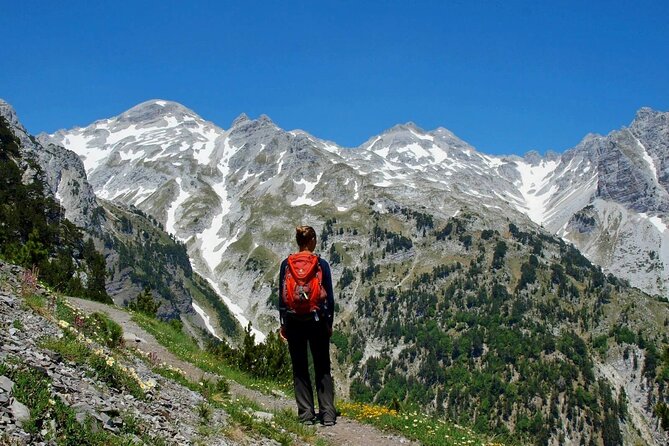
- Accursed Mountains views with real summit energy: peaks like Maja e Berizhdolit (1977m) and Gjeravica top out the adventure
- Iconic stops without skipping the work: Blue Eye of Theth hike plus steep valley trails
- Simple stays, real hospitality: homestays/guesthouses and shepherd’s hut villages at night and along the way
- Optional add-on summit if you’re feeling strong: Zla Kolate can tack on extra hours
Why Peaks of the Balkans feels different from a typical hike
This tour works because it mixes big trekking days with small, human moments. You’re not just chasing a view from a neat viewpoint. You’re walking through valleys, passing shepherd huts, and going far enough that the trail feels like it belongs to locals, not a crowd.
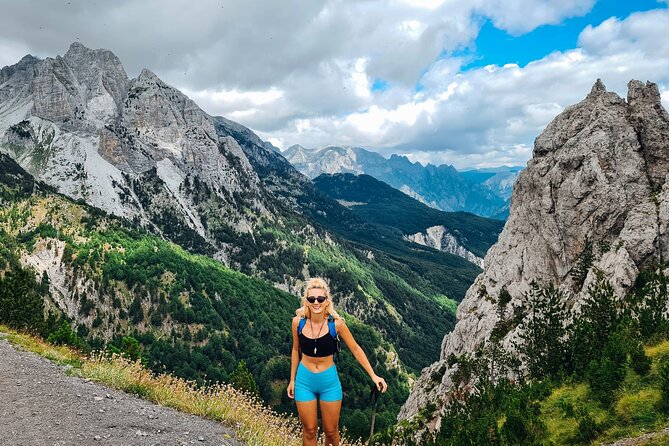
What I like most is how the scenery changes while you’re still on the same mountain “system.” You move through Dinaric Alps terrain and the Albanian Alps section, then cross into Montenegro and Kosovo. The mountains look related, but each day’s angle feels new: sharp grey peaks, snow patches that can linger, and then the softer surprise of blue-green water when you reach places like the Blue Eye of Theth.
The other secret ingredient is how the trip reduces stress. Long-distance border logistics are the kind of thing that can derail a self-planned trip. Here, you’re given transport help, a cross-border pass, and scheduled rides between key points. It’s still your body doing the work. But it’s not your brain fighting the clock.
And yes, it’s challenging. You’re looking at hikes that can run 6–8 hours on many days, plus higher terrain. Your calves will learn new job skills.
More Theth and Valbona treks in the Albanian Alps we have logged from Tirana
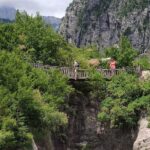
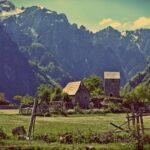
Starting at 6:00 am in Tirana, then easing into the Albanian Alps
You kick off early—departure from Tirana at 6:00 am. That early start isn’t just for show. It gives you daylight for the first drive and the first trail segment, which matters because mountain weather can shift fast.
Day 1 begins with a drive toward Tamarë. Along the way, you pass Shkodër and then continue into North Albania. Once you reach Tamarë, the first hike starts. It’s listed as about 4 hours (admission ticket free). This is your warm-up in the sense that you’re starting to feel the terrain, not that it’s easy. You’re moving into the Dinaric Alps system that stretches from Slovenia and down through this corner of the Balkans.
Tamarë to Lëpushë: waterfalls, drinkable water, and spring color
From Tamarë, you head farther toward Lëpushë. The route connects you with the Ujvara e Sllapit trail for about 3 hours. There’s a note that you might see a 70-meter-high waterfall if the seasonal rain pattern cooperates. If you do catch it, that’s one of those moments where the effort clicks.
You’ll also find that the water described from the top of the mountain is said to be drinkable. That’s useful information for planning your water strategy on a day where you’re not bouncing between towns.
Then you arrive in Lëpushë, a small mountain village known for its nature and for a springtime yellow flower. Before the day ends, you get leftover time for walking and exploring (about 2 hours listed). You’re essentially setting your rhythm: long hours outside, simple evening recovery, and tomorrow’s ascent waiting.
Possible drawback here: Day 1 includes driving plus hiking, so even if you’ve trained well, the day can feel longer than the “headline time” suggests. The upside is that you’re sleeping in a guesthouse before fatigue compounds.
Maja e Berizhdolit (1977m): day 2 in the Accursed Mountains
Day 2 is a summit-style trek to Maja e Berizhdolit (1977m), in the Albanian Alps also called the Accursed Mountains. This is a hike that’s described as passing water springs, with a rewarding view at the top.
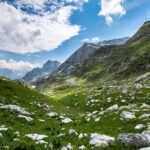
The way it sounds on paper also hints at why this day hits hard: one side can be rocky and snow-covered while the other side has almost no vegetation. That contrast matters. It means you’re not just climbing the same-looking terrain all day—you’re watching the mountain show different faces as you move.
The max hike time is up to 6 hours, including breaks. You head back to Lëpushë afterward, and the tour includes overnight in a guesthouse in Lëpushë.
What makes this day worth it
This isn’t just a “reach a number on a map” day. It’s a day where the mountain features you’re walking through—springs, rock formations, snow contrast—help you understand why this region has a serious reputation among hikers.
More guided Tirana tours with a local at the wheel
What to watch
It’s a maximum hike estimate, not a guarantee. If you get weather shifts or slippery patches (especially if snow is present), your pace can slow. Bring layers and accept that mountains don’t care about schedules.
Talijanka peak: the Albania-to-Montenegro crossing that changes the mood
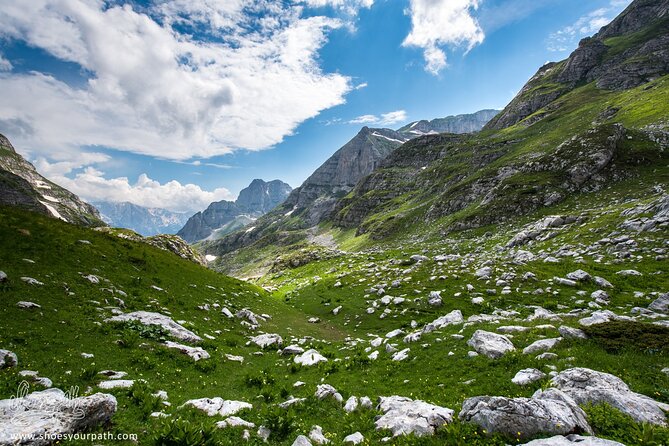
On Day 3, your destination is Vuthaj in Montenegro, but first you hike to Talijanka peak. This is the day where the tour becomes more than a single-country trek. You cross the border during the hike—from Albania into Montenegro.
Talijanka sits in the Grbaje Valley and the valley is described as U-shaped, surrounded by sharp, grey peaks. The peak is labeled as one of the most beautiful Balkan peaks, and from the top you can also see Lake Plav (Montenegro).
The hike is about 6 hours (admission ticket free). Then you take a minivan for the last 40 minutes to Vuthaj. In Vuthaj, you also get an opportunity to visit an Ali Pasha site (the name is cut off, but it’s clearly a specific place/activity included in your plan).
Why this border-crossing day works
Crossing borders can feel like an annoying checkpoint process when you’re traveling on your own. Here, it becomes part of the walking story. You’re already moving through terrain, so the “change” feels like a natural extension, not a detour.
Consideration
You’ll want to plan for the fact that not every day will be the same vibe: this day ends in a different country setting, with a different rhythm and a different type of village life.
Theth’s Old Church and the Blue Eye: Days 4–5 of mountain magic
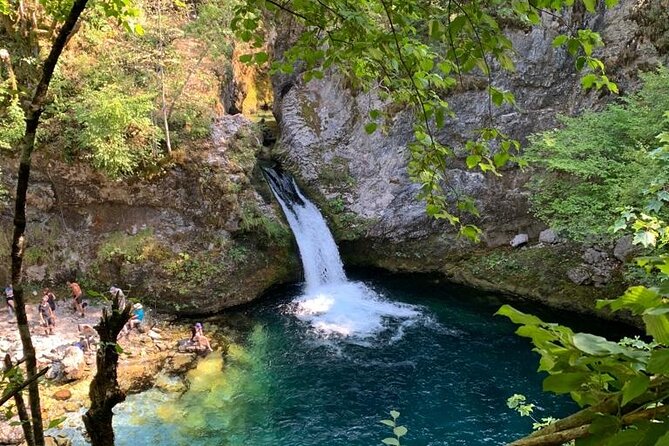
Day 4 takes you from Vuthaj to Theth and you cross the border back to Albania during the trek. The hike time is listed around 7 hours.
Along the route, you visit a hidden water place that would be difficult to find on your own without knowing the exact location. You’ll also pass Arapi peak (2217m) and multiple shepherd’s huts. That detail matters: shepherd huts are not just “cute scenery.” They’re functional markers of local movement across the mountains, and you can feel that continuity on the trail.
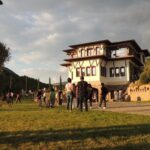
In Theth, your included experiences include the Old Church and the Lock in Toyour (listed as a symbol of Theth). Even if you only skim the story, these are the kinds of structures that connect the mountains to centuries of daily routines—prayer, protection, and community memory. Overnight is in a guesthouse in Theth.
Blue Eye of Theth: the hike you’ll remember even after the trail dust
Day 5 continues in Theth. The tour takes you to the Blue Eye of Theth, a natural wonder formed by rock erosion from water descending from melting snow.
The hike timing is 4 hours one way and about 3.5 hours back, with Day 5 listed as 8 hours total. You’re told the water color is an iridescent blend of green and blue, powered by a small waterfall that feeds the pool. The key detail: this is not a “quick stop.” You earn the view with steady walking.
Also noted: Blue Eye elevation up to 789 m and the hike is described as 3–4 hours one way.
Drawback to consider
Both Days 4 and 5 are Theth-focused. That’s great if you love the same village base. It’s less great if you’re hoping for constant movement to new towns every single night.
But if you like settling your pack in one place and really living the local rhythm for a couple days, Theth is a strong choice.
Valbona Pass and the mule trail: a long, remote day (Day 6)
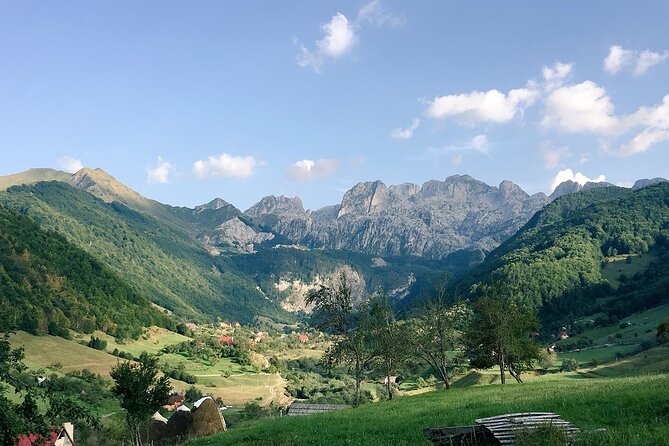
Day 6 is trekking from Theth to Valbona. This is described as intense, with a walk time of 6 to 8 hours in remote terrain.
You follow an old mule trail. That phrase is doing a lot of work. Trails like this weren’t built for tourists with comfortable grading; they were built for movement between valleys. Expect uneven ground, uphill grit, and plenty of places to stop and catch your breath.
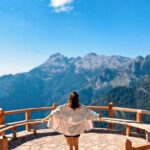
At one point, you get views toward both Theth valley and Valbona valley. The Valbona pass is also highlighted for views of the Bjeshket e Nemuna, also called the Accursed Mountains. The description notes it’s a national park in Gjakova and Peja in Kosovo, near the borders with Albania and Montenegro. On this day you pass wild forests and open mountain stretches, and you might even spot wildlife (the text cuts off, so I won’t guess what).
Why this day matters
After several peak-and-peak days, this is a connector day. It tells you what the region feels like when it’s not just summit drama. It’s the feeling of walking through the same geography that shaped the way people traveled for generations.
Cerem: forests, snow patches, and an optional Zla Kolate summit (Day 7)
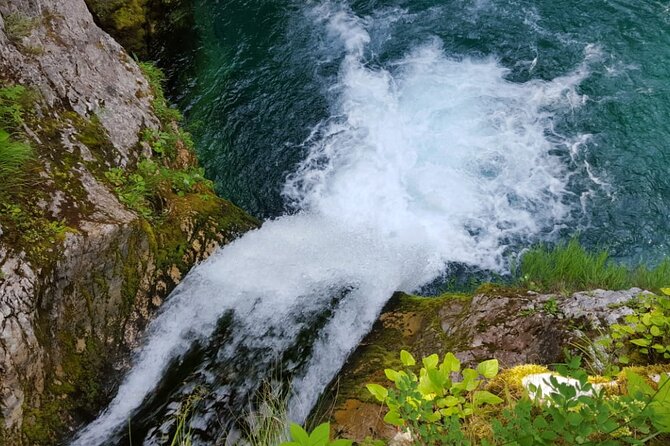
Day 7 heads to Cerem. Before you trek, you take transport to the starting point. The hike time listed is 7 hours, and it runs through forests and meadows.
As you walk, you reach an area that’s described like a canyon, and it’s said that this area can have the only remaining snow patch even during summer. That’s one of those small trail facts that makes you want to watch the mountains closely, not just stare forward at your next step.
You get an optional extension: the hike can add about 3 more hours if you go for Zla Kolate peak, bringing the total to 10 hours. If you do it, you’re adding a serious chunk of time on top of an already long day.
The tour also mentions striking features: a stone surface on a mountain side that looks like the face of a miserable old man, and a cave with extremely cold wind. Those details read like the kind of things you’d remember from a story told by a local guide, and they’re exactly the sort of moments that stop the hike from turning into pure endurance.
Doberdol and the Albania national reserve: berries, pine forest, and wildlife stakes (Day 8)
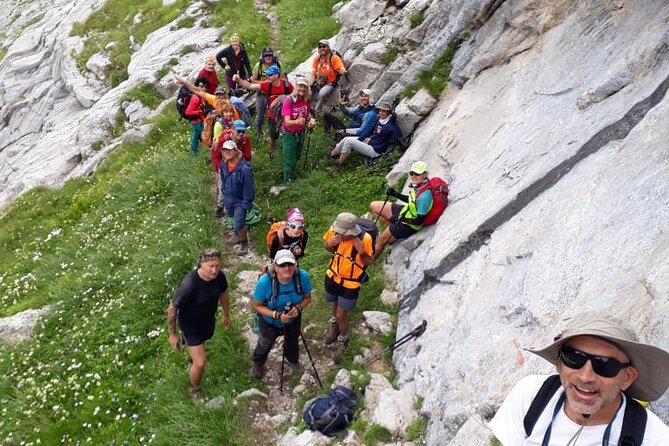
From Cerem you hike to Doberdol via a mule track. This is listed as 7 hours.
You cross the border to Montenegro for about two hours during the hike. So again, you’re not doing separate “transfer days.” You’re weaving the borders into the walking.
The trail runs through pine forests with seasonal berry picking possibilities mentioned: blueberries, blackberries, and raspberries depending on season. The tour also highlights the only National Reserve in Albania, with brown bears and the last population of approximately 40 lynxes in the Balkans.
Your highest point is listed as about 2100 meters. Along the way, there are shepherd hut villages where you can enjoy coffee or other drinks. Then you reach Doberdol, described as around 1800m (the rest of the line cuts off).
Consideration
This is a wildlife-involved area, so you should plan for the practical reality of mountain reserves: you’ll be walking where nature is the main event, not where signage or perfect trail clarity is guaranteed. Stay focused, stick to the route you’re given, and don’t assume phones will save you if the weather shifts.
Gjeravica’s high lakes and the road to Gjakova (Days 9–10)
Day 9 starts the “back to civilization” shift, but it doesn’t start gently. You hike to Gjeravica, listed as the highest peak of Kosovo and also the second highest peak of the Accursed Mountains.
From the top, you can see the Accursed Mountains on one side and the Sharr Mountains on the other. The tour also says you can swim in three different lakes formed by alpine and glacier waters. One lake is described as heart-shaped—the kind of detail that makes this day feel like a story you’ll keep repeating.
The hike time listed is 6 hours. After that, you go to Gropat e Erenikut in Kosovo, and from there you take a 4×4 ride to Gjakova for about 1 hour.
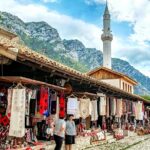
Day 10 is a short city tour of Gjakova for 4 hours. The highlight is the oldest and largest bazaar of Kosovo, which was destroyed during the Balkan wars, World War II, and the Kosovo war, then rebuilt to its old state. You also visit the clock tower and the Hadum mosque, built in the 16th century and said to have survived the wars. It’s described as showing early Islamic architecture in the Balkans, with arabesque decorations.
Finally, the transfer back to Tirana marks the end.
Why ending in Gjakova works
After days of rock, wind, and distance, a bazaar and mosque visit feels like a relief—but it’s not a downgrade. It’s how you see the region’s human side without losing the mountain connection.
Also, you get a normal meal opportunity at a place where the town can do the hosting.
Price and logistics: where $1,718.57 per person buys real help
At $1,718.57 per person for about 10 days, this isn’t a bargain hike. But it’s also not “paying for views only.” Your money covers the heavy-lifting logistics:
- 9 nights in simple accommodation (homestay/guesthouse/lodge or shepherd’s hut)
- Local transport provided by the company
- Cross-border pass
- 4×4 transfer from Gropat e Erenikut to Gjakova
- Entry tickets for the sites you visit
- Tourist/road-related costs listed (tourist taxes, road taxes, international insurance, petrol)
- Breakfast (9)
Meals aren’t included beyond breakfast. The tour states one meal typically costs 12–15 euros, so you’ll budget for lunches and dinners on your own.
Is it truly self-guided?
It’s best understood as guided planning with your hiking days organized for you. The route between trailheads and the key border movements are handled. But you’re still the one hiking the distance and living at guesthouses without resort-style support.
In the trip feedback you can see why this matters: people like the way the team stays in contact and helps with problem-solving. Names that come up include Brikena from Choose Balkans, with praise for being friendly, helpful, and checking in daily. That’s the kind of support that turns “self-guided” from a buzzword into real reassurance.
Group size and the feel of the trek
The maximum group size is 10 travelers. That’s big enough to share the experience without feeling like a commuter train, and small enough that you’ll actually remember faces.
Where this tour shines (and who should skip it)
This tour is for you if:
- You want mountain terrain rather than a paved-sightseeing itinerary
- You can handle long hiking days (often 6–8 hours)
- You’re okay with simple accommodations and possibly shared rooms
- You’d rather pay for logistics help than reinvent border-and-transport planning
This tour might not be for you if:
- You need a hotel every night with private bathrooms
- You dislike hiking when weather changes
- You want lots of downtime between hikes (this trip stacks active days)
A practical note from the tour info: you should have strong physical fitness and some hiking experience.
What to pack (based on the reality of these hikes)
You’re hiking multiple times on different terrain levels, plus there are notes about snow patches and long route times. So pack like you’ll be outdoors for hours.
At minimum, I’d plan around:
- Good hiking shoes or boots with grip (long days, remote terrain)
- A rain layer and warm layer for colder mountain air
- Sun protection and water strategy (you’ll be out 6–8 hours often)
- A headlamp or flashlight for basic evenings (guesthouses and shepherd areas can be dim)
- A way to keep warm even after you finish hiking (recovery matters on consecutive days)
The tour includes breakfasts, but lunches/dinners are on you. Snacks can save you when a shepherd hut coffee turns into “we’re moving on now.”
Should you book Peaks of the Balkans?
Book it if you want a mountain trip that feels like you’re living inside the Balkan Alps for 10 days—not just passing through. The combination of high peaks, classic Theth stops like the Blue Eye, and the chance to end with Gjakova’s bazaar and Hadum mosque makes this feel like a full arc: backcountry effort, then cultural payoff.
Skip it if you’re chasing comfort. Accommodation is described as simple, basic-bathroom style, and shared rooms may be required unless you pay for a private room option (35 euros extra per night per person based on availability). Also, nonrefundable terms mean you shouldn’t gamble with booking unless your hiking plans are solid.
If you’re fit, curious, and okay with basic stays, you’ll come back with that rare kind of travel memory: one where the main photos are of water, ridgelines, and stone churches—but your real story is the hours you spent moving through the mountains.
FAQ
How long is the Peaks of the Balkans self-guided tour?
It runs for about 10 days and includes 9 nights of accommodation.
Where does the tour start and end?
It starts in Tirana, Albania. It also ends back at the meeting point with a transfer back to Tirana on Day 10.
What time do we leave on the first day?
Departure from Tirana is at 6:00 am.
What kind of hiking fitness do I need?
You should have strong physical fitness and some hiking experience. The itinerary includes multiple hikes that can last 6–8 hours and some longer days.
What’s included in the price?
Included are 9 nights in simple guesthouse/homestay/lodge or shepherd’s hut-style accommodation, local transport, a cross-border pass, 4×4 transport from Gropat e Erenikut to Gjakova, entry tickets for visited sites, tourist/road costs listed, and breakfast (9).
Are lunch and dinner included?
No. Lunches, dinners, drinks, and snacks are not included. The tour notes one meal is typically around 12–15 euros.
What are the accommodation rooms like?
You’ll stay in traditional and simple accommodation with basic bathroom amenities. Rooms usually accommodate two to five travelers, and sharing may be required for mixed groups unless you book a private room.
Can I book a private room?
Yes. Private rooms are possible for an extra 35 euros per night per person based on availability.
Is the tour cancellation refundable?
No. The experience is non-refundable and cannot be changed for any reason.
More Tirana Tours and Albanian Day Trips
More from Our Tirana Review Desk
More Theth and Valbona Treks in the Albanian Alps
Not quite it? More Tirana tours and Albanian day trips fresh off our review desk

Theth, Valbona & the Albanian Alps, compared.
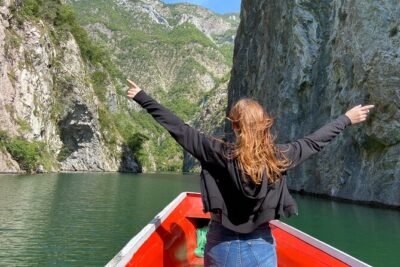 ★ 5.0Shala river & Komani lake -Day trip departure from Tirana/ShkodraFrom $62309 reviews
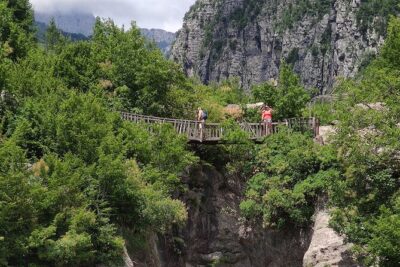 ★ 5.0Albanian Alps and Theth Village Day Tour from TiranaFrom $76116 reviews
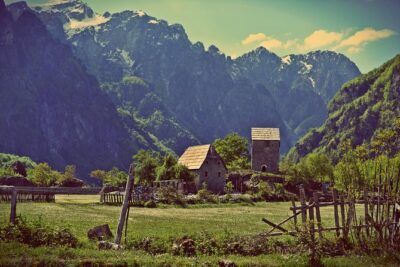 ★ 5.0Hiking Tour of Valbona, Theth & Blue Eye in 3 Days from TiranaFrom $52473 reviews
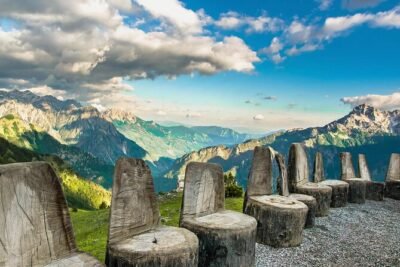 ★ 5.0Semi-Private Day Tour of Theth & Blue Eye from Tirana / ShkoderFrom $26152 reviews
 ★ 4.0Day Tour of Theth & Hike to Blue Eye from Tirana, Durres/ShkoderFrom $6443 reviews
 ★ 5.0Day tour of Theth from TiranaFrom $15433 reviews
 ★ 5.0Self-guided: Peaks of the Balkans Tour in 8 daysFrom $1,36632 reviews
 ★ 5.0Semi-Private Hiking Tour; Theth, Valbona & Koman Lake in 3 DaysFrom $75128 reviews
Browse the lists this tour appears in