
Reviewed · TIRANA CITY WALKING TOURS
Inside Tirana Walking Tour
Communist-era Tirana, explained on foot. This 2-hour walking tour connects major sights with the stories behind them, from culture institutions to a checkpoint memorial, with a mobile ticket and English commentary.
I especially like the way Era keeps things clear and friendly, and the pace stays easy even with multiple stops. I also like that every key stop has free admission, so your money goes to the guide and your time, not ticket booths.
One possible drawback: the route is mostly outdoors, and the experience requires good weather to run, so plan around rain and heat.
Inside Tirana Walking Tour: Key Takeaways
- Era’s explanations in English make the big monuments easier to read, fast
- Free entry at every stop keeps value high for a short 2-hour walk
- A smart mix of art, national identity, and communist history in one loop
- Postbllok brings the surveillance era into focus with concrete, bunker pieces, and meaning
- Blloku shows how Tirana changed after communism, from restricted area to nightlife
In This Review
- How This Walking Tour Helps You Read Tirana Fast
- Starting at Et’hem Bej Mosque: Your 2-Hour Route Through Power and Culture
- National Theatre of Opera and Ballet: Culture Built Into Tirana’s Main Institutions
- Skanderbeg Statue and Square: The City Plan Behind the Big Symbols
- National History Museum: A Short Visit That Points You to the Real Threads
- Postbllok Checkpoint Monument: How Tirana Remembers Surveillance and Fear
- Blloku: From a Restricted Politburo Zone to Tirana’s Social Scene
- Price, Timing, and What to Bring for a Smooth Walk
- Should You Book This Inside Tirana Walking Tour?
- FAQ
- How long is the Inside Tirana Walking Tour?
- Is the tour offered in English?
- Where do I meet, and where does the tour end?
- Are tickets or museum admissions included?
- What stops are included on the route?
- What happens if the weather is bad?
How This Walking Tour Helps You Read Tirana Fast
Tirana can feel like a city of contrasts: grand cultural buildings in one direction, heavy memory sites in another, and then trendy neighborhoods nearby. This tour is built to help you connect the dots without turning your day into a museum marathon.
You’ll walk a compact route that hits the national stage (opera and major institutions), the symbol center (Skanderbeg Square), and the places where Albania’s modern story got shaped. Even better, the time pressure is real but not stressful—about two hours, then you’re free to go deeper on your own.
Starting at Et’hem Bej Mosque: Your 2-Hour Route Through Power and Culture
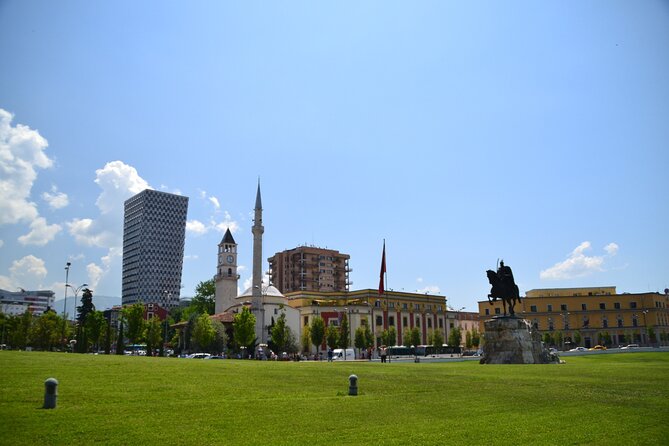
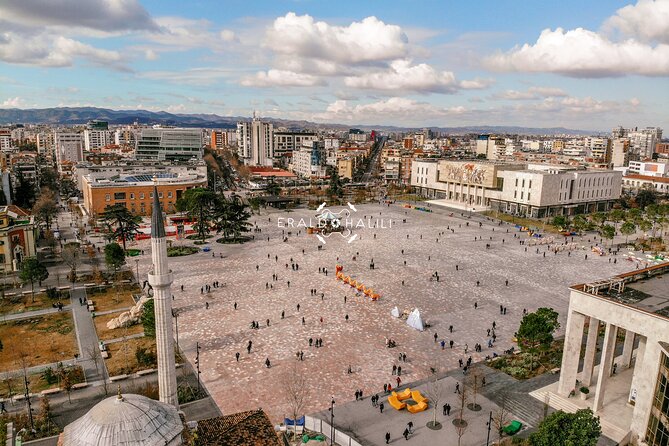
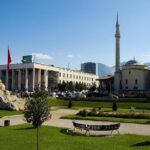
The tour begins at Et’hem Bej Mosque in Skënderbej Square, right where the city’s “main character” energy is concentrated. That’s useful because the route starts by giving you a mental map: where culture sits, where national identity is staged, and where the city’s shifts in ideology show up later.
You’ll return to the same meeting point at the end, so you don’t need to plan transport to “catch up” with yourself. With a maximum of 30 people, you’re not dealing with an endless line of bodies, which helps when you’re trying to hear your guide and look at details.
More Tirana walking tours through the boulevards and back lanes


National Theatre of Opera and Ballet: Culture Built Into Tirana’s Main Institutions
Stop one is the National Theatre of Opera and Ballet of Albania (located on the building known as the Palace of Culture). This isn’t just a pretty facade moment. It’s where Albania’s formal music life took shape in modern times.
The Albanian Philharmonic was established in 1950, bringing together the choir, symphony orchestra, opera singers, the ballet troupe, and the conductor. Over time, the Philharmonic’s activities developed in the very building that became the National Theatre, reflecting how the country built major public art institutions.
The building’s role was cemented in 1966, when the National Theatre of Opera and Ballet took its place there. If you’re the kind of traveler who likes understanding why a place exists (not only what it looks like), this stop sets the tone: Tirana’s national identity isn’t only political. It’s also artistic, organized, and institutional.
Skanderbeg Statue and Square: The City Plan Behind the Big Symbols
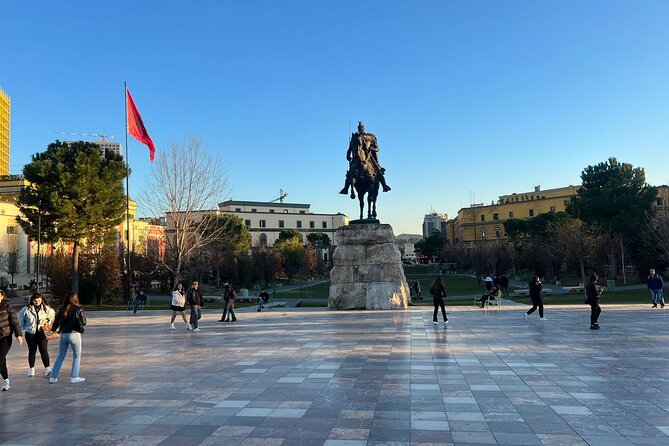
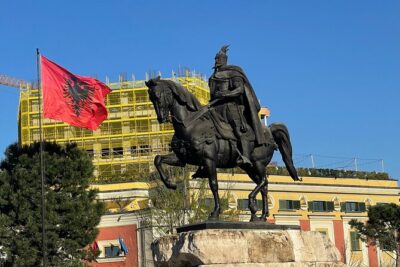
Next you’re at the Skanderbeg Monument, anchored in Skënderbej Square—the central plaza in Tirana. The monument is dedicated to Gjergj Kastrioti Skënderbeu, a national hero, which means the square isn’t just a meeting spot. It’s a statement.
The square is about 40,000 square meters, and the planning history is part of the story. Tirana’s city plan was first designed by Armando Brasini in 1925, then continued in a Neo-Renaissance style by Florestano Di Fausto with distinctive angular solutions and giant order fascias. After the Italian invasion, the master plan was updated in 1939 by Gherardo Bosio.
That planning timeline matters because you’ll notice the square’s surrounding institutions right away: the Tirana International Hotel, the Palace of Culture, the National Opera, the National Library, the National Bank, the Ethem Bey Mosque, the Clock Tower, the City Hall, and several ministries. In about 15 minutes, you get the feel of a city center designed to project authority and continuity.
National History Museum: A Short Visit That Points You to the Real Threads
Stop three is Muzeu Historik Kombëtar, the National History Museum. It opened on 28 October 1981, and the complex is huge—27,000 square meters total, with 18,000 square meters available for exhibitions. In other words: this museum could easily take you half a day, but your walking tour version is designed to give you orientation.
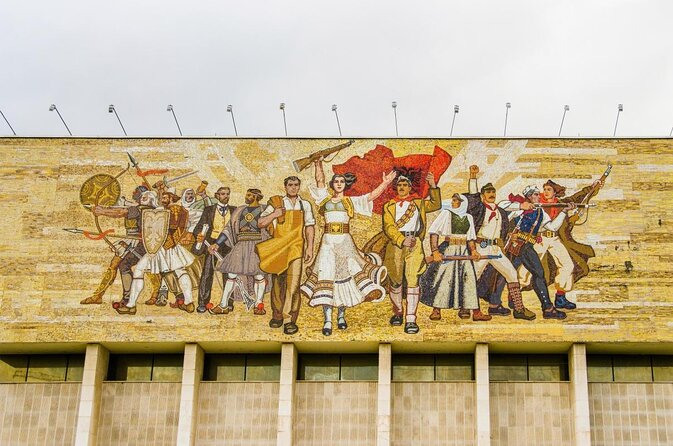
Above the entrance is a major mosaic mural titled The Albanians. It depicts figures stretching from ancient times toward more modern eras, which is a clue about how the museum frames identity across time. If you’re curious about how Albania tells its own story, this is the kind of opening image you want to see before you read labels.
Inside, you’ll hear your guide point out the museum’s pavilion themes: Antiquity, Middle Ages, Renaissance, Independence, Iconography, National Liberation Antifascist War, Communist Terror, and Mother Teresa. That list alone gives you a map for what you might follow later.
Tour time here is about 15 minutes, so it’s not for deep reading every room. Think of it as a “choose-your-later-adventure” stop: you’ll come away with the sections that match your interests.
Postbllok Checkpoint Monument: How Tirana Remembers Surveillance and Fear
Stop four is Postbllok (Checkpoint Monument), and it’s the emotional pivot of the route. This site is meant to be a somber reminder of Albania’s communist past—especially the surveillance and persecution associated with Enver Hoxha’s regime.
The monument includes original elements pulled from the physical language of imprisonment: concrete pillars from a notorious labor camp, an old bunker, and part of the Berlin Wall. That mix makes the memory feel more grounded than a simple plaque. It’s harder to look away because the materials are not just symbolic.
Postbllok is dedicated to the memory of those who suffered under the communist dictatorship and also points to resilience through the transition toward freedom and democracy. You’ll only spend about 10 minutes here, but it’s a powerful stop for anyone trying to understand why Albania’s later political and social changes felt so urgent.
Practical note: keep your phone charged and your eyes open. This is one of those places where the visuals are doing a lot of the storytelling.
More Tirana walks worth putting your boots on for




Blloku: From a Restricted Politburo Zone to Tirana’s Social Scene
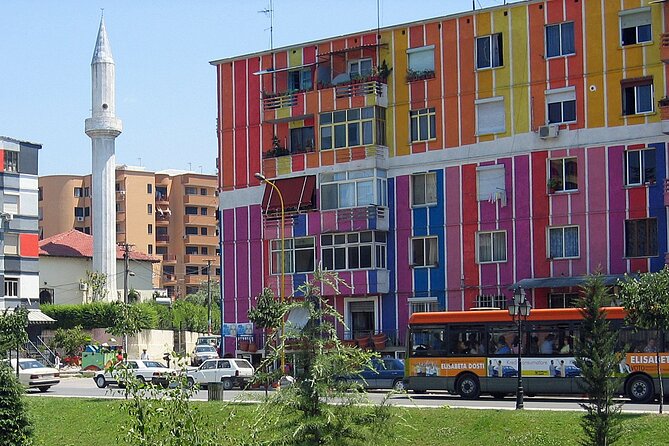
The final stop is Blloku, Tirana’s upmarket entertainment district in the southwestern part of the city, part of the Tirana e Re neighborhood. It’s known for boutiques, shops, restaurants, trendy bars, pubs, and cafes.
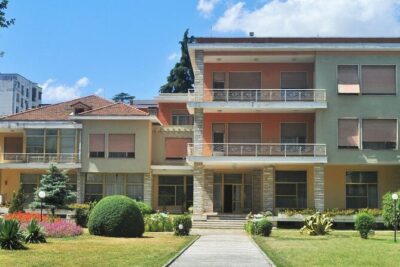
But the key point here is the contrast. Blloku became attractive especially after communism fell, because during the communist era it was a restricted residential area for members of the Albanian politburo. Ordinary Albanians weren’t allowed there, and it was even unmarked on most maps. If you like tracing how geography reflects politics, this neighborhood is a case study.
You can still find the residence of Albania’s communist leader Enver Hoxha in the area. After the fall of communism, development surged, bringing new exclusive flats and apartments. People also describe Ish-Blloku as the playground of the young Albanian elite, which helps explain why the area now feels youthful and social.
Your tour stop is about 15 minutes, which works well as a landing point: you finish with a sense of what Tirana became when restrictions lifted, and you can choose where to go next for dinner or a late coffee.
Price, Timing, and What to Bring for a Smooth Walk
At $6.02 per person for an approximately 2-hour walking tour, the value is mostly in the guide time and the structure. All the featured stops list free admission tickets, which means you’re not paying museum fees on top—so you’re really buying a guided route and interpretation.
It’s also offered in English, with a mobile ticket you can manage on your phone. The tour includes the guide, while tips aren’t included, so keep a little cash or card flexibility if you want to reward good pacing and clear explanations.
What you should bring is simple:
- Comfortable shoes for city sidewalks
- Water for the warmer months
- A fully charged phone for the mobile ticket
- Patience for a short day that packs in major themes
Also, confirmation comes within 48 hours of booking depending on availability, and free cancellation is available up to 24 hours before the start time. And yes—the tour requires good weather, so check the forecast if your dates are tight.
Should You Book This Inside Tirana Walking Tour?
I’d book this tour if you want a short, high-impact way to understand Tirana beyond photos. It’s especially worth it if you care about how art institutions, national symbols, and communist-era memory all sit within one compact geography.
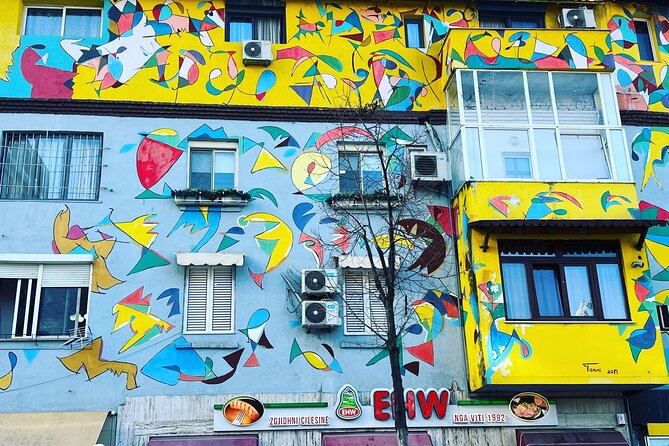
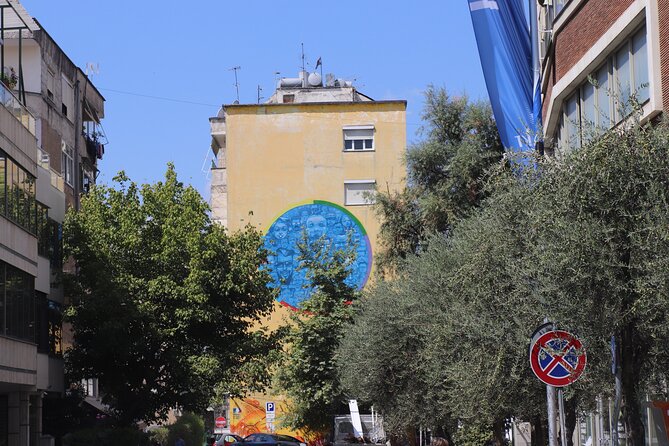
It’s also a smart pick if you like getting oriented quickly. After two hours, you’ll know what to revisit—whether that’s the history museum’s themes, the Postbllok atmosphere, or the social energy in Blloku. And if you’re a fan of street-level meaning, the experience includes that added layer of everyday city culture and murals, not only big monuments.
I would skip it only if you’re looking for a long museum session or a slow, detailed reading pace. This is an overview designed to steer your next steps, not to replace deeper visits.
FAQ
How long is the Inside Tirana Walking Tour?
It lasts about 2 hours.
Is the tour offered in English?
Yes, it’s offered in English.
Where do I meet, and where does the tour end?
You meet at Et’hem Bej Mosque in Skënderbej Square and the tour ends back at the same meeting point.
Are tickets or museum admissions included?
Admission tickets are listed as free for the stops on the route, and the tour includes the guide.
What stops are included on the route?
The route includes the National Theatre of Opera and Ballet of Albania, Skanderbeg Statue in Skënderbej Square, the National History Museum, Postbllok Checkpoint Monument, and Blloku.
What happens if the weather is bad?
This experience requires good weather. If it’s canceled due to poor weather, you’ll be offered a different date or a full refund.
More Tirana Tours and Albanian Day Trips

More from Our Tirana Review Desk

More Ways to Walk Tirana on Foot


Not quite it? More Tirana tours and Albanian day trips fresh off our review desk







Tirana City Walking Tours, compared.
 ★ 5.0Walking Tour of TiranaFrom $18646 reviews
 ★ 5.0Local food experience & walking tour of TiranaFrom $60192 reviews
 ★ 5.0Tour a Piedi di TiranaFrom $20174 reviews
 ★ 5.0Best of Local Food & City Tour of Tirana – Food & Drinks IncludedFrom $72160 reviews
 ★ 5.0Berat Walking TourFrom $1886 reviews
 ★ 5.0Tirana Hidden Treasures Sightseeing TourFrom $1660 reviews
 ★ 4.5City Tour of Tirana & Dajti Mountain with PickupFrom $6059 reviews
 ★ 5.0Tirana Walking Tour: History, Culture &Gems by a Passionate GuideFrom $3652 reviews
Browse the lists this tour appears in