
Reviewed · TIRANA CITY WALKING TOURS
Private Walking Tour Visit to Durrës with Licensed Guide
Durrës packs centuries into one walk. This private tour uses a licensed guide to connect Ottoman, Byzantine, Norman, Venetian, and later Italian-era influences you can actually point to on the ground. I love how quickly you start building a mental map, and you’ll get a clear thread from fortifications to everyday city life. You’ll also see how today’s Durrës sits on top of older layers.
What I like most is the tour’s “how it was built” focus, especially at the Venetian Tower of Durrës, where you’ll hear construction techniques and why the tower’s story matters during Ottoman rule and even into World War II. I also really value the stop around the Durrës Amphitheatre, including the details about its 1966 excavation and the ongoing effort to restore the whole monument.
The only potential drawback is pacing: each stop is short, so if you want to linger like you’re at a museum, you may feel slightly rushed. Plan for comfortable shoes and a light snack break, because you’ll be moving through busy streets.
In This Review
- Key highlights you should know before you go
- Starting at the Venetian Tower: where Durrës becomes readable
- Venetian Tower of Durrës and the multimedia stop you can optionally upgrade
- Church of Saint Paul and Saint Asti: quiet streets, political layers
- Ottoman Hammam (Medieval Bath): steam technology you can almost feel
- Bulevardi Epidamn and the 1928 urban plan: where to pause for a snack
- Aleksandër Moisiu Museum: how theatre, consulates, and earthquakes intersect
- Fatih Mosque (1501): Ottoman-era building logic against Byzantine walls
- Durres Amphitheatre: excavation by Vangjel Toci and the restoration project
- Catholic Church of Saint Lucy (Kisha Katolike Shën Dominiku): faith under legal bans
- Freedom Square (Sheshi Liria) and City Hall: urban planning you can walk through
- Practical notes on timing, private groups, and how to get value
- Should you book this Durrës private walking tour?
- FAQ
- How long is the private walking tour in Durrës?
- Is the tour private, or will I share it with others?
- What language is the tour offered in?
- What’s the price per person?
- Where does the tour start and end?
- Are the site entries included?
- Do I need to print a ticket?
- Is the tour suitable for people using service animals?
- Can I cancel for a full refund?
Key highlights you should know before you go
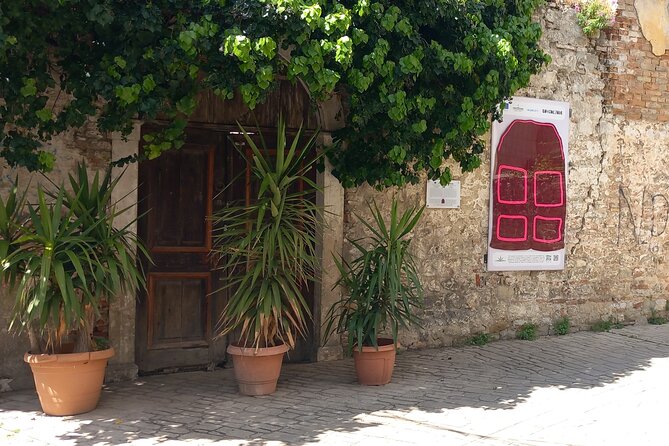
- Venetian Tower, including its changing role under Ottoman rule and later history through communist times
- Amphitheatre context, with the 1966 excavation and the restoration project explained clearly
- Ottoman hammam clues, plus how steam/heating worked and what traces reveal about older roads
- A multi-faith route, from mosques to churches to the way religious spaces changed under communism
- Freedom Square and City Hall, where urban planning is visible in the street layout
- Byzantine forum material, with artifacts shown in an outdoor setting
Starting at the Venetian Tower: where Durrës becomes readable
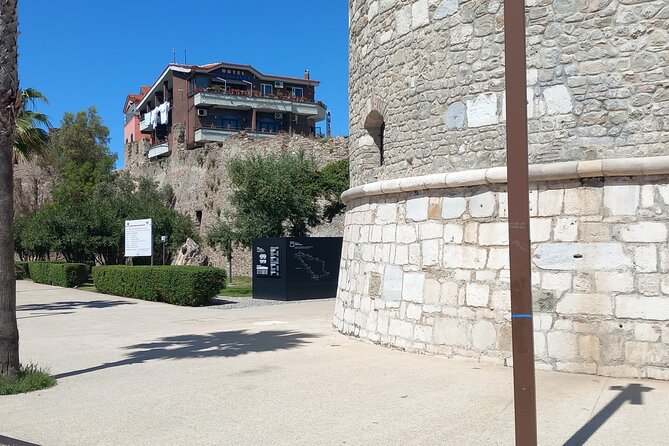
Pick a starting point and the whole city clicks. Here, you begin at the Venetian Tower of Durrës, and that choice is smart because it anchors the rest of the walk in a single, unmistakable landmark. From there, the guide’s job is to help you read what you’re seeing without getting lost in dates.
You’ll also get the big-picture “timeline feeling” fast: Durrës didn’t develop in one straight line. The tour frames the city as a meeting place of cultures and religions, so you’re not just staring at isolated monuments—you’re connecting them to how control and design changed over time. Expect to hear about fortifications and urban planning, including how an industrial-era city evolved on top of earlier patterns.
Even if you’re not a die-hard history person, the tour works because it points out why buildings exist where they do. A tower isn’t just a photo spot; it’s a practical structure tied to defense, movement, and later political shifts. That’s the kind of context that makes the rest of Durrës easier to understand on your own after the tour ends.
More Tirana walking tours through the boulevards and back lanes


Venetian Tower of Durrës and the multimedia stop you can optionally upgrade
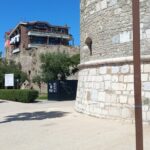
You’ll spend time on the tower’s construction story—how it was built, how it compares to other Adriatic (and wider) tower designs, and what its appearance can suggest about engineering choices. Then the guide ties that architecture to shifting historical power, including Ottoman-era significance and later demilitarization during the early stages of World War II.
One detail I think you’ll appreciate: the tour doesn’t treat the tower as frozen in time. You’ll hear how it was used through the communist regime and later into the last 30 years. That helps you understand why renovations and new uses matter now, not just then.
There’s also a very practical note about the tower’s current renovation works, financed by the European Commission, turning it into a multimedia center projecting the city’s history. Here’s the trade-off: to access the projection and the elevated balcony, visitors must pay an additional fee that’s not included in the tour. The good news is that entrance to view the interior is included, so you’re not locked out of seeing the renovated space.
If you’re the type who loves visuals, consider budgeting for that optional add-on. If you’d rather keep the experience strictly within your tour price, you can still get a lot out of the included access.
Church of Saint Paul and Saint Asti: quiet streets, political layers
After the tower, the route shifts into old-town texture—narrow streets, changing architectural styles, and places where you can feel how the city’s beliefs and rules shifted over time. One stop is the Church of Saint Paul and Saint Asti, where the focus is on the saints’ connection to Durrës and the way earlier religious buildings left traces.
What I like about this stop is that it connects faith to physical evidence. You’ll hear about hidden traces of the former Church of Saint Spiridon, demolished during the communist period. In other words, the tour isn’t only saying religious history happened; it’s showing you how that history can erase structures—and still leave marks behind if you know what to look for.
This is a good moment to slow down mentally. You’re still walking, but the guide’s explanation helps you see why a city can have “ghost architecture.” Even if you’re not interested in theology, you may be interested in how governments reshape public space.
Ottoman Hammam (Medieval Bath): steam technology you can almost feel
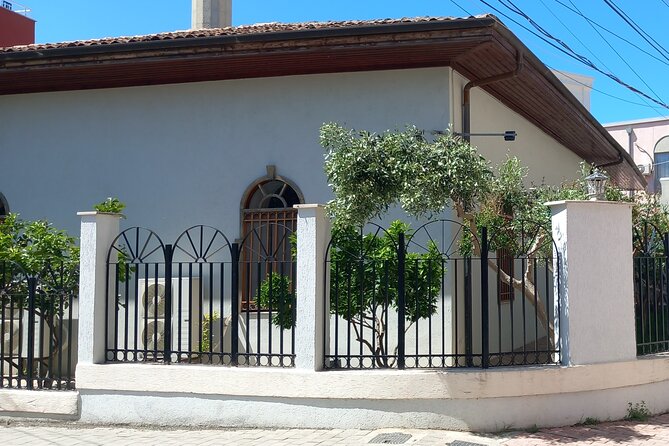
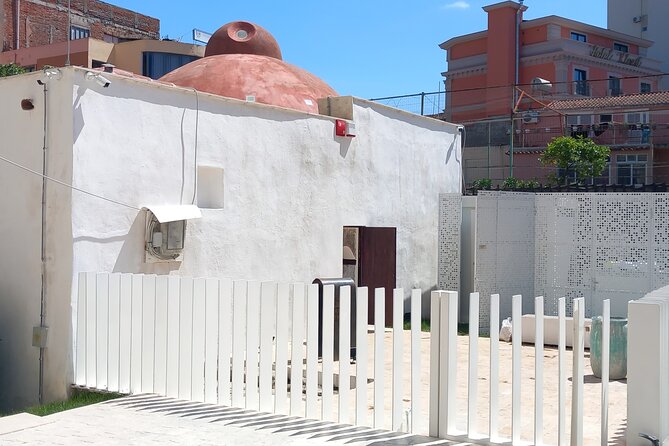
Next up is the Medieval Bath, an Ottoman hamam believed to have been built in the 17th century. The tour’s angle here is practical: you learn how steam and heating worked in a structure like this, and you connect it to how the building fit into the seaside promenade area.
The hammam story also links to nearby religious landmarks and older street geography. You’ll be told it may have been privately owned or connected to government buildings along the promenade, and you’ll also learn how it could relate to the White Mosque (reported as about five meters west, near where today’s Bulevardi Epidamn sits). Even if you can’t picture those distances instantly, the guide’s explanations should help you visualize how people moved through this zone before modern streets took over.
There’s another clever element: the tour uses building traces to point toward remnants of the old road to the Durres Castle. That’s the kind of detail that makes you stop seeing buildings as separate objects. You start seeing them as part of a system—roads, walls, water, heat, and movement.
I’d wear shoes with good grip here. It’s not a museum floor; you’ll be outdoors and walking through a living city.
Bulevardi Epidamn and the 1928 urban plan: where to pause for a snack
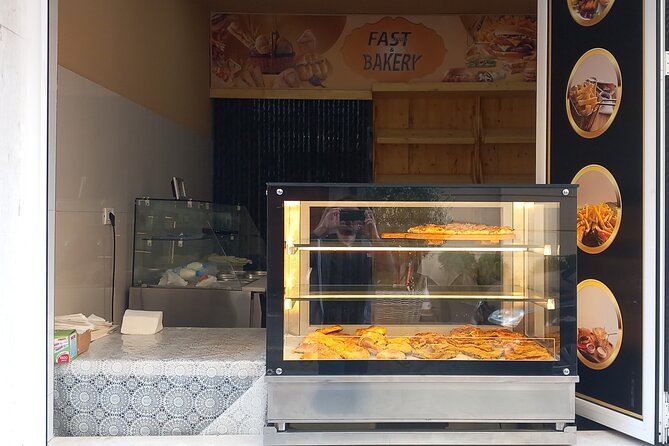
You’ll walk along Bulevardi Epidamn and get a short history lesson on why this promenade looks the way it does. The tour ties it to an urban regulatory plan from 1928, focusing on early residential building investments along this road segment.
This part is also where you’ll get a built-in “real-life break.” The tour pauses at local spots for refreshments such as coffee, water, burek, ice cream, or orange juice. That matters more than it sounds. In a 2–3 hour walk, a planned pause keeps your energy steady, and it gives you a chance to taste Durres without hunting around for the best option.
I like this segment because it connects official planning to your feet on the street. You’re not only learning where monuments are—you’re learning how ordinary neighborhoods were organized.
Tip for you: if it’s warm when you go, choose water and something simple before you get back into denser sightseeing streets. You’ll enjoy the next stops more.
More Tirana walks worth putting your boots on for


Aleksandër Moisiu Museum: how theatre, consulates, and earthquakes intersect
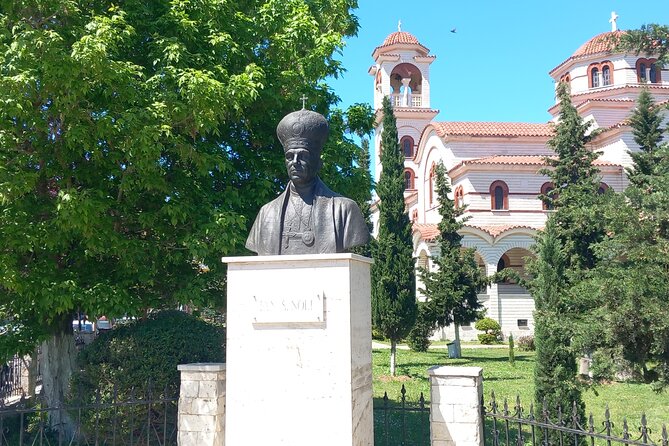
Then the tour moves to the Aleksandër Moisiu Museum, a house that once served as the consulate of England in Durrës after national independence when Durrës held the role of capital. Today, it’s linked to Aleksandër Moisiu, a distinguished international theatre artist connected to Durres.
The explanation here does something important: it shows how one building can hold several identities. It’s not just a museum stop. You’re learning about diplomatic history, traditional Albanian architecture, and the way earthquake damage affects what gets preserved.
You’ll hear that the house and the adjacent Byzantine tower were damaged in the 2019 earthquake, and that the building awaits the necessary investments to recover from that damage. That context gives the stop extra weight, because preservation here isn’t automatic. It depends on repairs, funding, and time.
If you like architecture, this is a good stop because the guide can point out traditional Albanian features and how Durres styles compare. If you don’t, you’ll still get a satisfying story about how one corner of town can represent changing eras.
Fatih Mosque (1501): Ottoman-era building logic against Byzantine walls
The walk includes the Fatih Mosque, built in 1501 and described as one of the three oldest mosques in Albania. You’ll learn how it was placed at the base of a Byzantine wall between two outer towers, and why that matters: it helped shield the minaret from seaside views and potential sea attacks.
Here’s a detail I think will stick with you. The tour explains that the mosque was built using the same types of materials as the Byzantine walls and even uses supportive sections of the wall to open up a broad ground floor base. That’s architecture solving a problem—defense, access, and structure—while still serving religious function.
Even if you don’t want to read architectural diagrams, you can understand the logic. The mosque’s design responds to its location, and the guide’s explanation ties that to historical conditions. You’ll likely look at the wall system more carefully after you hear it explained.
This is also a good stop for respectful observation. You’ll be learning about how religious sites have changed under different political regimes, which comes up again later in the route.
Durres Amphitheatre: excavation by Vangjel Toci and the restoration project
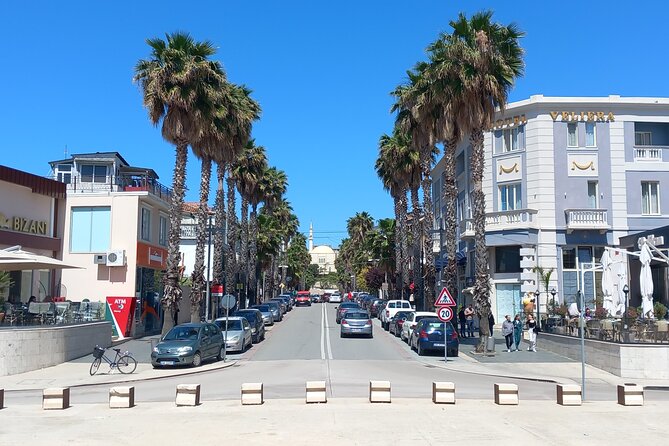
One of the most compelling stops on the whole experience is the Durrës Amphitheatre. The tour doesn’t just name it; it explains why it’s fascinating in an urban context, including how the amphitheatre coexists with the city above it.
You’ll be told about its excavation in 1966 by archaeologist Vangjel Toci, and about the intriguing finds that excavation revealed. That’s a strong hook for anyone who likes archaeology, because it gives you a specific person and a concrete year instead of vague “it was discovered long ago.”
Then the guide brings it to the present with the Government Project aimed at restoring the entire amphitheatre and preserving the historical layers. I like that the explanation includes the idea of highlighting layers rather than stripping everything down. It helps you understand what restoration tries to protect: meaning, not just stone.
This is also where you can get some great photos, but more importantly, you’ll get a sense of scale. Amphitheatres are hard to “get” from outside—context is everything—and this tour gives it.
If you’re sensitive to sun or heat, plan your drink earlier. You’ll probably want water before you hit this open-air site.
Catholic Church of Saint Lucy (Kisha Katolike Shën Dominiku): faith under legal bans
Another religious stop is the Kisha Katolike Shën Dominiku, known as the Church of Saint Lucy. The focus is on its construction history and on key figures related to city governance, connecting spirituality to public leadership.
The tour also explains the present condition and what happened during the communist era, when religious activities were legally banned. That’s a heavy topic, but the guide keeps it tied to what you can observe in the building and its surroundings.
I think this stop is valuable because it helps you understand why religion in Durrës wasn’t only about belief. It was about law, survival, and the ability to practice publicly. You may walk away with a clearer idea of how towns can change by controlling worship.
It’s a quieter moment. I’d use it to reset your attention for the final city-center focus.
Freedom Square (Sheshi Liria) and City Hall: urban planning you can walk through
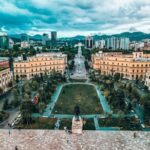
The route ends by centering on Sheshi Liria (Freedom Square), one of Durrës’s earliest squares. You’ll learn that it was originally designed as a floral garden in the 1928 First Urban Regulatory Plan, and you’ll see how that plan connects to major municipal buildings around it.
This is a great stop if you like city design. The guide connects Ottoman era to pre–World War II and to present times, helping you understand urban morphology—how the city’s layout shapes neighborhoods like the former Varosh areas branching out in different directions.
Then you’ll also see the Municipality of Durrës, built in 1931, with Italian architectural preferences from its time. A key detail is the large central balcony used for public speeches in the square. The guide also explains that after the 1926 earthquake destroyed the clock tower, a new public clock was installed atop the new City Hall building.
Even if you’re not a history fanatic, this kind of detail makes a city feel real. It’s not a list of buildings—it’s a story about governance, disasters, and how cities rebuild their public faces.
Practical notes on timing, private groups, and how to get value
This is a private walking tour for your group only, and that usually changes the whole experience. You can ask questions when something catches your eye—like how the tower relates to defense patterns, or why the hammam’s traces matter for understanding older roads.
Duration is about 2 to 3 hours, with short visits at each stop. That short-stop format keeps momentum high and makes it easier to fit into a day in Albania. It also means you’re getting a guided overview rather than a slow, deep dig at one site.
Price is $24.10 per person, and for a private guide plus admission-free entries at multiple monuments, it’s the kind of deal that can make sense if you want structure without a full-day commitment. You’re not paying for a bus ride or a long itinerary. You’re paying for someone licensed to help you connect the dots.
You’ll get an English-language tour, a mobile ticket, and the tour is near public transportation. Service animals are allowed, and most travelers can participate, though it is still a walking experience in the city.
Should you book this Durrës private walking tour?
Book it if you want a guided way to understand Durrës without feeling overwhelmed. This tour is especially good for you if you like architecture and urban planning clues—tower construction logic, hammam heating traces, and how one square links to multiple eras of the city. The strong guide explanations (the kind that make the amphitheatre and the tower feel connected, not separate) are a big part of the value.
Skip it or adjust expectations if you plan to spend most of your time stopping for long interiors and slow museum-style exploration. This walk favors quick, high-quality context over extended wandering. If that’s your style, you’ll leave with a clearer sense of where to go next on your own.
FAQ
How long is the private walking tour in Durrës?
The tour lasts about 2 to 3 hours.
Is the tour private, or will I share it with others?
It’s a private tour/activity, so only your group participates.
What language is the tour offered in?
The tour is offered in English.
What’s the price per person?
The price is $24.10 per person.
Where does the tour start and end?
It starts at Venetian Tower of Durrës and ends at Sheshi Liria (Freedom Square).
Are the site entries included?
The tour indicates free admission tickets for the listed stops. There is one notable exception: to access the projection and elevated balcony at the Venetian Tower, an additional fee is required and not included in the tour price.
Do I need to print a ticket?
You’ll have a mobile ticket.
Is the tour suitable for people using service animals?
Yes, service animals are allowed.
Can I cancel for a full refund?
Yes, cancellation is free, and you can cancel up to 24 hours in advance for a full refund.
More Tirana Tours and Albanian Day Trips
More from Our Tirana Review Desk
More Ways to Walk Tirana on Foot

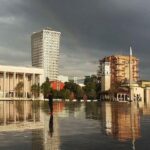
Not quite it? More Tirana tours and Albanian day trips fresh off our review desk
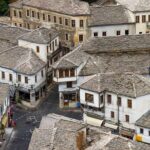


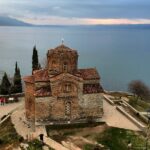



Tirana City Walking Tours, compared.
 ★ 5.0Walking Tour of TiranaFrom $18646 reviews
 ★ 5.0Local food experience & walking tour of TiranaFrom $60192 reviews
 ★ 5.0Tour a Piedi di TiranaFrom $20174 reviews
 ★ 5.0Best of Local Food & City Tour of Tirana – Food & Drinks IncludedFrom $72160 reviews
 ★ 5.0Berat Walking TourFrom $1886 reviews
 ★ 5.0Tirana Hidden Treasures Sightseeing TourFrom $1660 reviews
 ★ 4.5City Tour of Tirana & Dajti Mountain with PickupFrom $6059 reviews
 ★ 5.0Tirana Walking Tour: History, Culture &Gems by a Passionate GuideFrom $3652 reviews
Browse the lists this tour appears in