
Reviewed · TIRANA CITY WALKING TOURS
Tirana Walking Tour
Tirana can feel like a city with two stories—old and new—and this walk helps you read both in a few hours. You’ll start at Sheshi Skënderbej, stand in front of major symbols, and get the context that makes the streets snap into focus. I especially like how the tour turns big sites into clear, human-scale history instead of just photo stops.
My second favorite thing is the guide-led pacing and explanations. Guides like Aldo are known for being on time, answering questions fully, and adjusting the walk speed to the group, so you don’t feel rushed or lost. You also get practical travel tips and restaurant suggestions that feel like a local handoff.
One thing to consider: this tour depends on good weather and includes a fair amount of walking. If you’re short on energy, plan for comfortable shoes and expect the “main boulevard” section to be your longest stretch.
In This Review
- Key Highlights You’ll Actually Feel Walking
- Getting Oriented at Sheshi Skënderbej: The Perfect Starting Point
- Price and Value: Why This Walk Is a Smart First Ticket
- How the Route Works: From Squares to Power Streets to Blloku
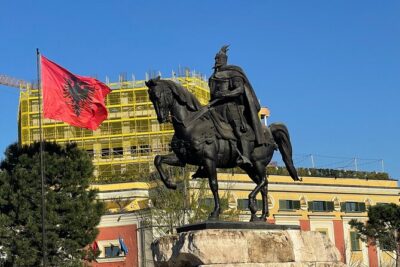
- Stop 1: Skanderbeg Square and the Et’hem Bey Mosque + Clock Tower
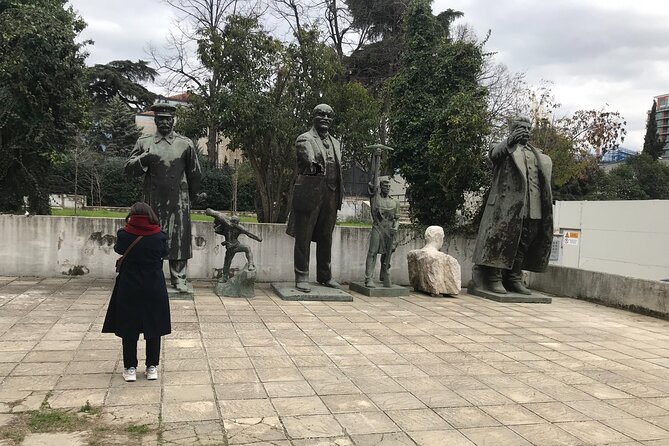
- Stop 2: Rruga Murat Toptani and the Communist-Era Memory Layer
- Stop 3: Bulevardi Dëshmorët e Kombit and the “Power Belt” Walk
- Stop 4: Blloku (Ex-Blloku) and What It Meant to Be Off-Limits
- The Guide Makes or Breaks It: Aldo’s Pace, Questions, and Connections
- Who Should Book This Tirana Walking Tour
- Should You Book This Tirana Walking Tour?
- FAQ
- How long is the Tirana Walking Tour?
- Where do I meet for the tour?
- What language is the tour offered in?
- What’s included in the price?
- Are the attraction stops free?
- Is the tour suitable for most travelers and can service animals attend?
Key Highlights You’ll Actually Feel Walking
- Three hours that connect Tirana’s political story to everyday streets, not just monuments
- Skanderbeg Square stops focused on Et’hem Bey Mosque and the Clock Tower
- Rruga Murat Toptani route with Bunk Art 2, Toptani Castle, and the Zogu Residence area
- A long boulevard walk along Bulevardi Dëshmorët e Kombit with key government buildings
- Blloku (Ex-Blloku) explained, including what made it off-limits during Communist rule
- Max 15 people and an English licensed guide, with time for questions
Getting Oriented at Sheshi Skënderbej: The Perfect Starting Point
The tour begins at Sheshi Skënderbej 1, right in the heart of old Tirana. That matters, because Tirana’s main sights cluster around a few central axes, and this route uses them efficiently. You’re not zigzagging all over town. You’re moving in a logical line, like following a timeline.
Expect to spend part of the first stretch on foot between landmark groups. The tour is listed as about 3 hours, and the pace is meant to be easy to follow. In my experience with walking tours of this style (and from the consistent praise the guides get), the key is how quickly you understand where you are and why it matters.
This also sets you up for the rest of your trip. After one well-taught orientation, you’ll stop seeing Tirana as “random buildings” and start seeing patterns: power, religion, and national identity—layered over the same streets.
More Tirana walking tours through the boulevards and back lanes


Price and Value: Why This Walk Is a Smart First Ticket
At $11.91 per person, this is priced like a budget-friendly city orientation. For that, you’re getting a licensed guide and a route that touches multiple landmark zones across Tirana’s old center and major boulevards.
Here’s what makes the value feel real: the stops that require attention are paired with explanation. Places like the mosque, clock tower, government buildings, and Blloku are easy to miss if you’re just sightseeing on your own. The guide’s job is to connect what you’re seeing to what it meant—politically, socially, and architecturally.
Another value point: the itinerary notes free admission tickets for the listed timed parts (including the Et’hem Bey Mosque segment). So your money goes mostly toward the guide and the walking orientation, not paid entry fees.
One more practical note: this tour is commonly booked well ahead (an average of 56 days in advance). That usually means you should lock in your date if your schedule is tight, especially for a first-day arrival.
How the Route Works: From Squares to Power Streets to Blloku
You’ll walk through four core zones, each with a different mood and function.
- Skanderbeg Square sets the “public center” stage, where older Tirana symbols sit beside newer national institutions.
- Rruga Murat Toptani shifts toward Communist-era memory and notable historic residences and castles nearby.
- Bulevardi Dëshmorët e Kombit becomes the long “power belt” walk, where state structures line a major boulevard.
- Blloku tells the most personal story on the route: who lived behind walls, and what that did to normal people’s lives.
That structure is the real reason the walk works so well as a first tour. You’re not jumping randomly. You’re moving through zones that help you understand the geography of control and the transformation afterward.
Stop 1: Skanderbeg Square and the Et’hem Bey Mosque + Clock Tower
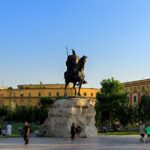
You start with Skanderbeg Square, one of Tirana’s signature spaces. The tour focuses on two major symbols:
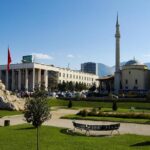
First, you’ll visit the Et’hem Bey Mosque. It’s described as the oldest building in Tirana and one of the city’s symbols. The guide explains its history and points out the decorations you might otherwise glide past. This is a great stop because it anchors the “older identity” side of Tirana. You see religious architecture, not just government blocks.
Nearby is the Clock Tower, also highlighted as a symbol of old Tirana and once the tallest building. Even if you don’t care about architecture, clock towers are useful storytelling tools. They suggest civic timekeeping, public life, and how cities organized themselves before today’s skyline.
After those, you’ll look at other major nearby landmarks mentioned on the route, including the National Bank of Albania, the National Museum, Hotel Tirana, the Palace of Culture, and Tirana Municipality. The key here isn’t memorizing names. It’s learning how one square hosts multiple layers of authority, culture, and public identity.
One consideration: squares can be busy, depending on your walking time. You’ll want to stay close to your guide to hear the explanation, especially when groups pause for photos.
Stop 2: Rruga Murat Toptani and the Communist-Era Memory Layer
Next you head along Rruga Murat Toptani, a street the tour uses to show the darker chapters of 20th-century Albania—without turning the walk into pure gloom.
You pass by Bunk Art 2, described as a museum about Communist atrocities. This is an important contrast to the lighter “touristy” parts of a city. Instead of pretending history is just architecture, the route acknowledges what people endured and what power looked like underground and behind official walls.
You also pass the Castle of Toptani area and the prince Zogu Residence. Including these stops matters because it reminds you that Communist rule wasn’t Tirana’s only political era. Albania had other centers of power before the later period, and the city’s buildings reflect that layering.
On this same stretch, you pass by the House of Parliament and the new Mosque, described as the biggest in the Balkans and still under construction. That detail gives you another storyline: religion and state are still evolving, not frozen in one era. It also helps explain why Tirana feels like it’s always in motion.
Drawback to keep in mind: because you’re passing some sites rather than stopping at every single one, your biggest payoff will come from listening closely and using your guide’s explanations to connect the dots.
More Tirana walks worth putting your boots on for




Stop 3: Bulevardi Dëshmorët e Kombit and the “Power Belt” Walk
This is your long walking segment on Bulevardi Dëshmorët e Kombit, Tirana’s main boulevard. The route is built around the idea that government buildings tell a story even when you’re just walking past them.
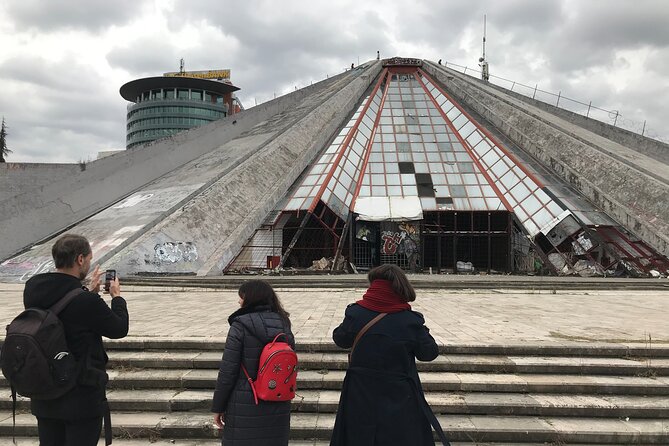
You’ll pass the Pyramid, described here as the dictator Hoxha’s museum after his death. The tour frames it as a symbol of how regimes try to preserve legacy and control public memory, even after leaders are gone.
You’ll also pass the Prime Ministry, Presidency, Parliament Offices, and educational and cultural institutions like the University and the Academy of Arts, plus the National Stadium. The mix is useful. It shows that power doesn’t only live in legislatures. It spreads across education, culture, and public space.
This stop is where you’ll likely start to feel the rhythm of the route. It’s a straightforward walk, but the guide’s job is to keep it meaningful. When a guide can explain why these buildings are here and what they represent, a “boring boulevard” becomes a living timeline.
If you’re the type who needs frequent movement breaks, ask your guide about short pauses. One review specifically mentions a short coffee time, which is the kind of small kindness that makes a long boulevard walk more comfortable.
Stop 4: Blloku (Ex-Blloku) and What It Meant to Be Off-Limits
If you want the most emotional part of the tour, this is it.
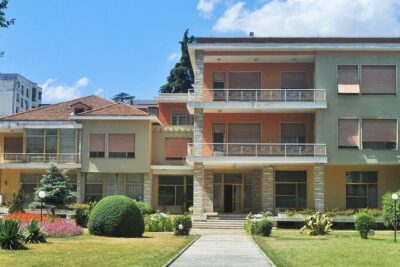
Blloku (also called Ex-Blloku) was the residence area of Communist leaders. The key detail: it was completely closed to normal citizens during that period. Standing in this area helps you understand the difference between public space and controlled space in a way that lectures can’t.
The tour has you passing Hoxha’s house while the area is explained as the center of life for rulers during Communist Albania. You’re not just hearing what happened. You’re being asked to imagine what it must have felt like when your city had a section you couldn’t enter.
Then the tour brings you to the present-day contrast: Blloku is now described as the most vibrant and impressive place in Tirana. That doesn’t mean the story is cheerful. It means history changed the neighborhood—and the neighborhood reflects that change in how people use it now.
Practical thought: since Blloku can feel lively, keep an eye on your guide if you stop for photos. Crowd energy can make it harder to hear, especially near storefronts.
The Guide Makes or Breaks It: Aldo’s Pace, Questions, and Connections
This tour’s biggest repeatedly praised asset is the guide quality. Reviews highlight guides like Aldo as well informed and delightful, on time and prepared, and able to adjust the pace for the group.
What I like most about this style of guiding is the way it meets you where you are. Aldo is described as quickly assessing general knowledge and using that to connect the missing dots. That’s the difference between a tour where you collect facts and a tour where you start understanding the country.
You’ll also get time for questions and full answers, which is a big deal on a history-heavy route. And you’ll likely walk away with practical recommendations for what to do next, including restaurant suggestions.
If you’ve ever had a walking tour where the guide speaks nonstop and you can’t process, this one seems designed to avoid that. It keeps the walk slow enough to absorb, with friendly, memorable explanations.
Who Should Book This Tirana Walking Tour
This tour fits best if you want your first day in Tirana to do more than sightseeing. Book it if you:
- want a structured introduction to Tirana’s major zones within about three hours
- prefer an English guide who explains what you’re seeing
- like history that focuses on real places—mosques, squares, institutions, and neighborhoods with rules
- enjoy asking questions and getting clear answers
It’s also a strong choice if you’re traveling solo or as a couple, since group size caps at 15 travelers, meaning you’re more likely to feel included than absorbed.
Should You Book This Tirana Walking Tour?
Yes—if you want a smart first orientation in Tirana, this is an easy choice. At $11.91 with a licensed English guide, free admission noted for the listed timed stop, and a route that covers symbols, Communist memory sites, and Blloku’s off-limits story, you get a lot of meaning per minute.
I’d pass only if you hate walking, struggle with patience for history context, or can’t travel on a day with good weather. Other than that, this is the kind of tour that helps you start your Albania trip with your bearings straight.
FAQ
How long is the Tirana Walking Tour?
It’s listed as approximately 3 hours.
Where do I meet for the tour?
The meeting point is Sheshi Skënderbej 1, Tiranë 1000, Albania, and the tour ends back at the same spot.
What language is the tour offered in?
The tour is offered in English.
What’s included in the price?
The price includes a licensed guide.
Are the attraction stops free?
The itinerary notes admission tickets free for the listed stop segments (including the Et’hem Bey Mosque and the other mentioned stops).
Is the tour suitable for most travelers and can service animals attend?
The tour indicates most travelers can participate, service animals are allowed, and it’s near public transportation.
More Tirana Tours and Albanian Day Trips

More from Our Tirana Review Desk
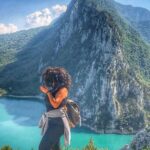
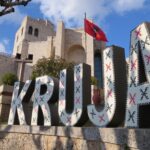

More Ways to Walk Tirana on Foot


Not quite it? More Tirana tours and Albanian day trips fresh off our review desk
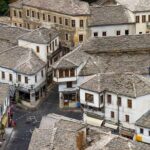


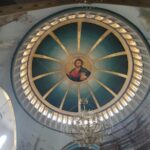




Tirana City Walking Tours, compared.
 ★ 5.0Walking Tour of TiranaFrom $18646 reviews
 ★ 5.0Local food experience & walking tour of TiranaFrom $60192 reviews
 ★ 5.0Tour a Piedi di TiranaFrom $20174 reviews
 ★ 5.0Best of Local Food & City Tour of Tirana – Food & Drinks IncludedFrom $72160 reviews
 ★ 5.0Berat Walking TourFrom $1886 reviews
 ★ 5.0Tirana Hidden Treasures Sightseeing TourFrom $1660 reviews
 ★ 4.5City Tour of Tirana & Dajti Mountain with PickupFrom $6059 reviews
 ★ 5.0Tirana Walking Tour: History, Culture &Gems by a Passionate GuideFrom $3652 reviews
Browse the lists this tour appears in